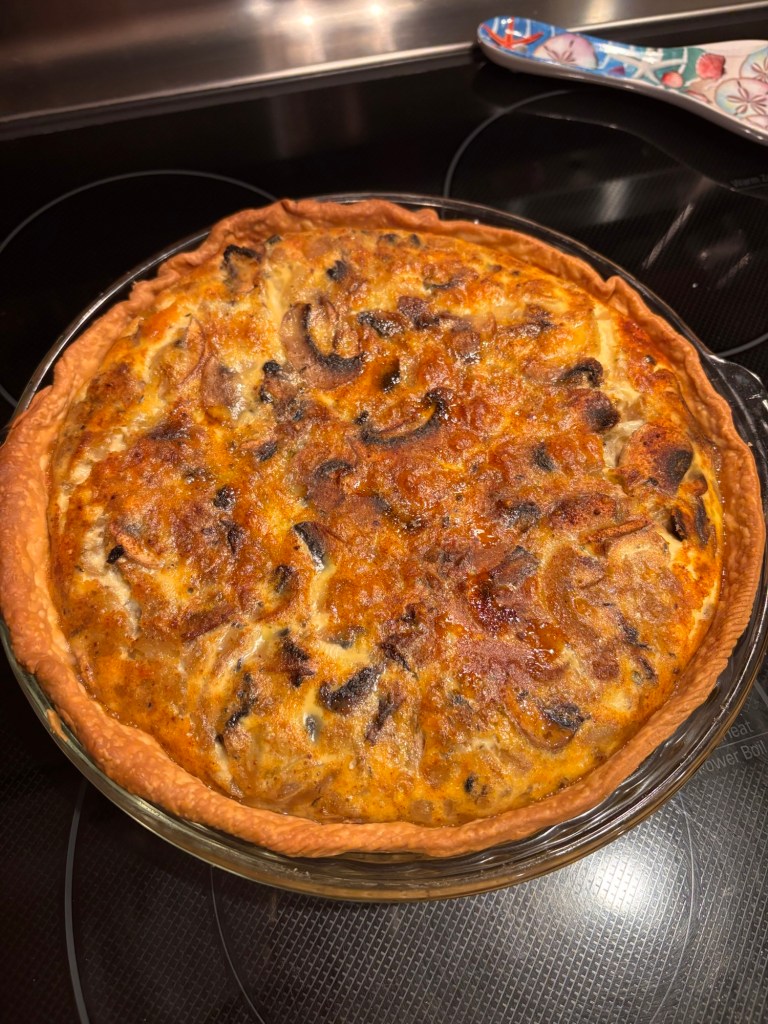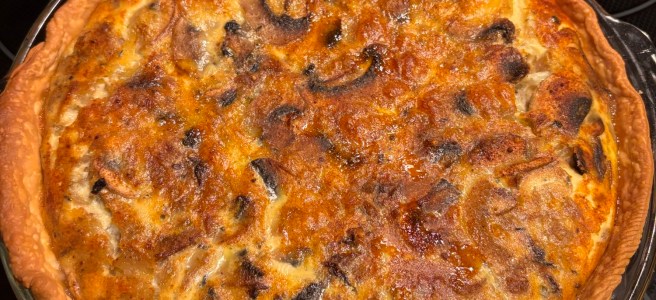
Swiss cheese and mushroom quiche

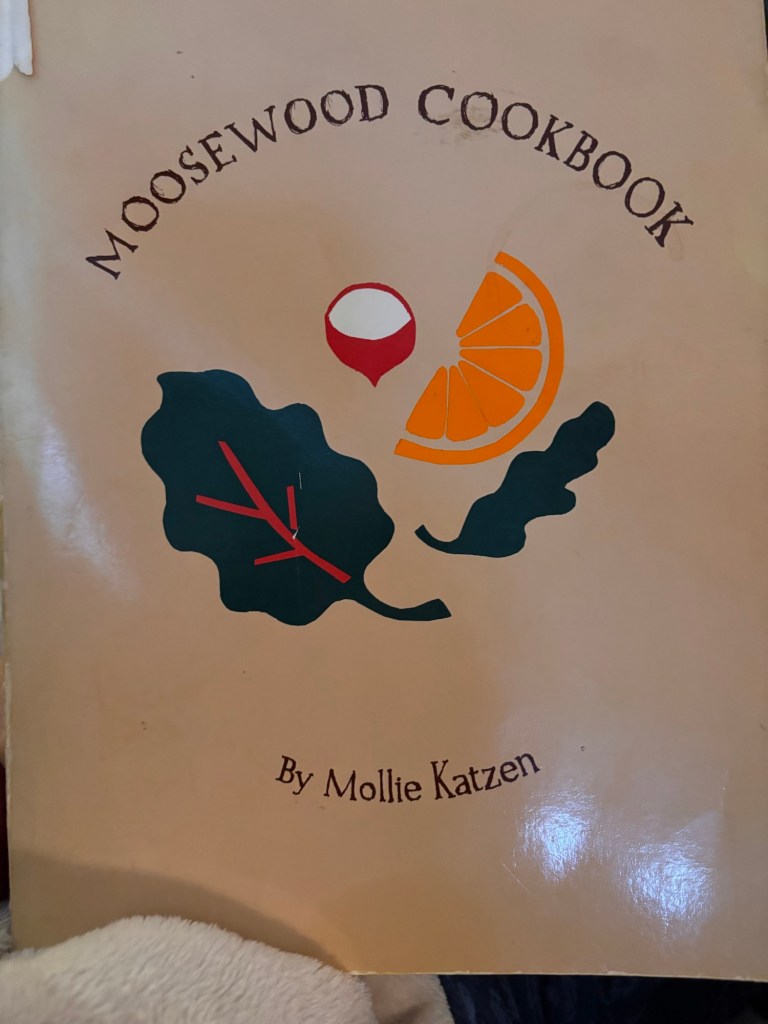
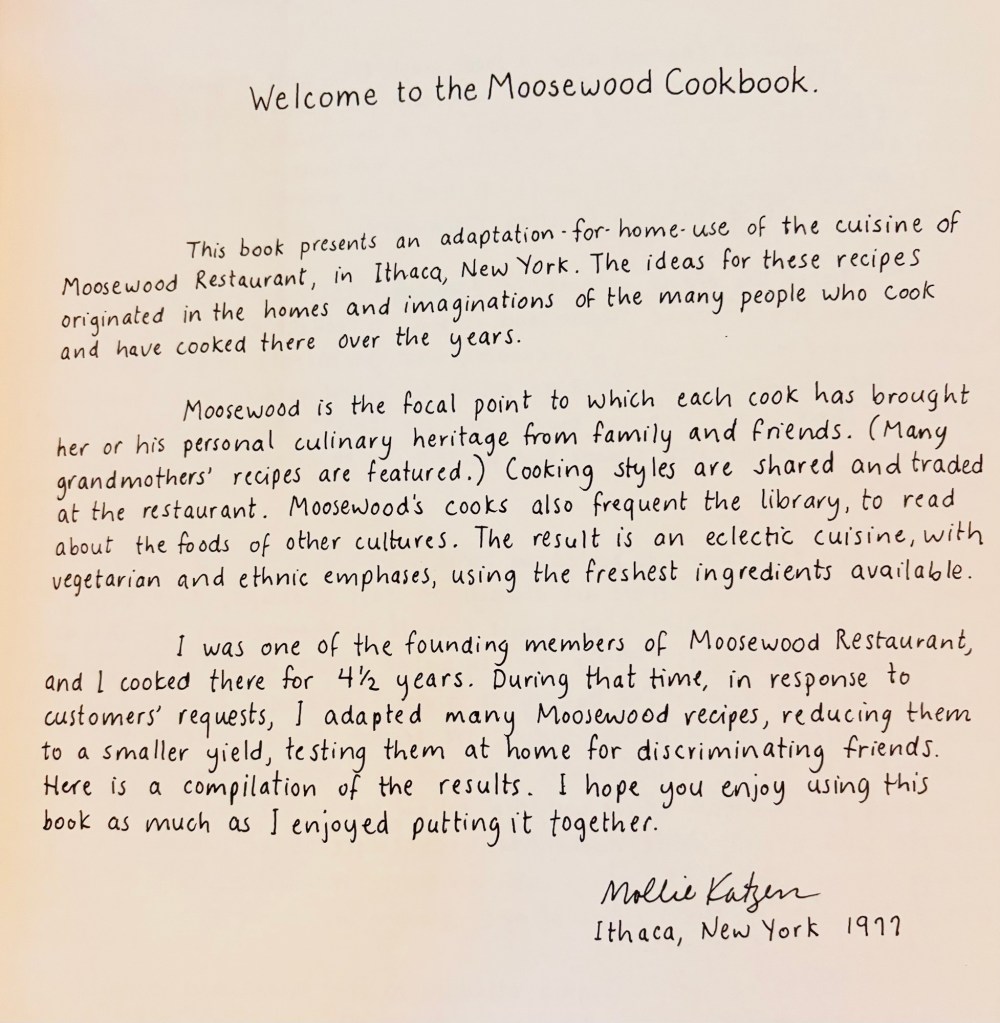
I blogged recently about the good old Moosewood cookbooks—a GenX cultural touchstone for a certain demographic. My favorite recipe from the entire Moosewood Empire is—without a doubt—the “Swiss Cheese and Mushroom Quiche” from the very first Moosewood cookbook (copyright 1977), page 111. I have made this Mollie Katzen recipe dozens, if not hundreds, of times. I’ve made it for guests, potluck suppers, baby showers, brunches, and countless times for my own family. Typically I make it with a pre-made, refrigerated pie crust and it comes out great. Every. Single. Time.

So here it is:
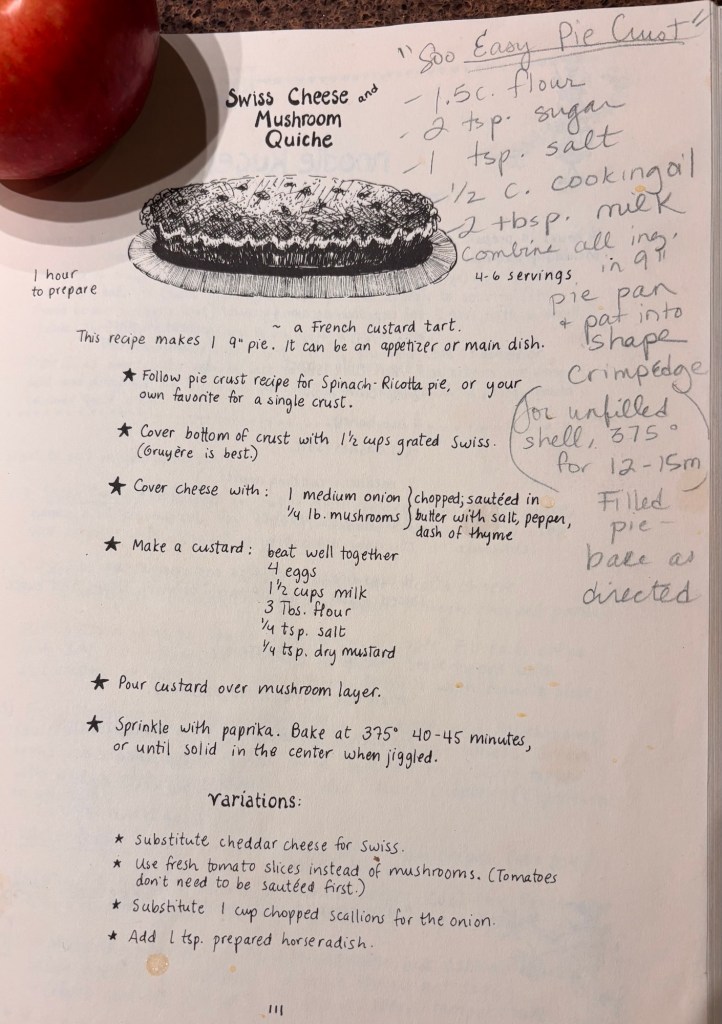
Any Swiss 🧀 will work, but as the recipe notes, Gruyère is best.
Last night’s dinner
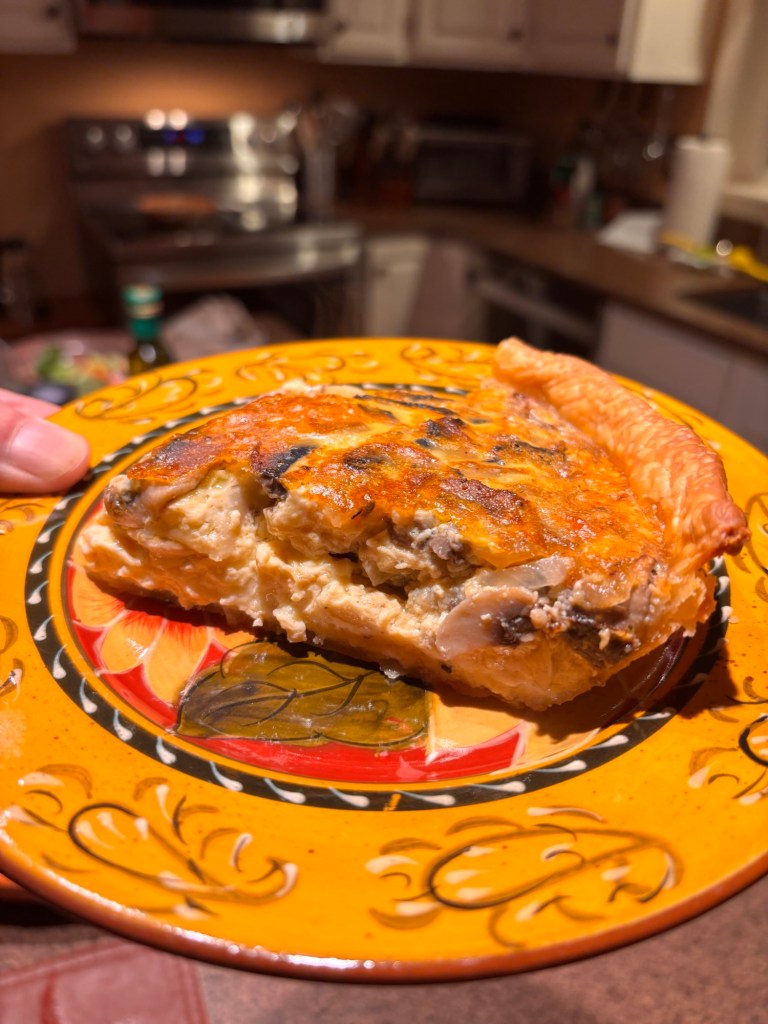
Side view

Who else remembers hearing or saying “Real Men Don’t Eat Quiche” in the eighties? Here’s the story behind it, according to ChatGPT:

“Real Men Don’t Eat Quiche” was a famous American catchphrase from the early 1980s that poked fun at traditional ideas of masculinity.

It was essentially a joke about what supposedly made a man a real man: eating steak instead of quiche, drinking beer instead of wine, watching football instead of cooking, and avoiding anything considered too refined, delicate, or feminine.

The phrase became a cultural shorthand for macho attitudes and gender stereotypes.

Where did it come from?

The phrase originated with humorist and screenwriter Bruce Feirstein, who published a book called Real Men Don’t Eat Quiche in 1982.

Interestingly, Feirstein originally came up with the line for a screenplay. When it was rejected, he developed it into a satirical book.

The book became a huge bestseller. It sold more than 1.6 million copies and spent 55 weeks on the New York Times bestseller list.

What was the joke really about?

The early 1980s were a time of changing gender roles. Women were increasingly entering traditionally male professions, and men were being encouraged to be more emotionally open, involved fathers, and equal partners at home.

The book exaggerated the anxiety some men felt about losing their traditional masculine identity.

The irony was that the book was making fun of macho men, not celebrating them.
Moosewood

What’s a small moment from your past that you still think about years later?

I still remember my college roommate Ann making an actual meal in our sophomore apartment kitchen circa 1984. I had never done any real cooking growing up, and freshman year we ate every meal in the dining hall. It was a weird feeling to have a kitchen of our own. We were like…adults…and we could be vegetarians if we felt like it.

If you were in college in the 80s and had even a passing interest in eating less meat, you probably owned The Moosewood Cookbook, or borrowed it from a roommate and never gave it back. Mollie Katzen’s hand-lettered, hand-illustrated pages felt more like a friend’s notebook than a cookbook. Everyone made the same few things: a big pot of soup, something with lots of cheese and broccoli, and a very ambitious attempt at a dinner party for six. I still have mine.

Copyright, 1977
Decades later, my son was in college in Ithaca, NY and I finally got to eat in the legendary Moosewood Restaurant in downtown Ithaca.

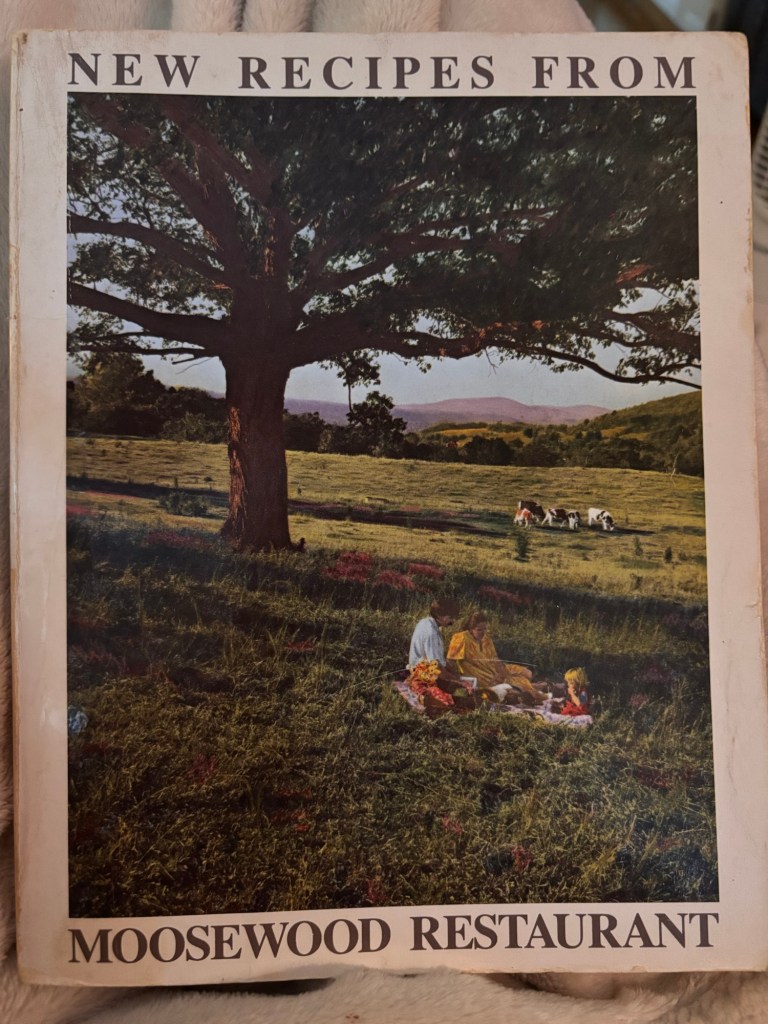
Their subsequent cookbooks, including “Enchanted Broccoli Forest,” were huge bestsellers, especially among young, liberal, vegetarian types. I bought “New Recipes from Moosewood Restaurant” when it came out in 1987–the year I graduated college. I still have that one too.

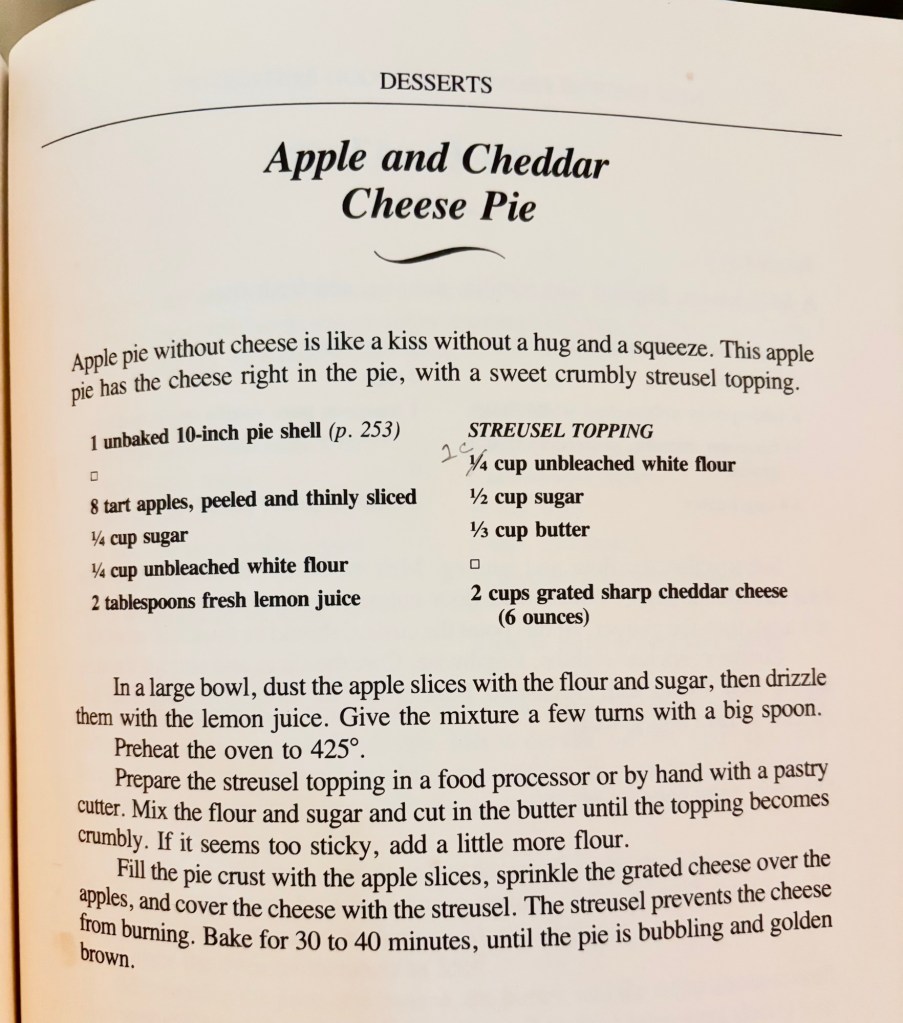
Yesterday, my husband asked for my old “Apple Cheddar Cheese Pie” recipe, so I dug it out. It was in the New Recipes cookbook.

This one has typed pages, rather than the hand-illustrated look of the original.
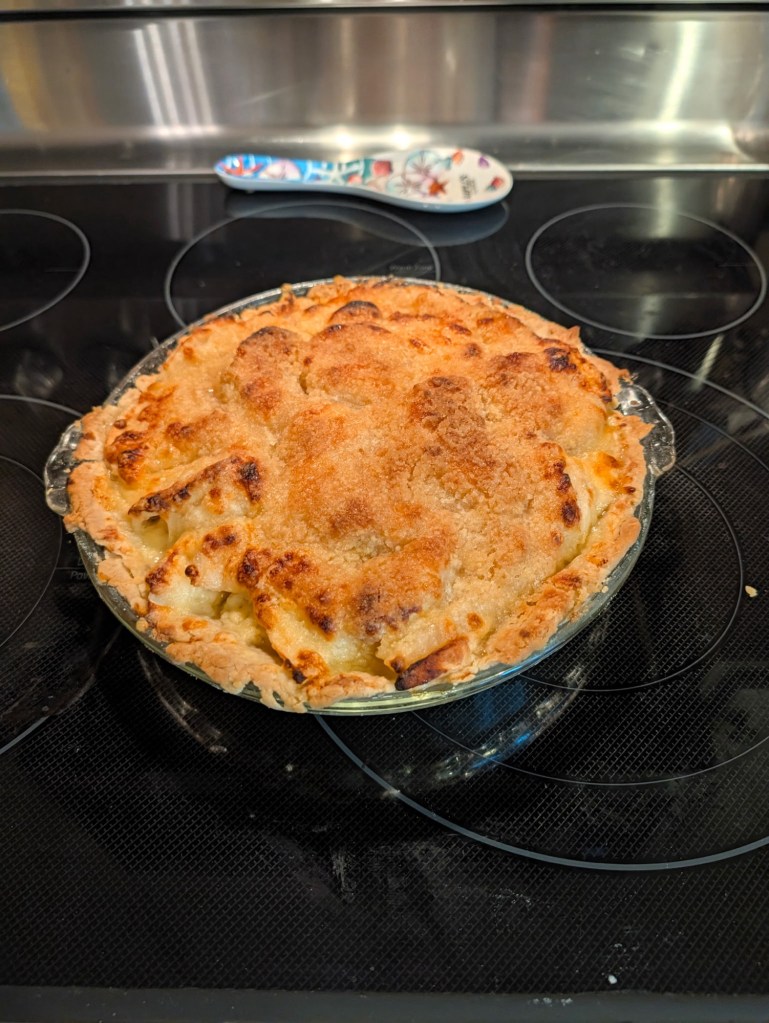
He whipped up this pie while I was working on a painting yesterday.
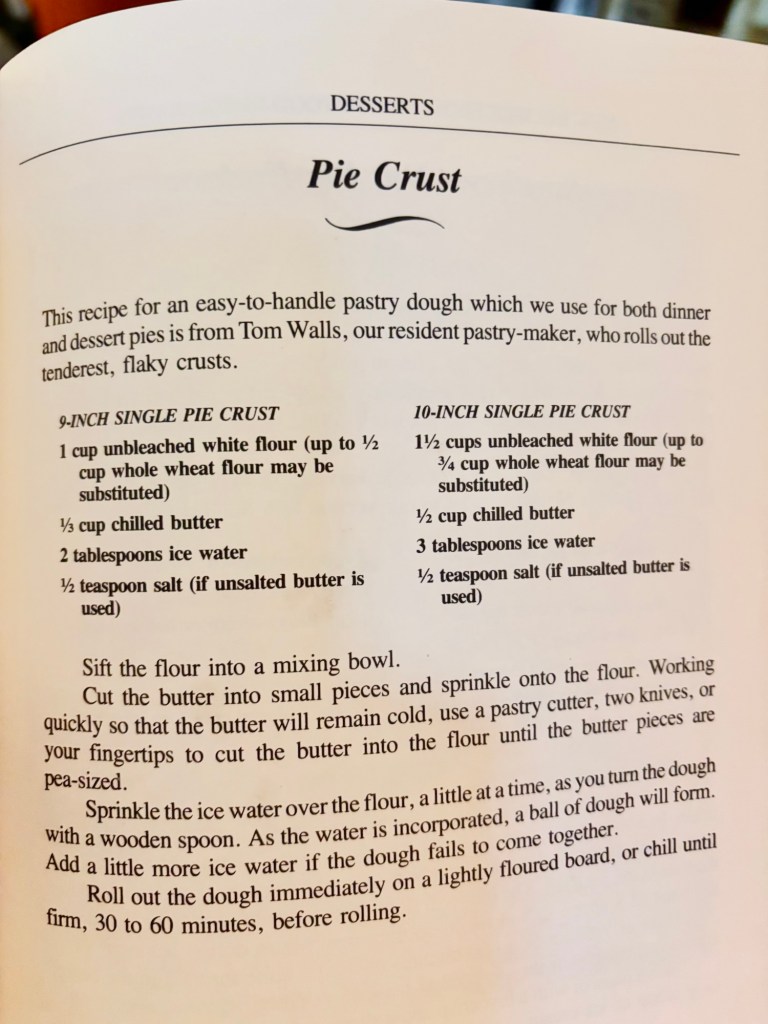
We had no pre-made pie crusts on hand, so he made the crust too. Impressive, don’t you think?

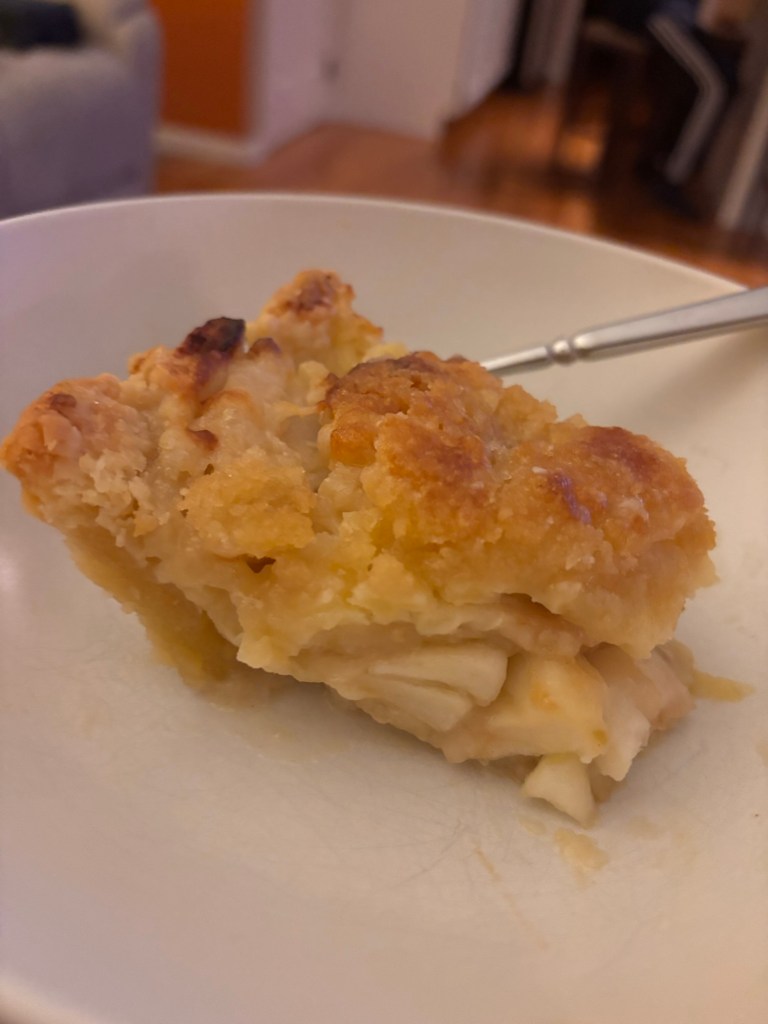
It came out great. The layer of cheese under the streusel makes this pie feel more like an actual meal. I would not add ice cream to this, but truth be told, my husband did.

Moosewood Restaurant’s Apple and Cheddar Cheese Pie. The last time I made this was at least twenty years ago.
The cheese isn’t really visible, but you can taste it and it’s lovely with the apples and sweet topping.
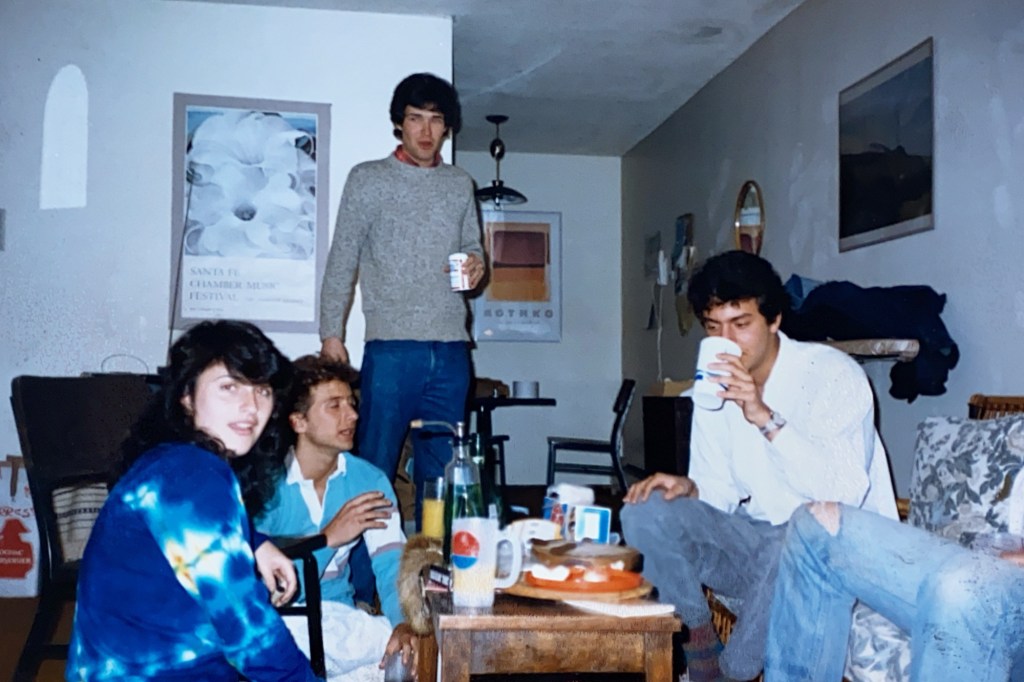
My roommate Ann (far left) and friends in our first apartment with a kitchen.
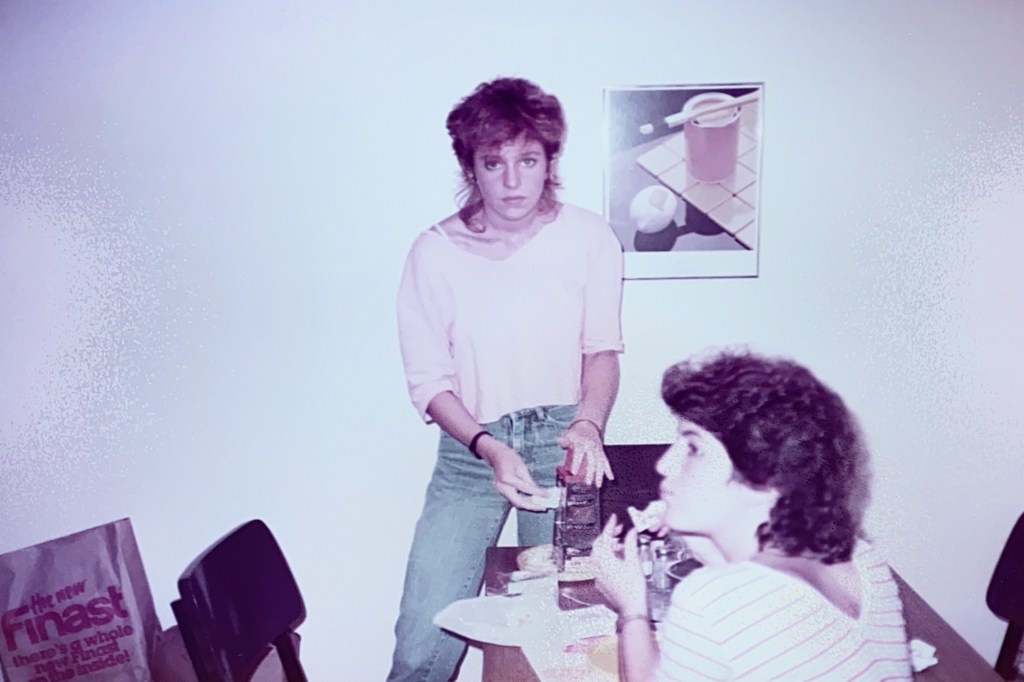
Terrible photo of my other roommate (and dear departed friend) grating cheese in that first kitchen. It was probably for a Moosewood recipe. There is lots and lots of CHEESE in Moosewood cookbooks. No meat, but a few fish recipes are included.

Watercolor bootcamp – part 2

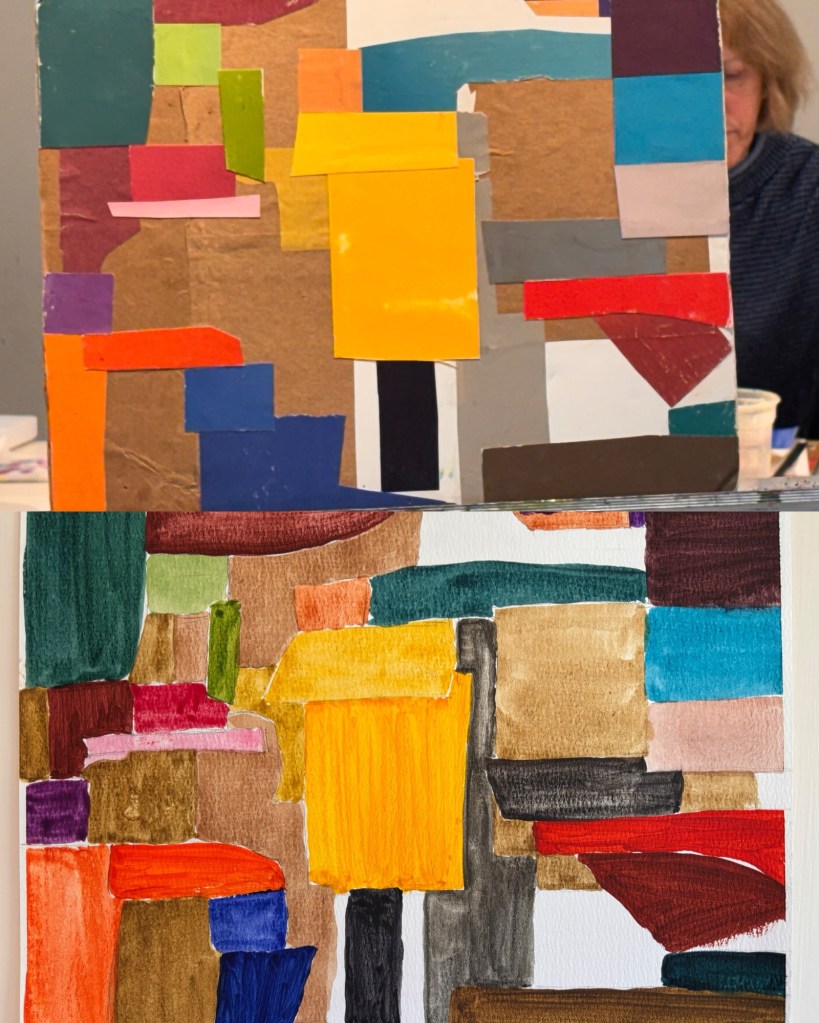
This week our watercolor drill sergeant made us copy a colorful abstract collage. The point was to recreate each color as accurately as possible. It was really hard!

I did OK on the color matching but got disapproval for using “subpar” paper which created all those streaks. (I didn’t want to waste my expensive paper on what was essentially an exercise.)

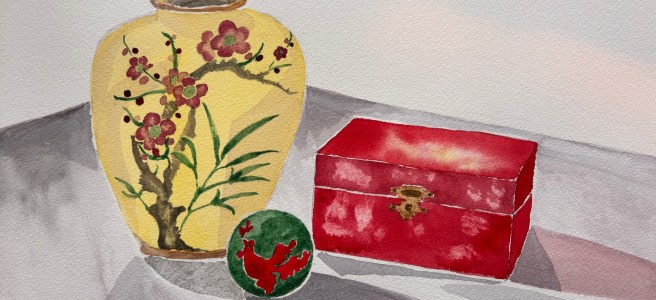
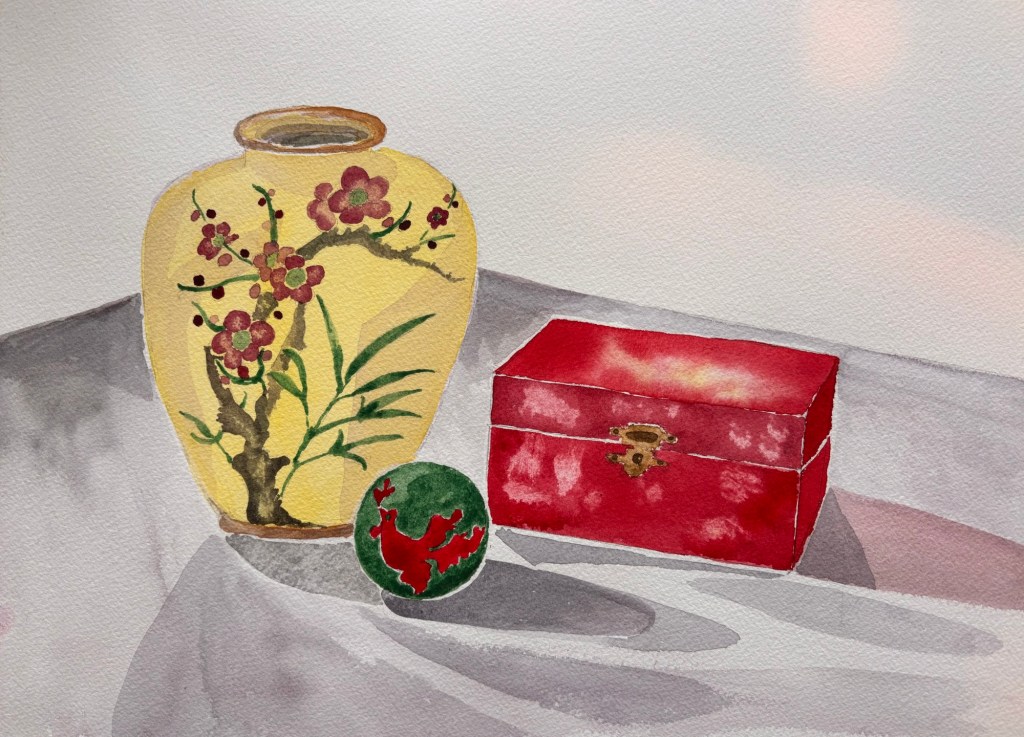
The homework was to paint a still life comprised of colorful objects, getting the colors as close as possible. Again, hard.

Here’s my homework. I’m pretty happy with it although the yellow is not right. I think I went too light on the yellow because I knew I was going to paint those flowers over it. (It would’ve been too much work to mask out that whole flower area. )
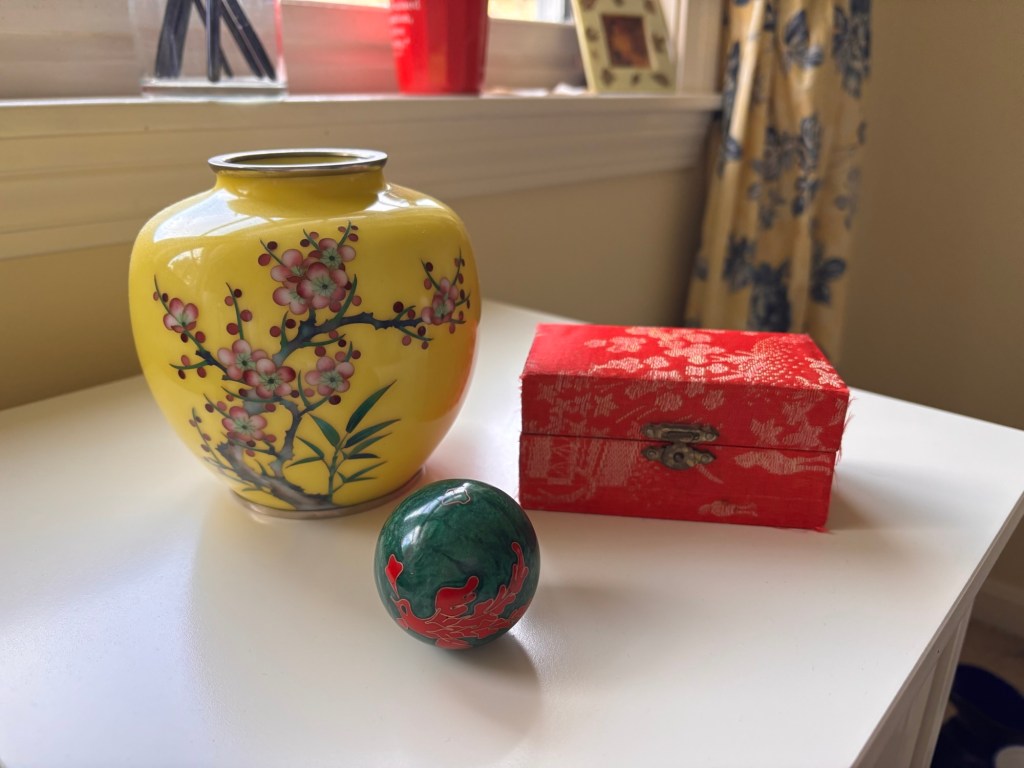
Here’s what I was looking at—a collection of objects from China and Japan that
I happened to have in my house.

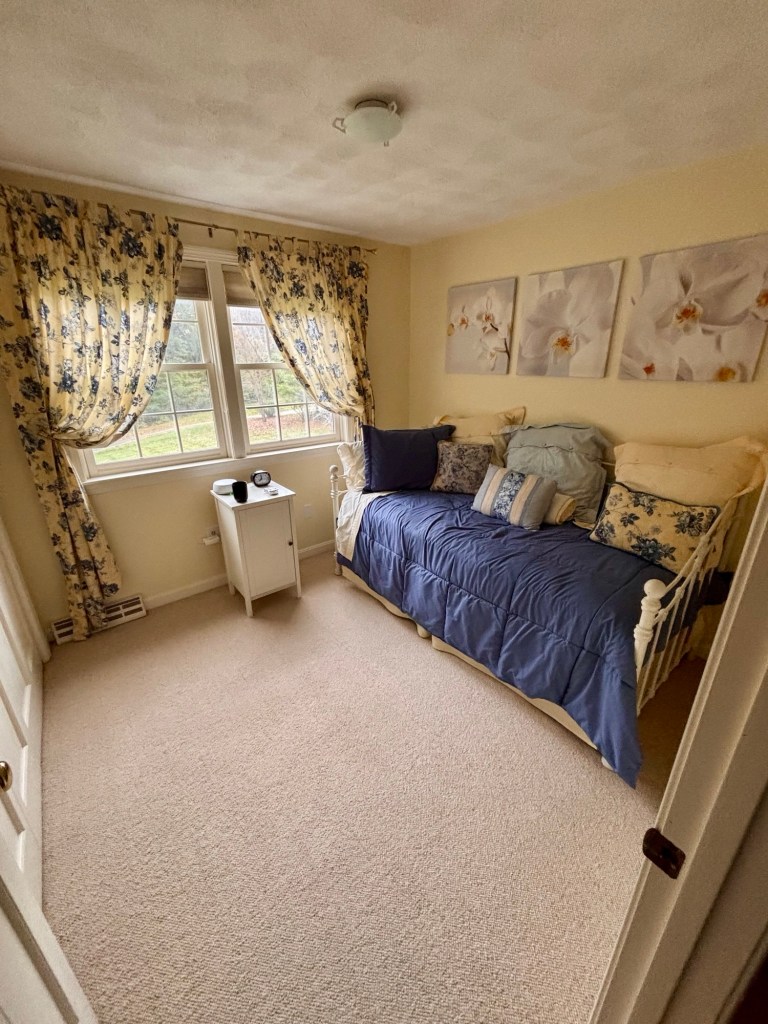
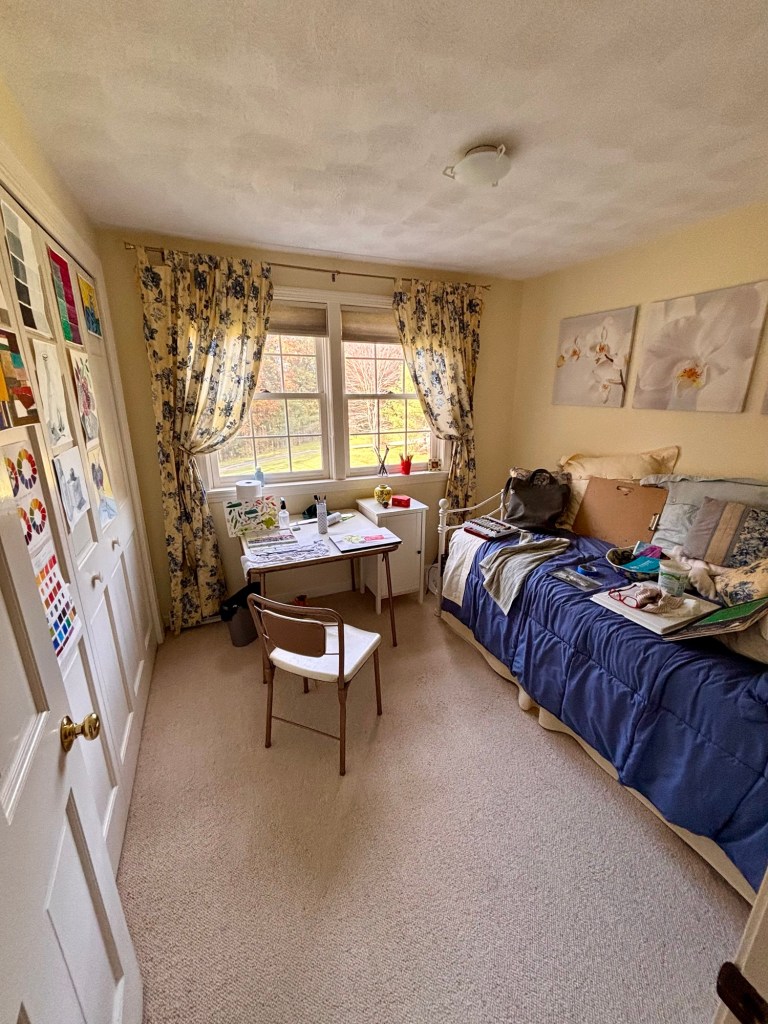
In other exciting news: I decided to move all my painting and drawing stuff out of the dining room and into an extra bedroom upstairs. So I guess I have a “studio” now.

Cute bedroom with nice light that nobody ever used
This is not ideal, but it’s better than the dining room. That card table I’m painting on was my parents. I think it was made in like 1960. It has some sort of faux leather covering that smells moldy. I need to get rid of the daybed and get a new, larger table.

Related post:

Watercolor bootcamp

Less selfishness

What’s one thing that would instantly improve your city?

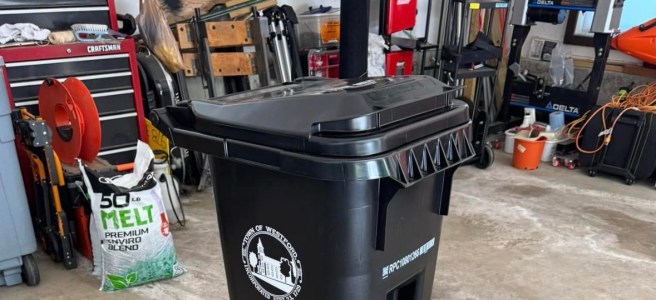
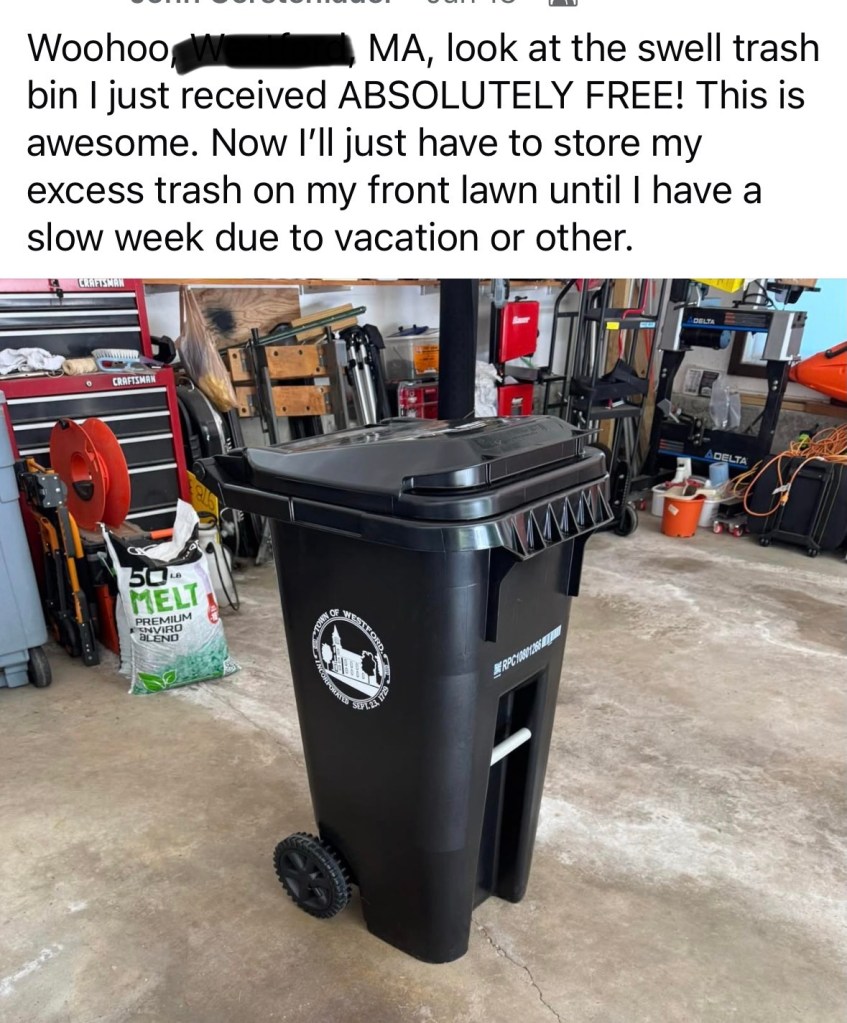
We’re having high suburban drama here in my leafy suburb outside of Boston over…trash.

Due to budget constraints and a failed vote to raise our own taxes, the town has implemented a new trash policy whereby every family gets one small trash bin. (Recycling bins are separate.)

It’s proving to be very dramatic and upsetting to a lot of people. If you fill your bin and still have more trash, you have to buy special $15 bags to dispose of the rest.

Since my husband and I are empty nesters, we can deal. For families with young children, disposable diapers alone would fill up about half of these little bins. It’s an actual hardship for them.

In the grand scheme of things, this is a relatively minor problem, but it’s also just another way we’re making life harder for young families.

Conservatives say they want more babies and growing families, yet they continually vote down money to pay for schools and other services that families need.

Typical post in a town Facebook group that elicited 100+ comments and devolved into several online fights
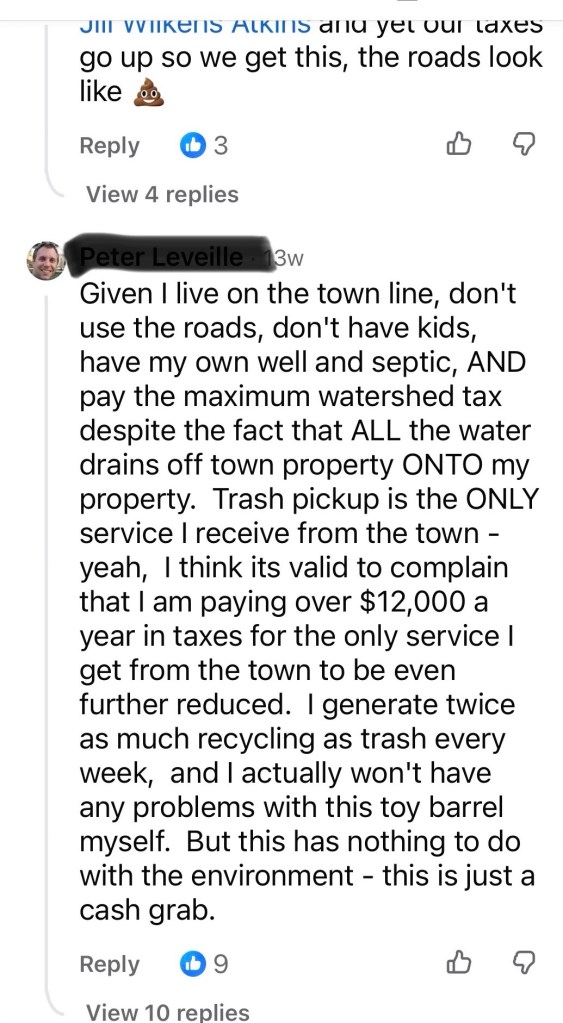
Typical comment from a white guy who thinks he shouldn’t have to contribute to the community because he has no family of his own (gee, I wonder why?) I mean, he doesn’t even “USE THE ROADS.” Maybe he has a Jetsons-style space saucer to get around.

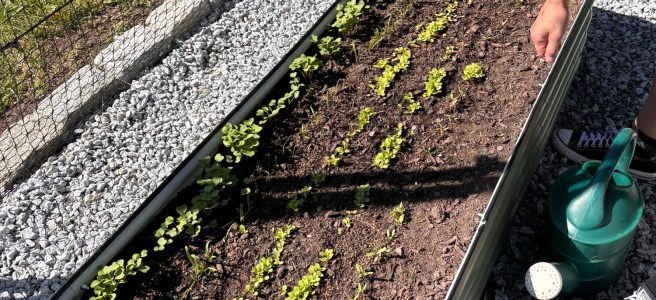
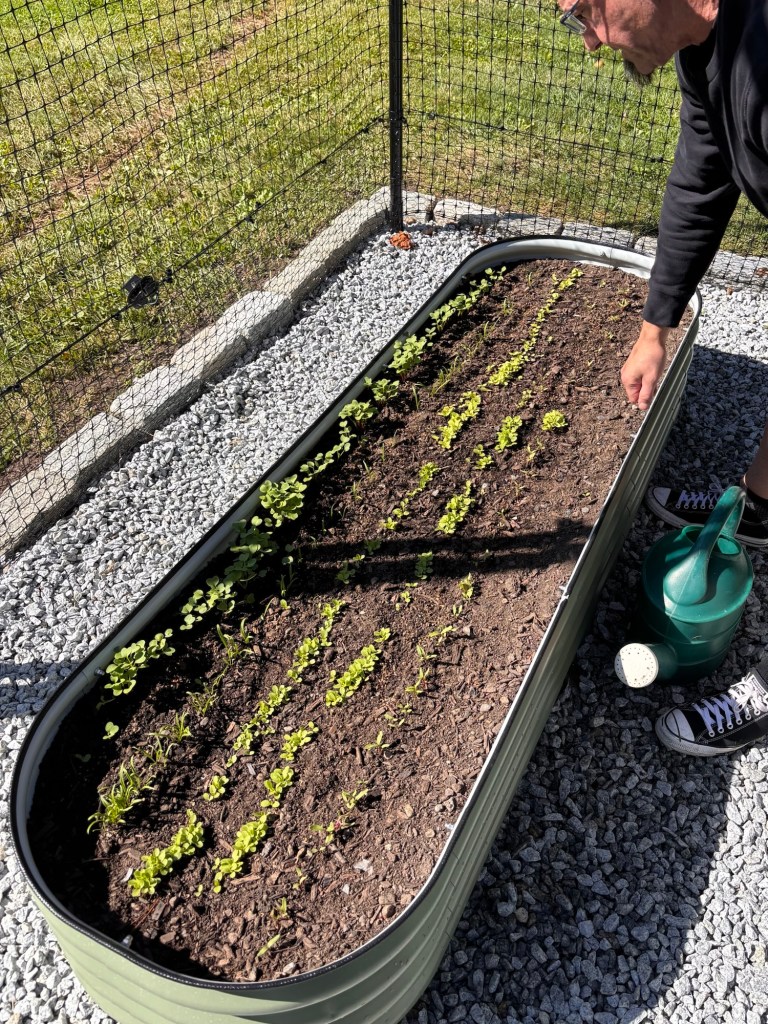
We have germination

My husband’s new Retirement Garden (aka The Graveyard) will not sit idle until spring. With hopes for a warm October, he went ahead and put in a bunch of seeds and surprisingly, they all sprouted.

He planted spinach, radishes, Swiss chard and four kinds of lettuce seeds.

Also, he now has a spigot out there. 💦

For my friends facing knee replacement: his two new knees are really pretty darn good now. Walking is not a problem. Stairs are not a problem. I would say that this optimistic return to his lifelong love of plants and gardening has been made possible by those surgeries.

Blizzards of yore

In case you haven’t heard, a major winter storm is coming—the likes of which we haven’t seen around here since 2022.

It’s currently 1 degree Fahrenheit and the grocery stores will be packed today with everyone trying to stock up before the snow starts tomorrow around noon. (At this point, I’m still planning to go to church tomorrow morning.) People in non-snow climates: the idea of being stuck inside with your loved ones for 24-48 hours tends to make people buy eggs, milk, bread and firewood like they’re going out of style.

A shared memory for GenXers from Massachusetts is the Bizzard of ‘78, when they cancelled school for like a whole week. It was awesome. People remember jumping off their roofs into huge snowbanks, bumper skiing (when you hold onto your friend’s bumper and they pull you down the snow covered street), and building giant holes and igloos which could’ve collapsed and suffocated their occupants at any moment. There were surprisingly few snow accidents, although one friend’s brother was very seriously injured by a plow that didn’t see him playing in a snow bank. Stay OUT OF THE WAY of the plows, people!

My doll and me tasting the snow in February 1969
The famous Blizzard of 1978 brought us like 4 feet of snow and no school for days on end.
In 1978, 7th graders were far too cool for snow pants, so we just wore jeans to play in the snow.
My son on a huge snowbank in APRIL 2005 – the “April Fools Day” storm
My kids shoveling out a car after Winter Storm Nemo (aka the Blizzard of 2013)
And the stairs
My son “swimming” in the snow in January 2015. He was determined to make it out to his basketball hoop after Hurricane Juno.
He made it

🌨️❄️☃️🥶

Thursday Doors—Boston’s North End

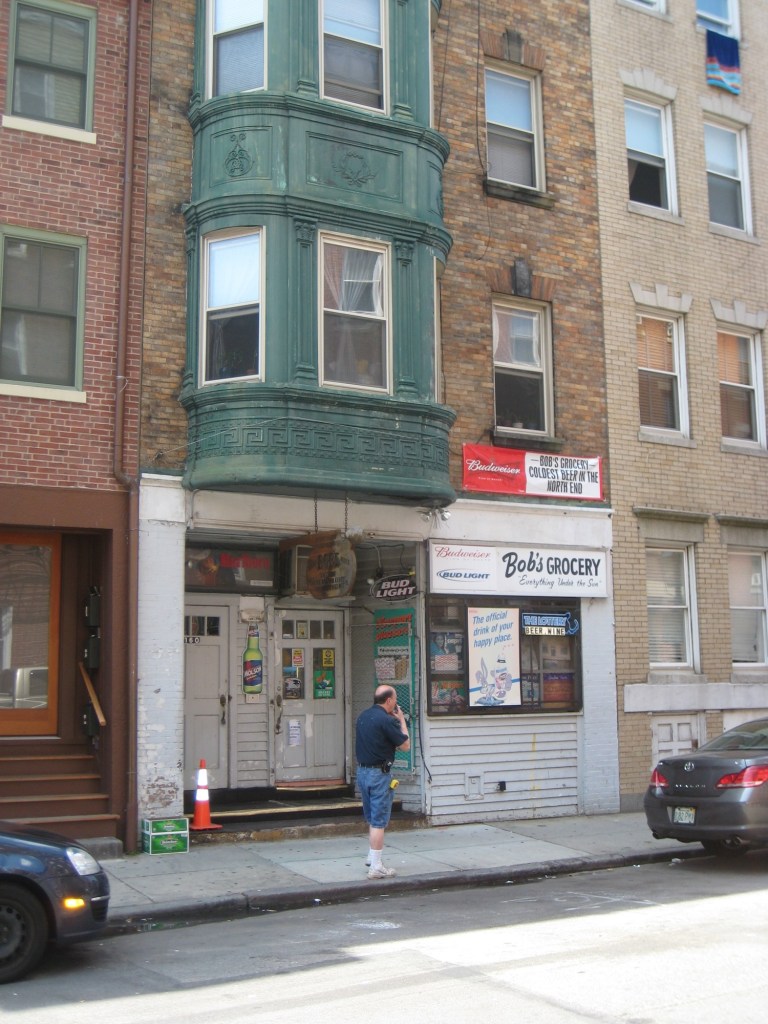
There are many beautiful old doors in Boston’s historic North End (aka the Italian neighborhood), but 160 Endicott Street is not one of them.
It’s an old, unrenovated building…
…in a great location in Boston’s North End—just around the corner from the original Pizzeria Regina

It is, however, a meaningful door in terms of my life story. I lived there in the early 1990s with my roommate Bridget, a friend from work. It was the last place I lived as a single woman. After that, I moved in with a boyfriend who I later married.

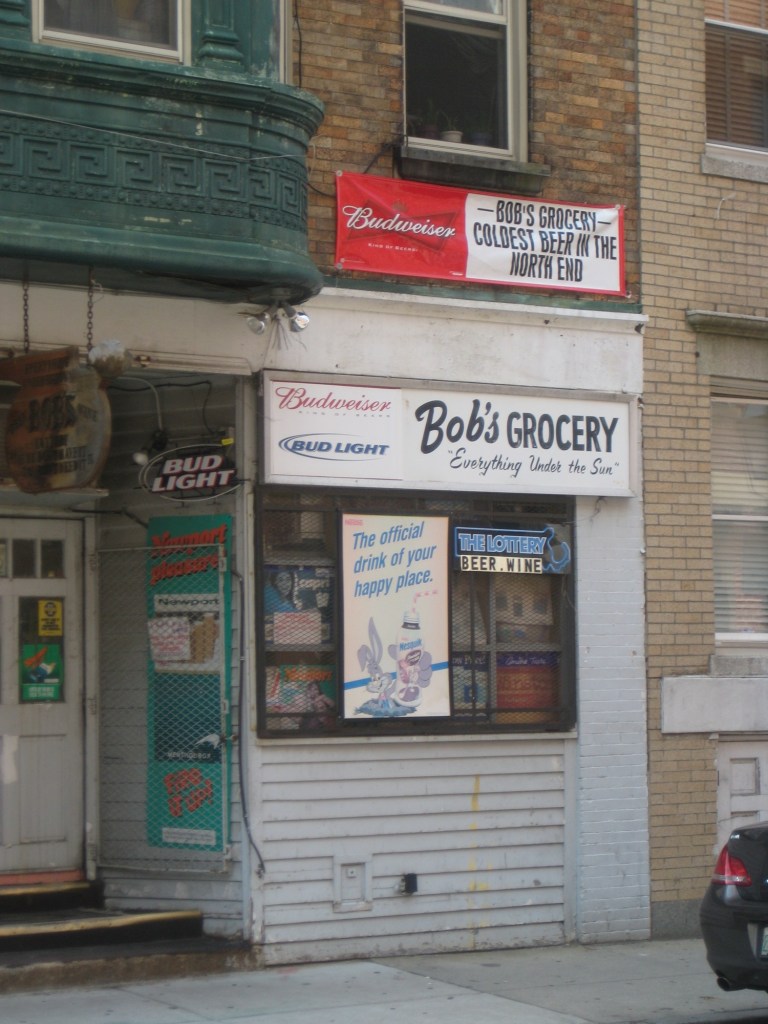
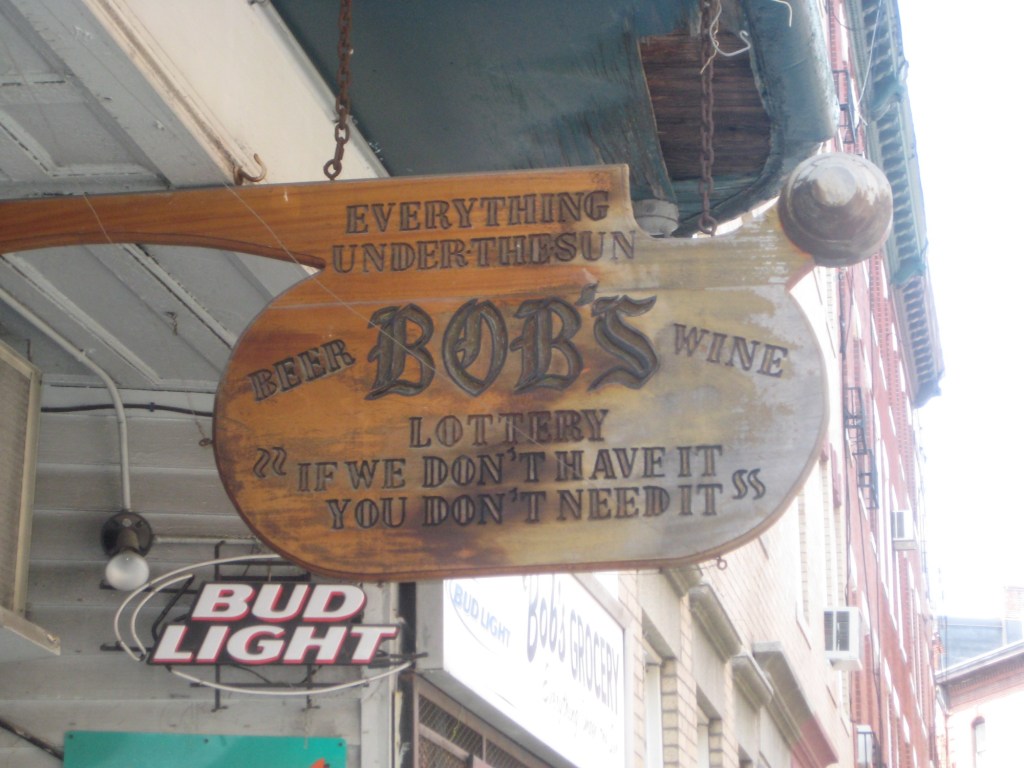
160 Endicott was truly a dump. It was the first floor apartment over a convenience store that I think was some type of front for a low-level gambling operation. Their most popular item was lottery tickets. They had a few dusty cans of soup and literally nothing else you would ever want to buy. The irony was the hand-carved sign, “If we don’t have it, you don’t need it.” They never had anything I needed. Not a tampon, not an Advil, nothing.

The apartment itself was totally unrenovated and smelled liked cats. The kitchen was horrible. The bathroom had cockroaches. The downstairs neighbors (who lived in an unfinished basement beneath the store) were always asking to borrow my car so they could drive to the dog racing track up north. But it was in a great location in the heart of old Boston and we could afford it on our art museum salaries, with absolutely no help from parents, which was my main objective in moving there. I really didn’t want to be beholden to my parents for anything. I needed some space from them and my troubled sister.

I took my kids back to visit in 2009. It looked much the same from the outside, but the store inside looked cleaner and nicer. New owners had taken over.

I didn’t ask to see the old apartment, but the green exterior bay window looked exactly the same. And the sign was still there:

“If we don’t have it, you don’t need it.”
That was the window of my “bedroom” which was actually the living room. I slept on a pullout sofa.
A return trip to 160 Endicott Street in 2009
In 2009, the humble exterior looked identical to how it looked in 1990.

The twenties are such a formative decade. So many forks in the road. Decisions made. Paths chosen. Roads not taken.

Memories of my time on Endicott Street include gaining a more visceral understanding of poverty (I thought our place was bad, until I saw how the people under the store were living); finally ending a longterm romantic relationship that had been going on and off for years; great authors—like Toni Morrison and Maya Angelou—introduced to me by my roommate Bridget (a reader and a feminist); and food smells—especially Bova’s bakery, open 24/7. Not much in Boston is open all night…but Bova’s is. There are better bakeries in Boston’s North End, but nothing smelled as good as Bova’s at 3am.

Posted for Dan’s Thursday Doors

Internet Chicken Parm

I wanted to make things easy on myself yesterday as I am doing all the cooking, while my husband recovers from total knee replacement surgery. (His leg still aches too much to eat out in a restaurant.) I had the idea of making chicken parmigiana with store-cooked chicken cutlets, but the price for TWO of them was $16.99, so I decided to make them myself.

Believe it or not, it was my first time making chicken parm. I looked at NYT Cooking’s version of the recipe, but then decided to go with something simpler that Google turned up:

I like how there’s a baked version of the recipe (if you don’t want to fry the cutlets in oil first), but for my first time making it, I decided to fry the cutlets.

I didn’t have sliced mozzarella, so I used about 8 ounces of grated mozzarella and it was yummy. I also didn’t have basil, so I topped with a bit of fresh parsley leftover from my Slow Cooker Garlic Butter Chicken.

My husband was very appreciative (as always) of my efforts and I liked it too. I used store bought marinara sauce (Rao’s), so it was really pretty easy.

I recommend buying high-quality organic chicken breasts (like Bell & Evans) and slicing them into cutlets yourself before pounding.

Buy the good chicken breasts for best results
Served on leftover pasta with a salad

Knee socks

Today’s realization from The Great Photo Digitization Project of 2025 (inspired by the tragic California wildfires) is that I was an extremely well-dressed child. (My own kids were nowhere near as well-dressed as my sister and I were.)

And this was before the era of “fast fashion,” so my mother made many of our dresses and outfits.

We always had matching accessories too. Note the headband in this shot:

With my baby cousin Steven and Aunt Betsy, 1971

In my old photo albums, one accessory is featured more than all the others and that is color-coordinated knee socks. I remember having a drawer full of them. Thinking back, they were pretty cool because they came in so many different colors and were way more comfortable than tights.

Knee socks and a matching purse for the first day of first grade
November 1972
Note the “milk box” near the front door (I am old)
Heading off to Town Day 1973

Facilitated by my mother and a Marshall’s opening up in my town in the late 70s (“Brand Names for Less”), I ended up being a major clothes horse right through high school. I embraced the Reagan era “preppy look” and had dozens of sweaters in every color of the rainbow. My closet looked like a Benetton store.

My high school preppy look

It wasn’t until I tried to fit all my clothes into a tiny freshman dorm closet that I realized how ridiculously many I had.

Summer reading

How do you relax?

I like to lay on the beach with a good book. It’s usually a hassle to get to the beach in New England (driving, parking, etc), but once I’m there, I find it relaxing.

We had a discussion about “summer reads” in my book group. I was reluctant to read anything too traumatic or depressing in August. Other people made no distinction between summer reading and regular reading.

Here’s the book I read at the beach in August. It certainly looked the part. Very beachy!

REVIEW: It liked it. It was a little darker than the cover would have you think. It was a good complement to the “Summer of Barbie.” The main character is a woman (a scientist) severely hampered by the boxes American society forced women into in the 1950s and 60s. There is one central tragedy, but it has a key “summer read” element: a happy ending.