
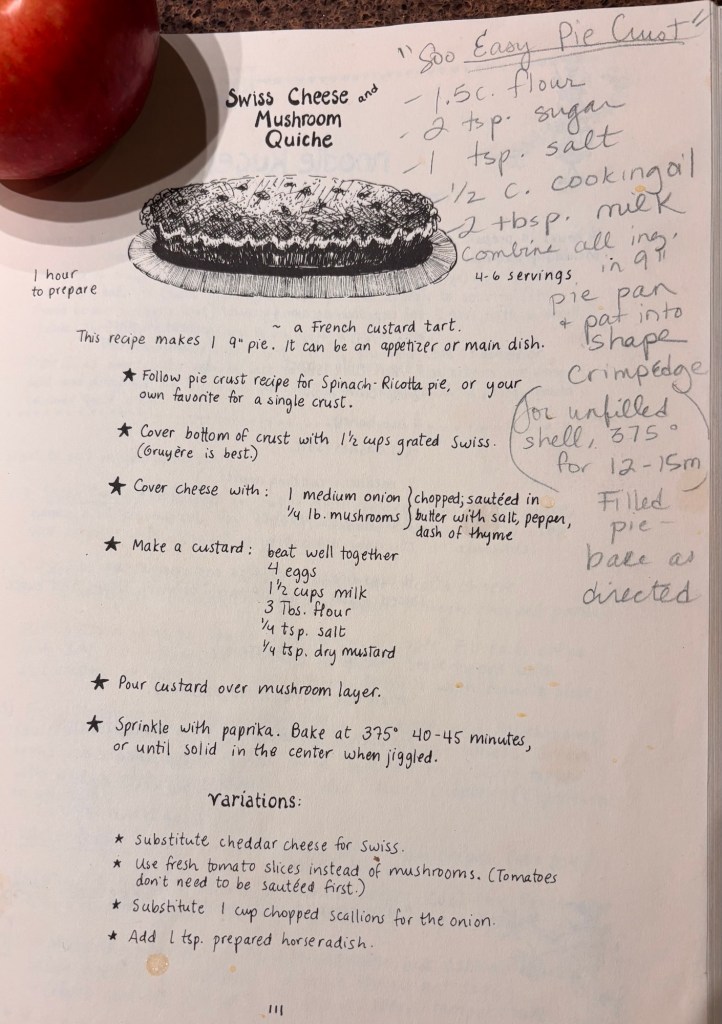
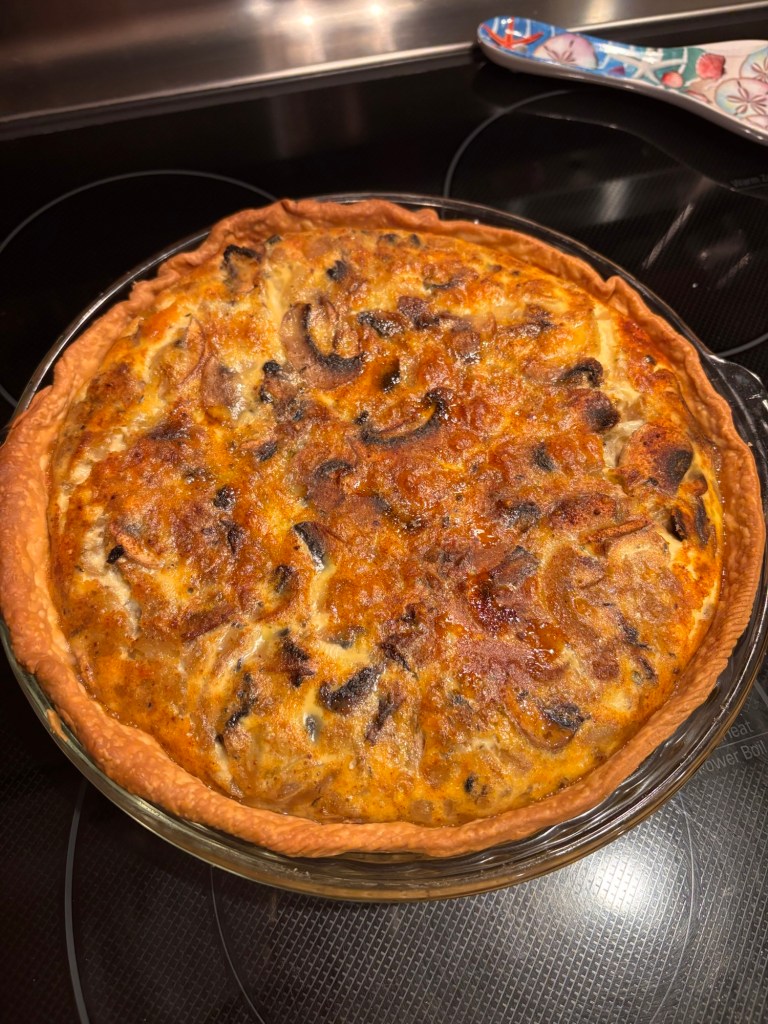
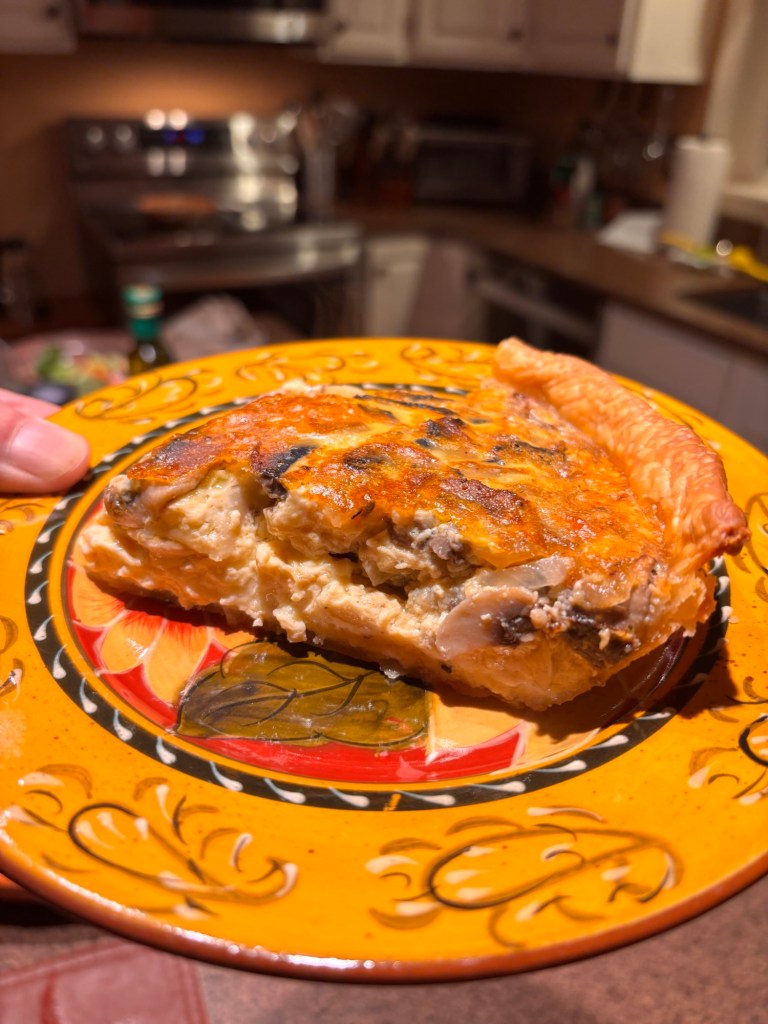
I blogged recently about the good old Moosewood cookbooks—a GenX cultural touchstone for a certain demographic. My favorite recipe from the entire Moosewood Empire is—without a doubt—the “Swiss Cheese and Mushroom Quiche” from the very first Moosewood cookbook (copyright 1977), page 111. I have made this Molly Katzen recipe dozens, if not hundreds, of times. I’ve made it for guests, potluck suppers, baby showers, brunches, and countless times for my own family. Typically I make it with a pre-made, refrigerated pie crust and it comes out great. Every. Single. Time.
So here it is:
Who else remembers hearing or saying “Real Men Don’t Eat Quiche” in the eighties? Here’s the story behind it, according to ChatGPT:
“Real Men Don’t Eat Quiche” was a famous American catchphrase from the early 1980s that poked fun at traditional ideas of masculinity.
It was essentially a joke about what supposedly made a man a real man: eating steak instead of quiche, drinking beer instead of wine, watching football instead of cooking, and avoiding anything considered too refined, delicate, or feminine.
The phrase became a cultural shorthand for macho attitudes and gender stereotypes.
Where did it come from?
The phrase originated with humorist and screenwriter Bruce Feirstein, who published a book called Real Men Don’t Eat Quiche in 1982.
Interestingly, Feirstein originally came up with the line for a screenplay. When it was rejected, he developed it into a satirical book.
The book became a huge bestseller. It sold more than 1.6 million copies and spent 55 weeks on the New York Times bestseller list.
What was the joke really about?
The early 1980s were a time of changing gender roles. Women were increasingly entering traditionally male professions, and men were being encouraged to be more emotionally open, involved fathers, and equal partners at home.
The book exaggerated the anxiety some men felt about losing their traditional masculine identity.
The irony was that the book was making fun of macho men, not celebrating them.

