Yesterday I participated in a sacred circle dance where we honored Yule and the winter solstice.
AI depiction of our sacred circle yesterday, which included a 90+ year old woman and her 5 adult daughters all dressed in white for her birthday
The sun set at 4:16pm yesterday so we lit a fire in our fireplace in the evening. I had a memory of how much we really wanted a fireplace when we were house hunting. (Our first house did not have one.) We only use our fireplace occasionally, but it IS special to have an an indoor fire on these longest, darkest nights of the year.
As the embers burned down, I made myself two s’mores for dessert.
And now, on Winter Solstice morning (December 21) it is still pitch black at 6:30am and I’m awaiting the replay of the livestream of the ancient chamber at Newgrange in Ireland, which we visited in June. (I wasn’t up at at 3:40am to watch it live.) We saw a demonstration of how the sun lights up the inner chamber on the solstice when we were there, but I want to see the real version.
Finally, if you missed this year’s Lucia Morning broadcast from Visby, Sweden on St. Lucia Day (December 13), it’s a great thing to experience during these dark long nights. I watch it every year. The second children’s choir (the younger kids in the adorable wool coats and sweaters) are particularly enchanting.
Wishing all of my fellow Northern Hemisphere dwellers a light in the darkness this December solstice day. It only gets brighter from here.
In 2011, I started keeping a list of books I’ve read in my phone’s notepad, so I could remember them.
Here is my list for 2025 in the order I read them:
“Night Watch” by Jayne Anne Phillips (c2023)
“The Last Train to Key West” by Chanel Cleeton (c2020)
“Florida” by Lauren Groff (c2018)
“The Frozen River” by Ariel Lawhon (c2023)
“Intermezzo” by Sally Rooney (c2024)
“Small Things Like These” by Claire Keegan (c2021)
“Foster” by Claire Keegan (c2010)
“James” by Percival Everett (c2024)
“How to Lose Your Mother: A Daughter’s Memoir” by Molly Jong-Fast (c2025)
“Savannah Blues” by Mary Kay Andrews (c2002)
“The Director” by Daniel Kehlmann (c2025)
“Tom Lake” by Ann Patchett (c2023)
“The Covenant of Water” by Abraham Verghese (c2023)
“A Visit from the Goon Squad” by Jennifer Egan (c2010)
“The Candy House” by Jennifer Egan (c2022)
“The Summer Before the War” by Helen Simonson (c2016)
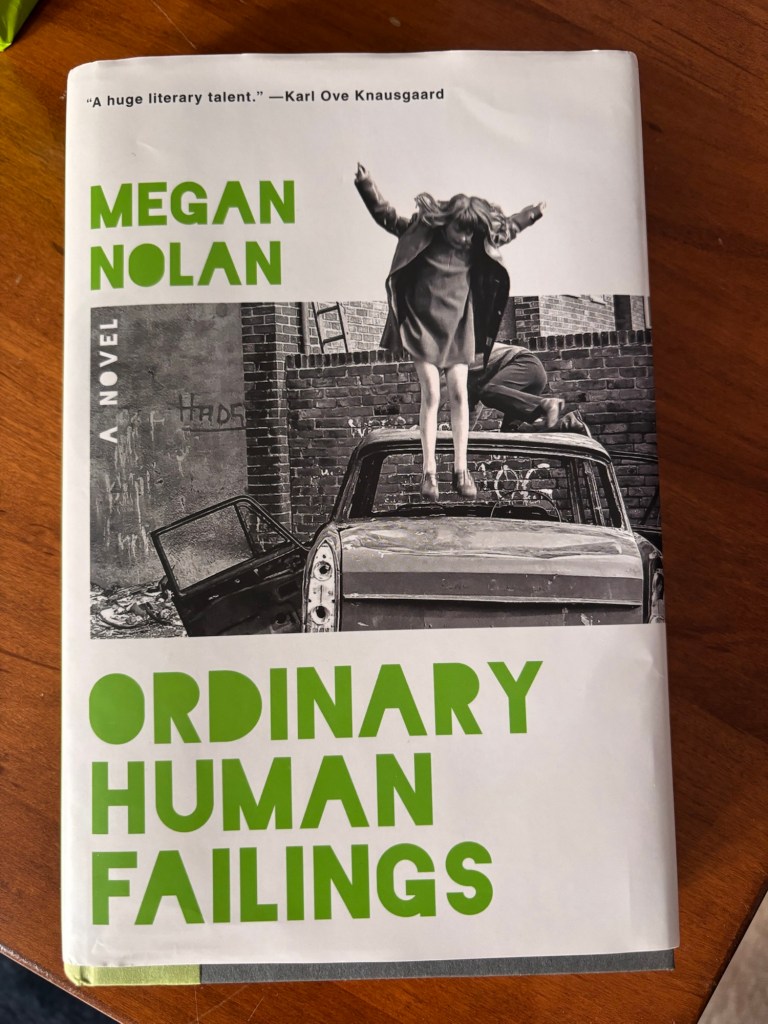
“Ordinary Human Failings” by Megan Nolan (c2024)
“Heart the Lover” (c2025) by Lily King
Many of these selections I read for my book group, which I absolutely love. We have such good discussions! Three of the four other women in my book club read way more than I do, so it’s sometimes hard to find something that none of them has read before. So this is how we choose our books:
We rotate the job of picking the book. When it’s your turn, you circulate three titles that interest you and the others rank them 1-3. Usually a clear winner emerges without much math needed.
Looking back on the list, I think Florida by Lauren Groff was my favorite. I’m not usually a short stories person, but this collection really blew me away. I read it before heading to Key West for the first time in February. If you’ve spent any amount of time in the Sunshine State, at least one of the characters will resonate with you. There’s a grain of truth in all the “Florida Man” jokes and memes (that’s why they’re funny) and this book goes deep into the truly fascinating and unique characters that seem to be made possible only in that flat, sticky, hot, beautiful, bizarre one-of-a-kind American state.
I read several books by contemporary Irish women authors this year (both before and after my big 60th birthday trip to Ireland in June). Sally Rooney, Claire Keegan, and Megan Nolan are all great. Several of their novels have been adapted for film and TV. I especially recommend “Ordinary Human Failings” by Megan Nolan. I’ve never read a more aptly titled book. Here’s the quote where she uses the exact words. It’s early on in the book.
On one of his first mornings a memo had been sent around from Edward to the desks of the entire editorial staff, which read:
A REMINDER! Reasonable excuses for lateness/missing meetings/not doing something I told you to do etc, include: Bereavement (parent only). Serious illness (life-threatening, your own). Reasonable excuses do NOT INCLUDE ordinary human failings such as hangovers, broken hearts, etc etc etc.
I think it’s the “etc etc etc” that makes this line so good. The story is all about the etceteras.
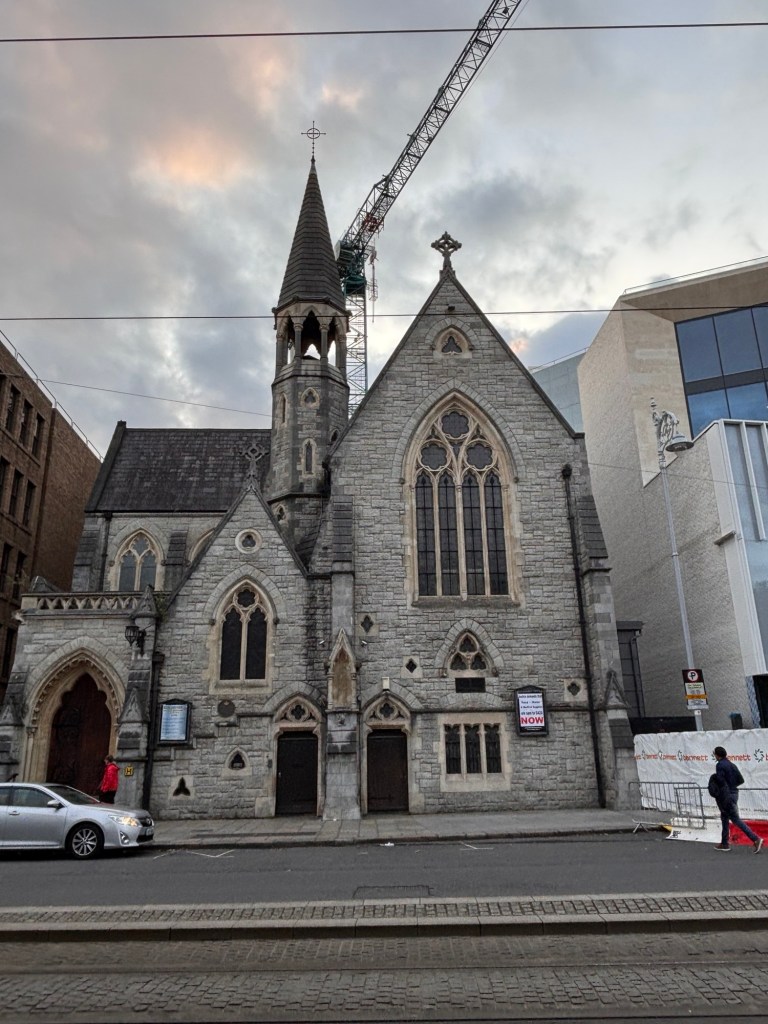
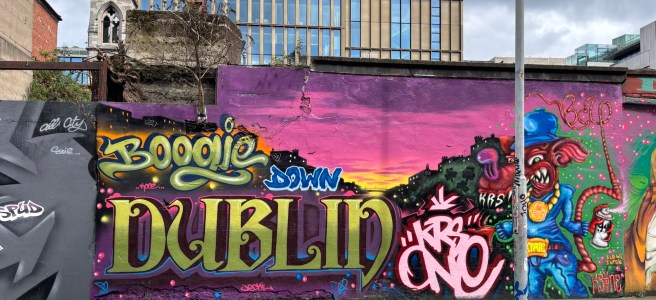
I’ve already posted many Irish doors from my trip in June, but not this one:
This is the Dublin Unitarian Church, which I walked by many times before realizing what it was. The church was right near our hotel, but so “tucked in,” I didn’t notice it until the very end of my time there.
It’s clearly in the gothic style, similar to last week’s doors. I guess I like “recessed arches.” (Thanks to Suzette for naming them for me.) And look at those cool hinges.
Seriously, this church has NO breathing room on either side. By the time I noticed it was a Unitarian Church, it was time to go home. I never got to see the inside. The doors were locked both times I tried. ☹️
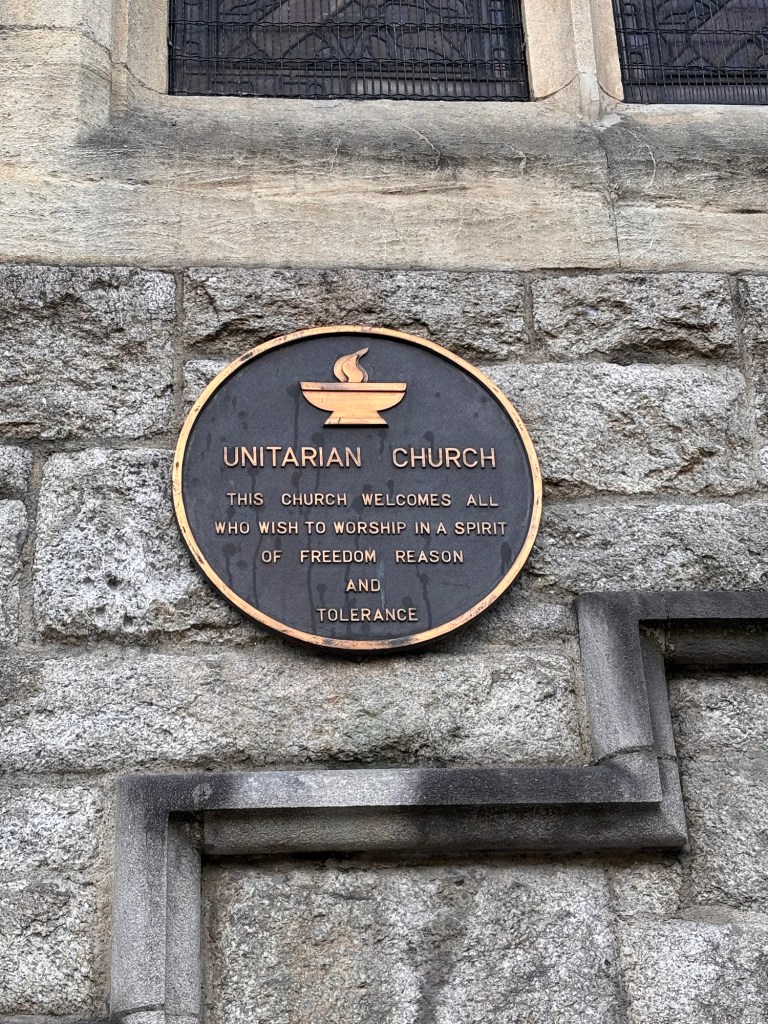
Similar to Unitarian Universalist churches in the USA, it uses the flaming chalice symbol.
What’s the difference between Unitarian Universalist and just Unitarian?
PerChatGPT:
American Unitarian Universalism (UU) emerged in 1961 from the merger of Unitarian and Universalist traditions, forming a non-creedal, pluralistic movement embracing humanists, theists, atheists, pagans, and others. It emphasizes individual freedom, social justice, and spiritual diversity without doctrinal boundaries.
European Unitarian churches, including Dublin’s, remain rooted in liberal Christian heritage, emphasizing reason, conscience, and the moral teachings of Jesus while rejecting the Trinity. They are typically more theistic and biblically grounded, though open and inclusive. In short: American UUism is multi-faith and post-Christian, while European Unitarianism is liberal Christian with freedom of belief.
For more Thursday Doors, see Dan’s blog No Facilities.
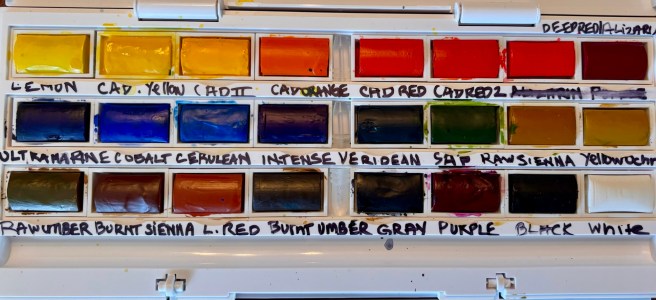
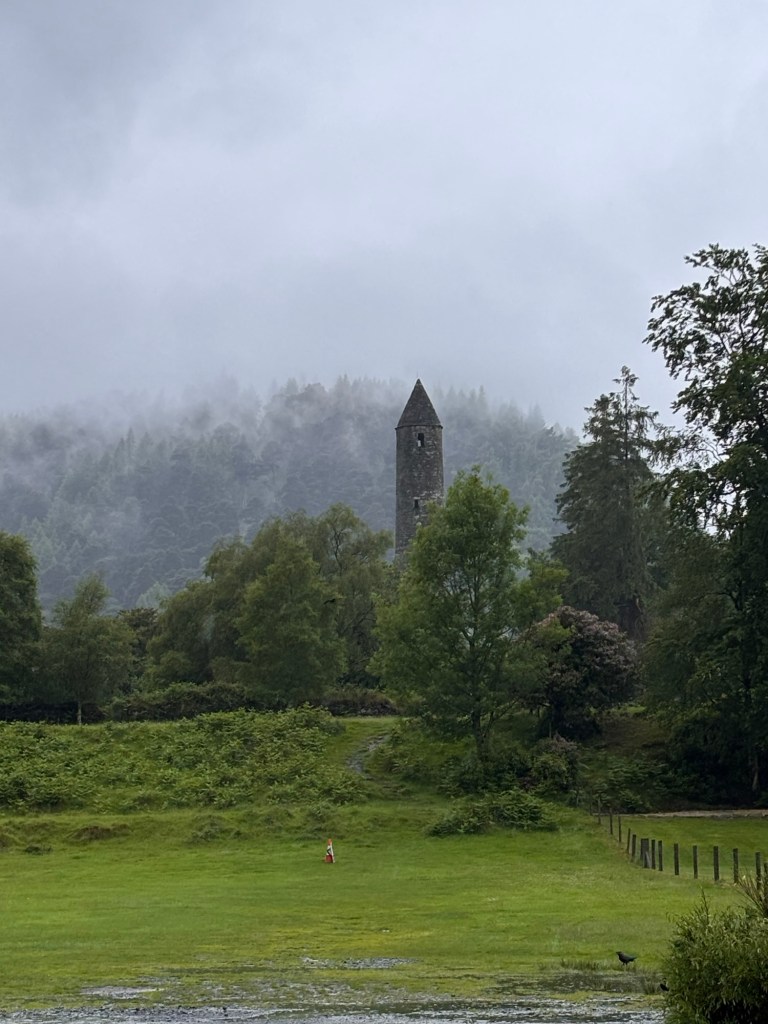
Given the tremendous amount of interest among my fellow retired ladies in painting landscapes, I could not wait until the next class to try one—a misty one, of course.
Here’s my inspiration photo from my misty trip to Ireland in June:
The round tower at Glendalough—a medieval monastery in County Wicklow, IrelandThis is 9×12” watercolor block paper. I spent about 1.5 hours on it. I used a hairdryer to dry the paper between layers.
I’m going to ask the teacher for feedback/tips next class. I’m actually sad we don’t have class this Monday due to the holiday.
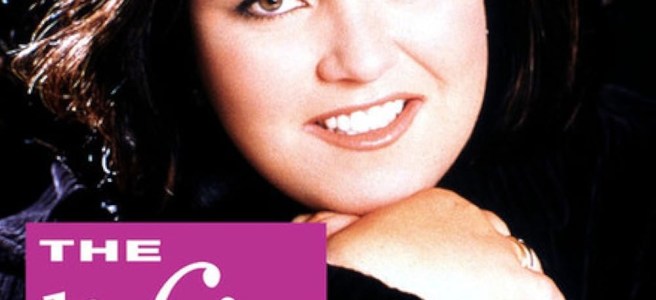
Like Sex and the City, Rosie O’Donnell is very aligned to me culturally.
In case you don’t remember the 1990s, Rosie O’Donnell was HUGE—one of America’s biggest cultural figures. Her daytime talkshow The Rosie O’Donnell Show won multiple Emmys and the media nicknamed her “The Queen of Nice.” She was truly a household name. I watched her a lot. She adopted her first child Parker in 1995, the same year I became a mom. She kept me company during the day when I was home with my kids. She was funny, kind, warm and loved Broadway musicals like I did.
In the 2000s, her image shifted as she came out publicly and became a strong advocate for LGBTQ+ rights, which made me like her even more. Later, when she was on The View, I didn’t watch her as often because I was back working, but I know that’s when her public fights with Donald Trump really ramped up. My recollection is that it was primarily a beef between two New Yorkers that had history and absolutely hated each other in a way that only two New Yorkers can.
Well, lo and behold, thirty years later, Trump is the most authoritarian President the United States has ever seen and Rosie has escaped to Ireland.
In fact, since I discovered her TikTok and Substack shortly before my trip to Ireland, I’ve been following her time abroad closely. She seems to really love living in Dublin, although she misses her family. I even went to the Dublin comedy club where she had been practicing her act for the Edinburgh Fringe Festival. By all accounts, she was a smashing success there. She plays Australia next.
I’m happy for Rosie that things are going well for her abroad, but I’m very aware of the absolutely dystopian reasons she left the country.
We are in uncharted waters now.
We live in a time when an American President publicly threatens to revoke a natural-born American’s citizenship for no reason other than that he just really fucking hates her.
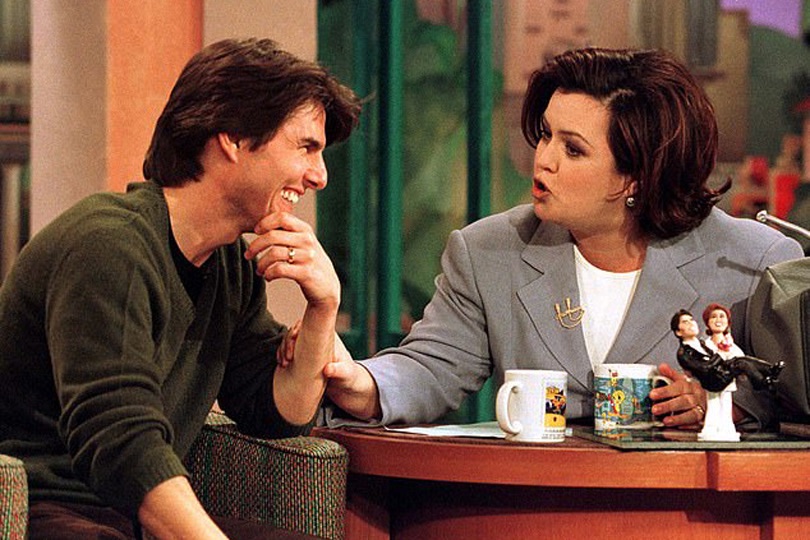
Tom Cruise on The Rosie O’Donnell Show (and BTW, good on Tom for declining to accept a lifetime achievement award from Orange Mussolini at The Kennedy Center)
My parents have traveled a lot. They’ve been to many countries and seen many things. And one thing I’ve noticed is that they’ve forgotten quite a few specifics of late. I’m not blaming them (they’re pretty darn old), but I’d like to not forget as much as possible.
Typically, I take photos of signs or menus to remember where I was, but now our phones tell us exactly where each pic was taken (which is handy).
In any case, this post is mostly for me, like a diary. And possibly for my kids or grandkids who may someday wonder where exactly we went in Ireland on that trip we took back in 2025.
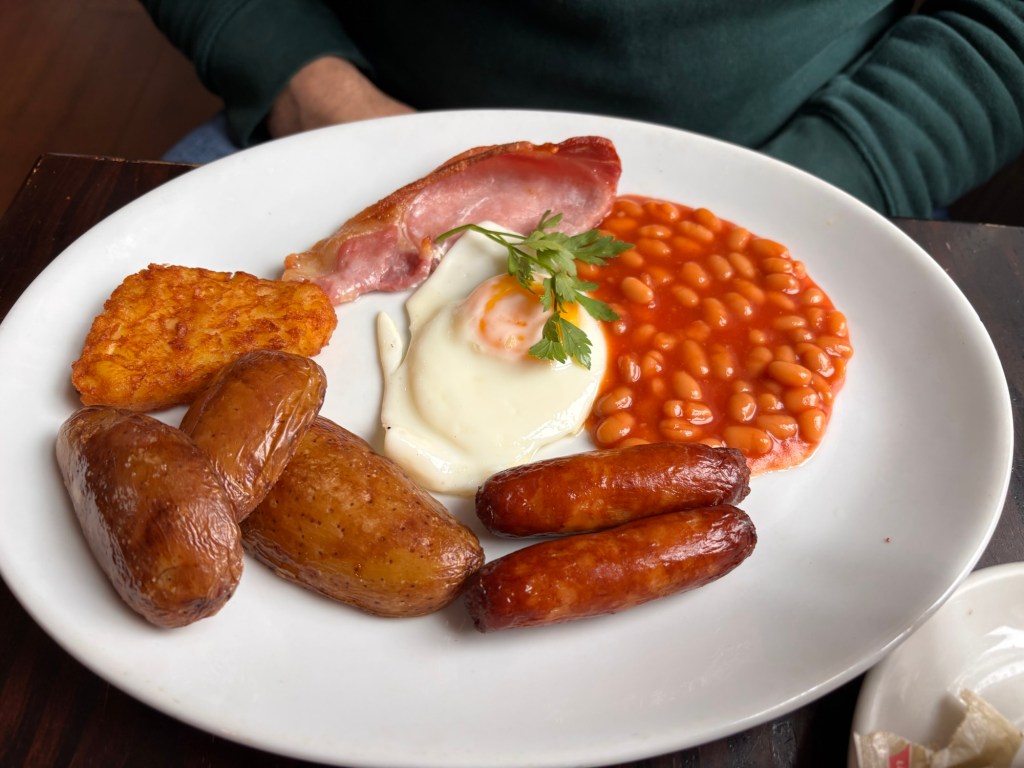
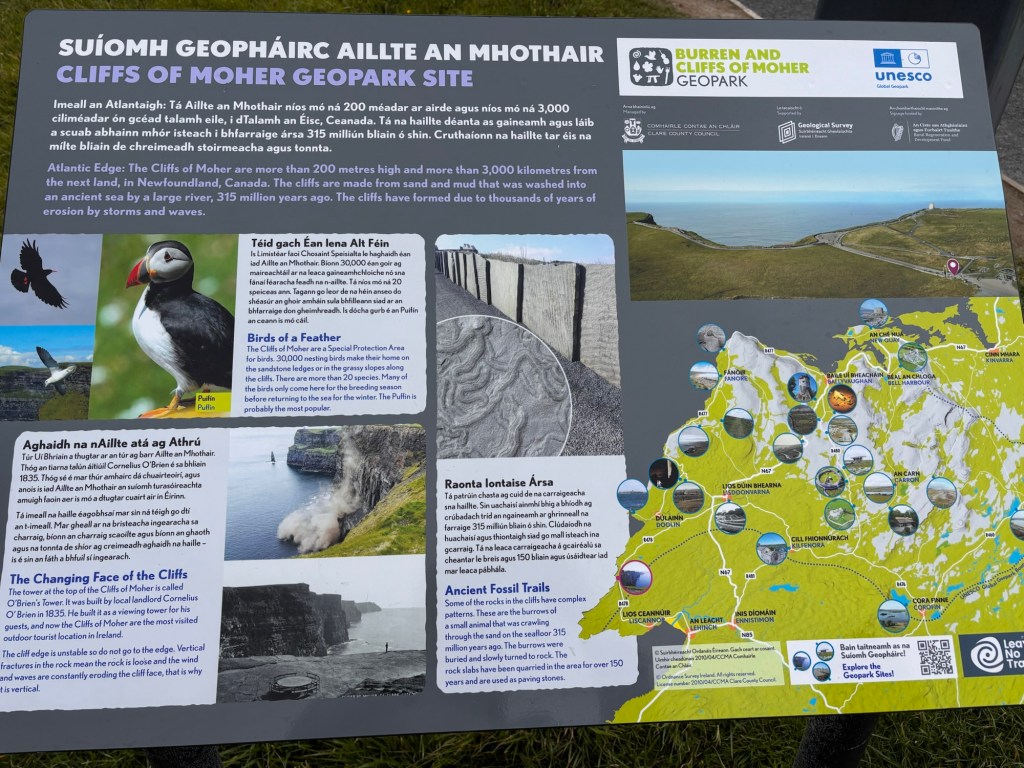
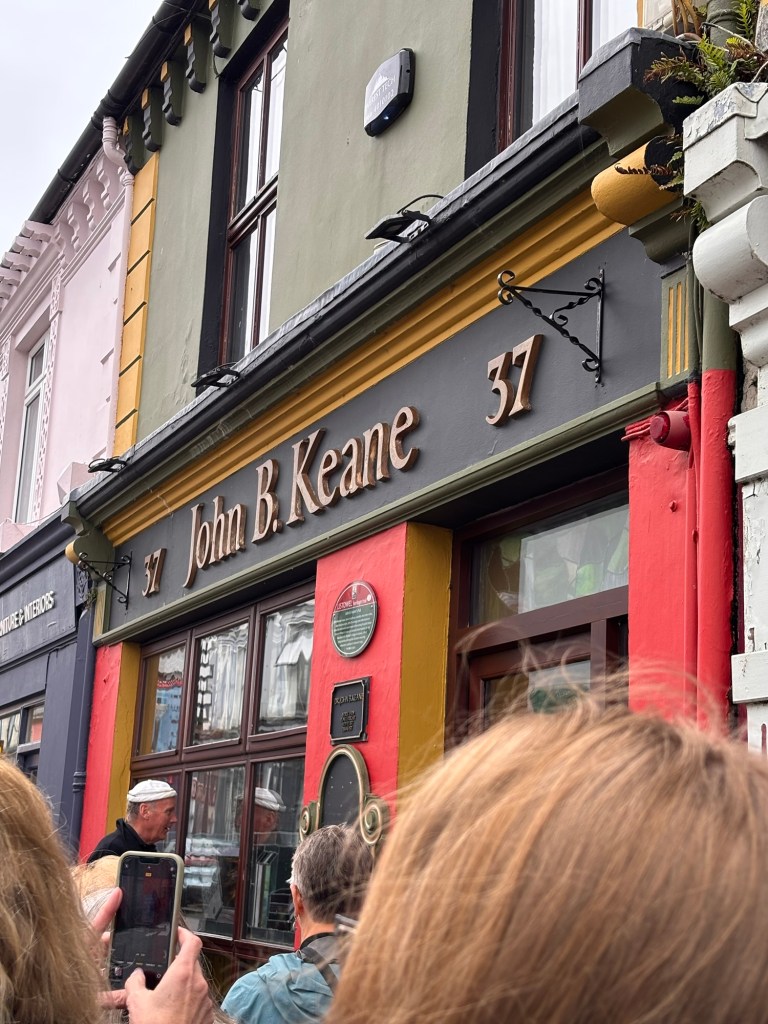
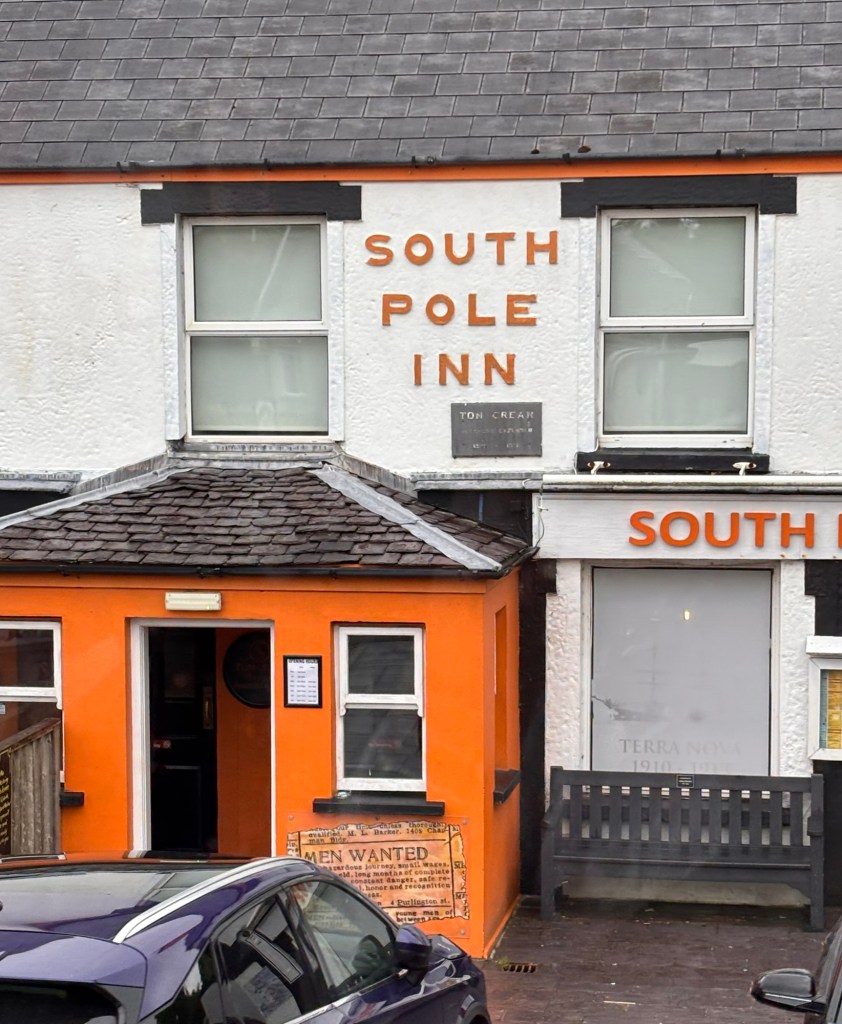
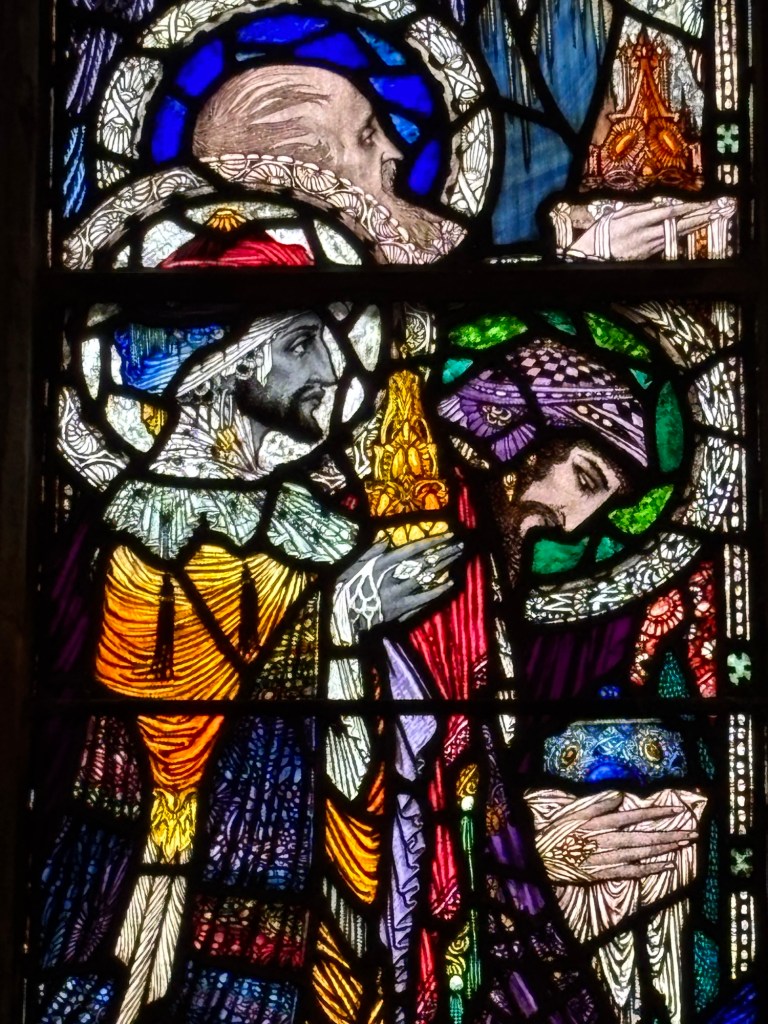
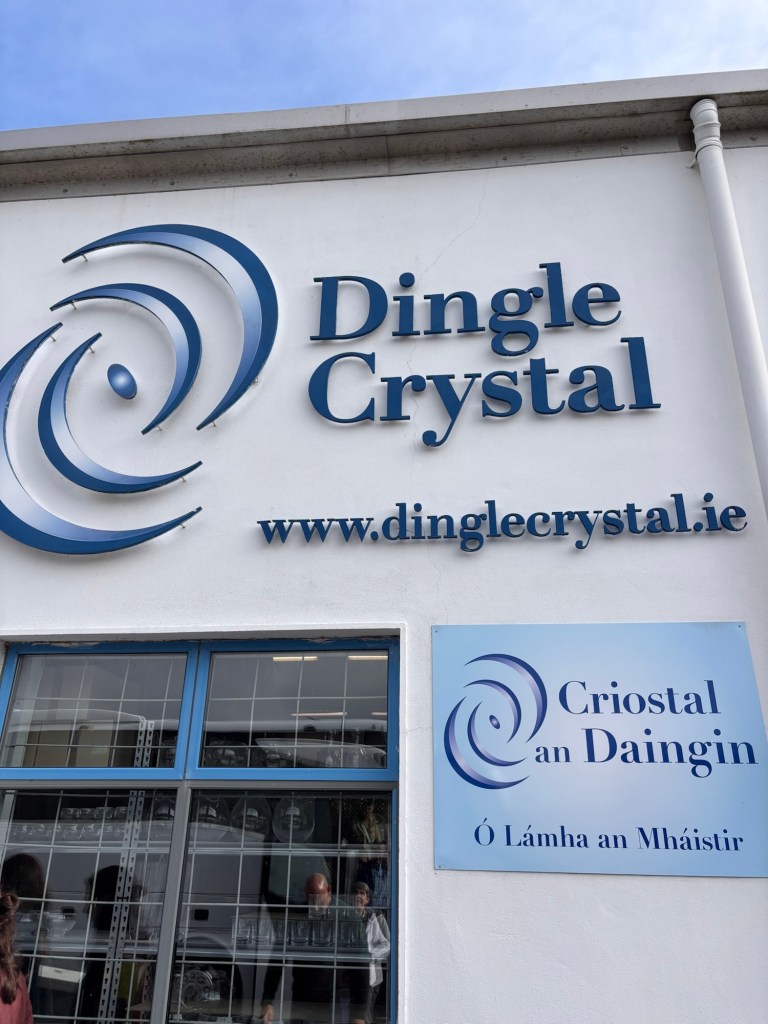
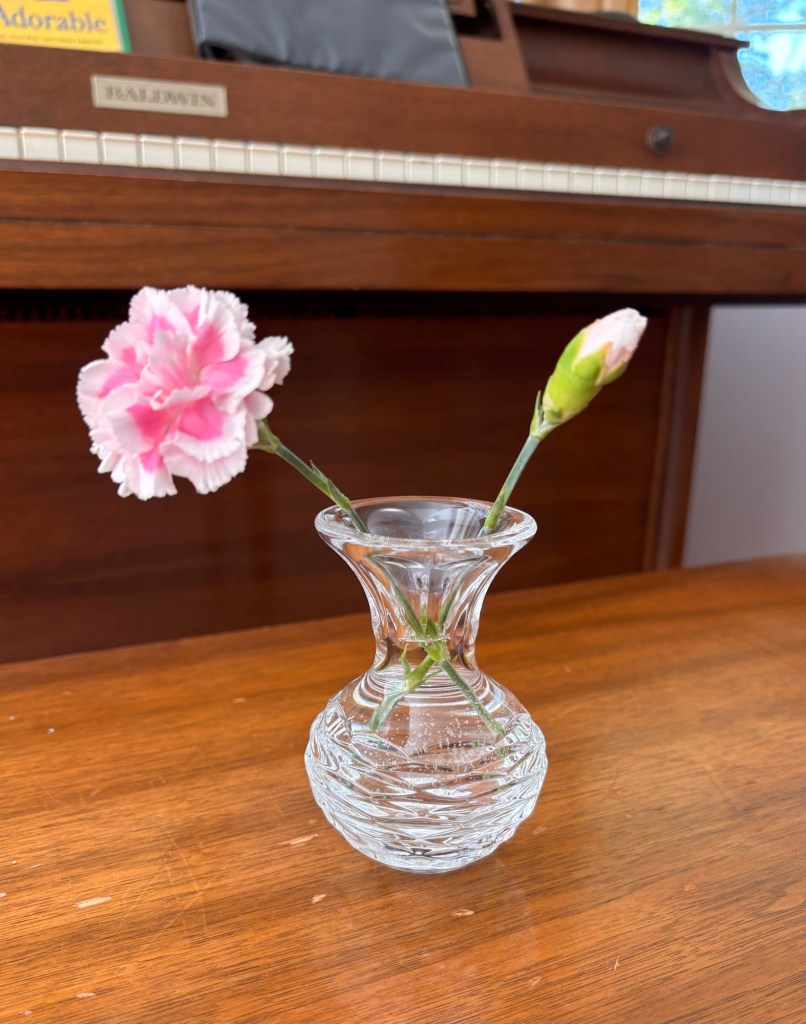
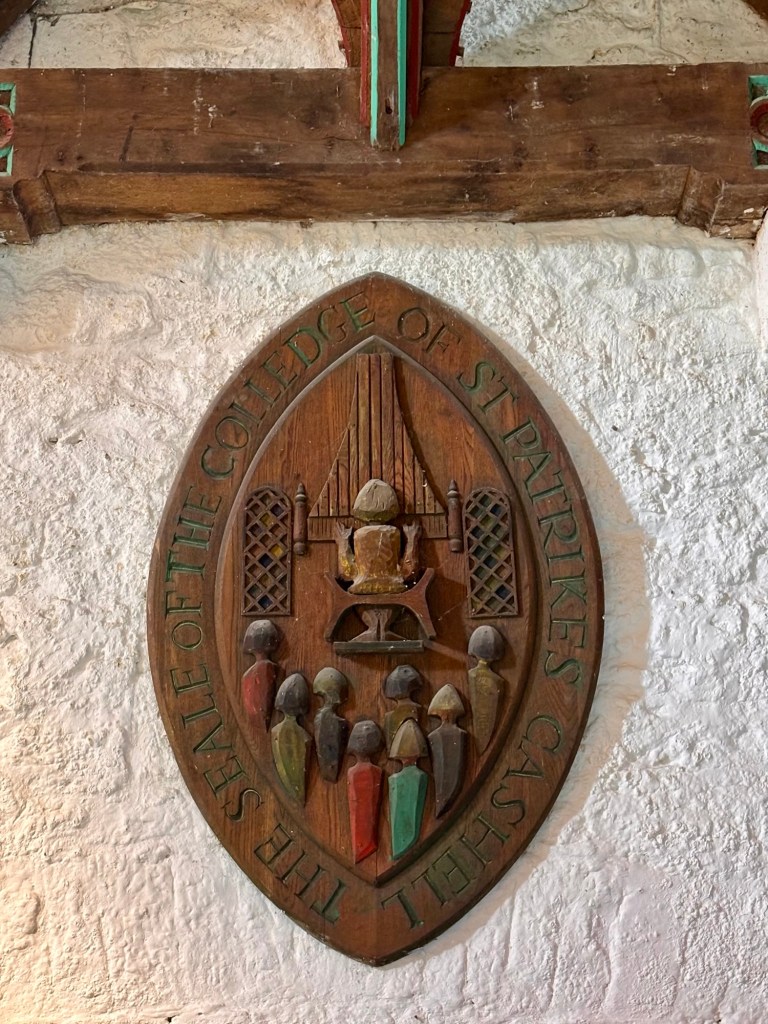
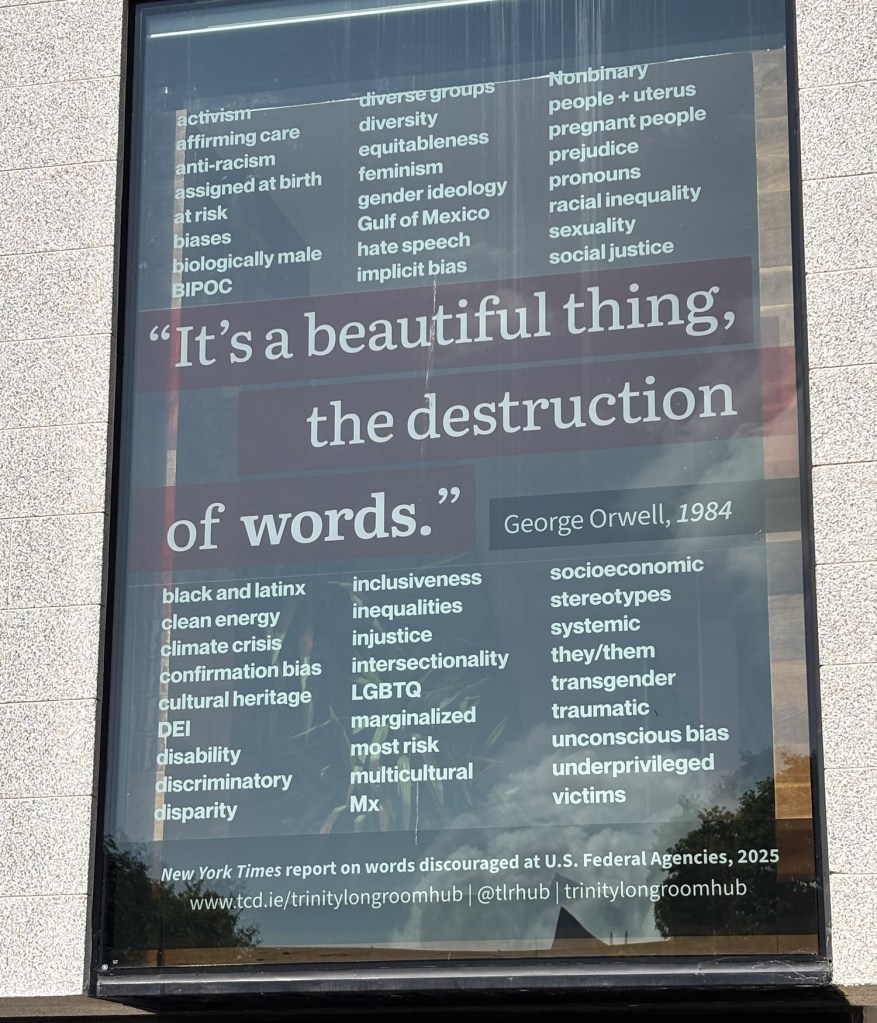
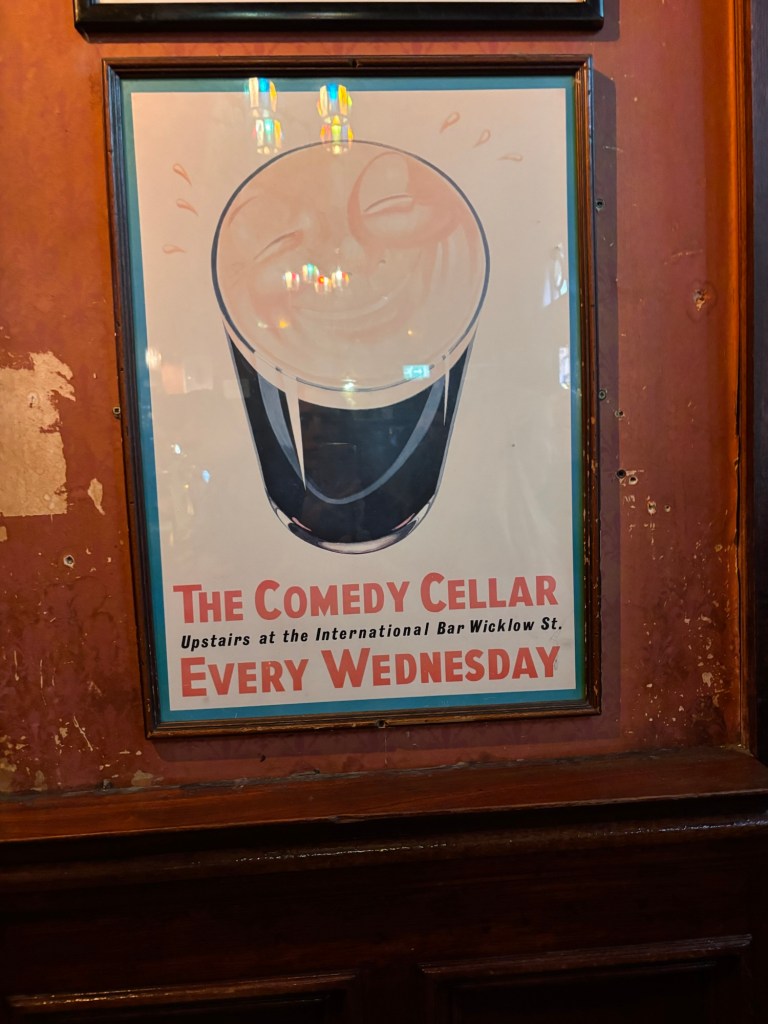
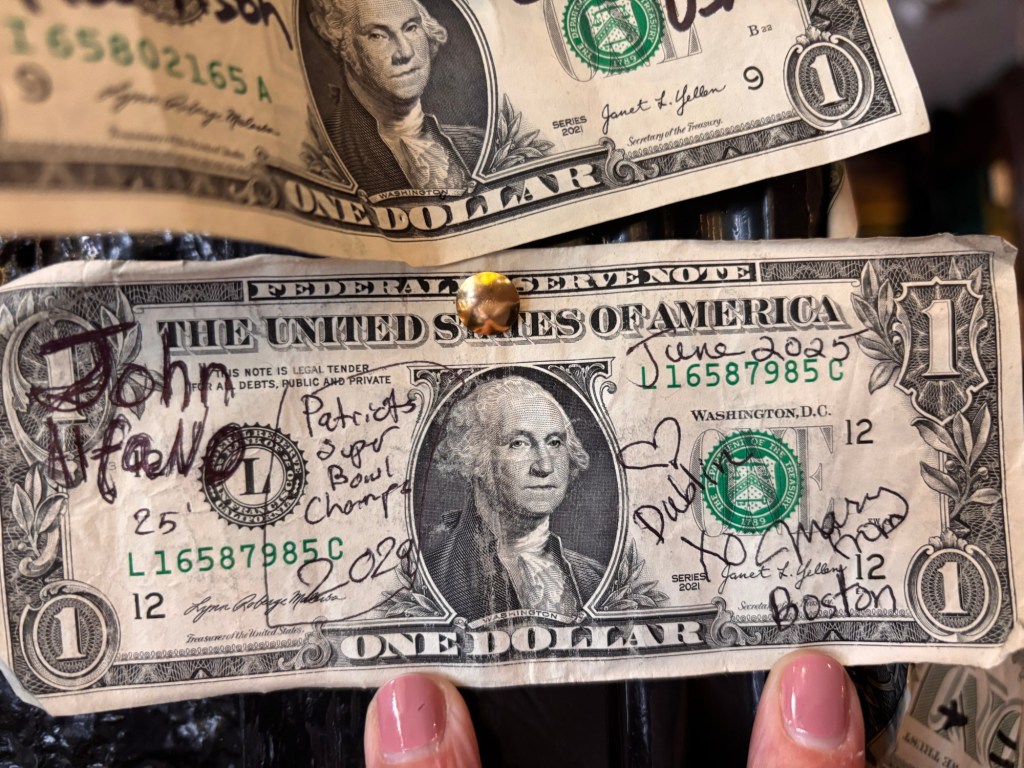
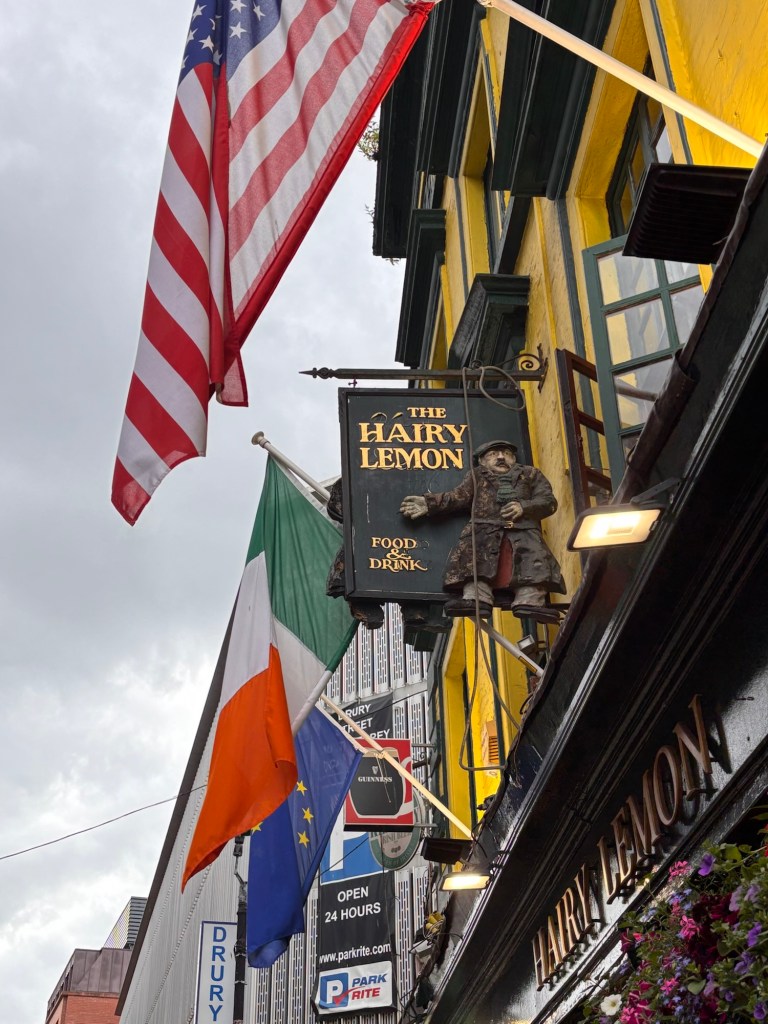
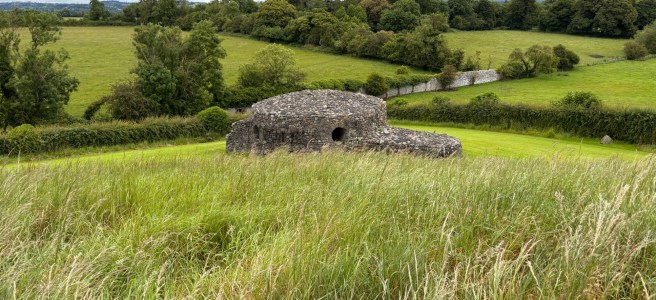
Barry’s Tea in our room at the Old Ground Hotel in Ennis. I thought this was a good sign because “Barry” was my great grandmother’s last name! Barry’s is one of 2 major tea brands popular in Ireland. The other one is Lyons. We were told people are fiercely loyal to one brand or the other. Nobody ever switches brands.Irish breakfast at Café Aroma, Ennis This document is the 1916 Proclamation of the Irish Republic, one of the most important texts in Irish history. We saw it everywhere. This one is in Ennis. Here’s the sign at the Cliffs of Moher. Everything is written in both English and Irish (aka Irish Gaelic)—it’s not a dead language. People still speak it and kids are required to learn it in a school.My dessert at Henry’s Bistro & Wine Bar, EnnisWe took the The Killimer–Tarbert Ferry across the Shannon River in western Ireland. It connects Killimer, in County Clare to Tarbert, in County Kerry This is the pub in Listowel (County Kerry) owned by Billy Keane, son of beloved Irish playwright John B. Keane. Billy told us many great stories and (because it was my birthday) I was selected to play the part of a drunk patron being shooed from the bar with a push broom. I nailed it. 🤣This is The South Pole Pub in Annascaul, County Kerry, where we stopped for a drink on a rainy day. It was owned and run by Tom Crean, one of Ireland’s greatest polar explorers.Tom Crean (1877-1938) played a major role in Ernest Shackleton’s Endurance expedition, one of the greatest survival stories in exploration history. Handsome, right?In Dingle, we were lucky to get in to see the exceptional Harry Clarke stained‑glass windows in the Chapel of the Sacred Heart, part of the former Presentation Sisters’ convent on Green Street, now known as An Díseart – Institute of Irish Spirituality and Culture. A close-up of “The Three Kings” in one of the Harry Clarke windows (the faces, wow)This is where we saw a crystal cutting demo and I bought a cute little bud vase with Irish beehive design. It’s signed by the founder and master cutter Sean Daly.I managed to get it home unbroken in my carry-on, even though Irish airport security insisted on unpacking it! Slea Head Drive, The Blasket Centre and Gallarus Oratory in the Dingle Peninsula was the most spectacular day of the trip.I had my first Guinness at Curran’s Pub in Dingle and it was good. Not all pubs in Ireland serve Guinness correctly. You have to ask the locals.This is the lobby of the Milltown House in Dingle where we stayed for two nights. This horse—I mean dog—lives in the hotel. He’s a huge Irish Wolfhound named Seamus.We had a truly delicious dinner at Doyle’s Seafood in Dingle. I heard a great guitarist/singer at this pub in Dingle. He had the whole place singing along.The sign from the Monastery in Adare explains that the many pigeons you see nesting in the walls of ancient buildings in Ireland were actually a major food source for the monks. 🤢The choir logo (for lack of a better word) from the choir quarters at the Rock of Cashel. As a choir lady myself, I had to get a photo of it. Apparently they treated those 15th century choristers very well around town! Free food, etc (if they flashed the logo)We had a nice cocktail party and group dinner here at “The Left Bank” in Kilkenny. We stayed nearby at the Pembroke.Explanation of another fascinating, ancient spiral 🌀 carving in the Glendalough Visitor Center, County Wicklow.This one has a cross in the middle of the spiral so they think it’s from a later period than the ones at Newgrange.Delicious lunch at Avoca Fern House, about 35 minutes south of Dublin in Kilmacanogue, County WicklowArtist and activist Grace Gifford Plunkett’s cell at Kilmainham jail (subject of Rod Stewart’s song Grace, she married her husband just before his execution)This is a huge sign on a building in the main courtyard of Trinity College near the Book of Kells entrance.An interactive display at the EPIC Museum in Dublin told me I’m part of the large Irish diaspora with the Barry nameWe stayed at the Iveagh Garden Hotel in Dublin, which is in a fantastic location. The ancient Gleninsheen Gold Collar at the National Museum of Archaeology in Dublin. In addition to the magnificent gold collection, the preserved human “bog bodies” are a highlight of this major FREE museum. The International is a centrally located bar with stand-up comedy shows upstairs AND in the cellar. Rosie O’Donnell (who left the US for Ireland due to Trump) has been honing her set here over the past few months. We pinned a dollar on the wall at The Hairy Lemon in Dublin.I finally got my Fish and Chips there. It was good! They served it with pea mash—unclear if the mash was for dipping the fish or fries—or just eating plain.A small sign in the exterior of the Unitarian Church of Dublin, which was very close to our hotel (Iveagh Garden)Pride and Diversity flags were flying all over Dublin.Ireland is a successful, progressive country in 2025. It has great public schools, free healthcare, free college, legal abortion, same sex marriage, and is the second wealthiest country in Europe, believe it or not! We were told on multiple occasions that the Catholic Church is used mainly to “match, hatch and dispatch” and that young people rarely attend mass. Multiculturalism is a goal there.
On our last full day in Ireland, we figured out how to take a commuter train from Connolly Station in Dublin to Drogheda (about 45 minutes away) and then grabbed a cab to the Brú na Bóinne Visitor Center—commonly referred to as “Newgrange.”
Brú na Bóinne is one of the world’s most important prehistoric archaeological sites. Older than both the pyramids and Stonehenge, it’s home to the massive passage tombs of Newgrange, Knowth, and Dowth. With advance tickets, you can tour Knowth and Newgrange with a guide.
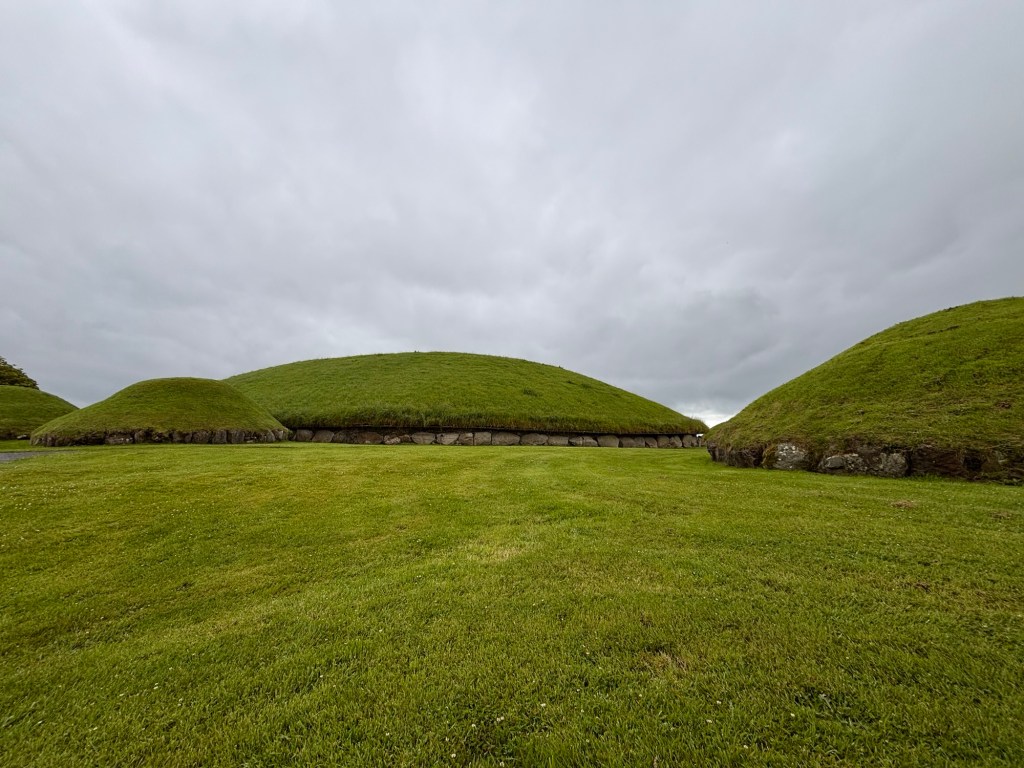
Knowth (dating from 3,200 BCE)
Knowth includes one large central mound surrounded by 17 smaller satellite mounds.
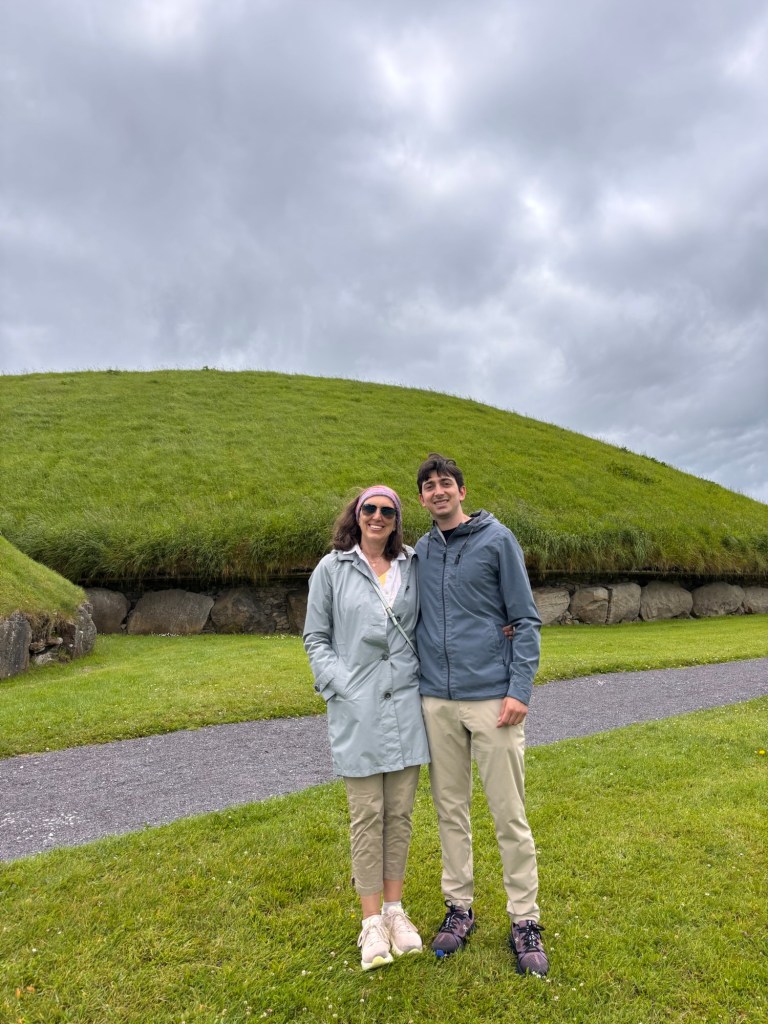
The large mound at Knowth (behind us) features two opposing passageways—one facing east and the other west—which are believed to relate to the equinoxes.
The decorated stones around the bases of the mounds are referred to as kerbstones. These large stones feature intricate megalithic art, including spirals, concentric circles, and other abstract motifs carved by Neolithic peoples.
Hard to make out, but experts believe this is an ancient lunar calendar on a kerbstone at Knowth.
The view from atop the largest mound at Knowth. We happened to visit on Father’s Day (which is the same day in Ireland) and there were Irish fathers and sons visiting too! ☘️
You can ascend to the top of the largest mound at Knowth and actually go inside the Newgrange tomb through a narrow, rocky passageway to experience this 5,000 year old sacred space which was engineered with astonishing precision to align with the solstice sun, when it miraculously lights the inner burial chamber.
Newgrange (3,200 BCE)
It’s a surreal feeling to stand in an underground chamber built by humans 5,000 years ago. At one point, the guide extinguished all light in the tomb, submerging the chamber into pitch blackness, and then demonstrated with an artificial light how the chamber lights up (for about 17 minutes) on the winter solstice.
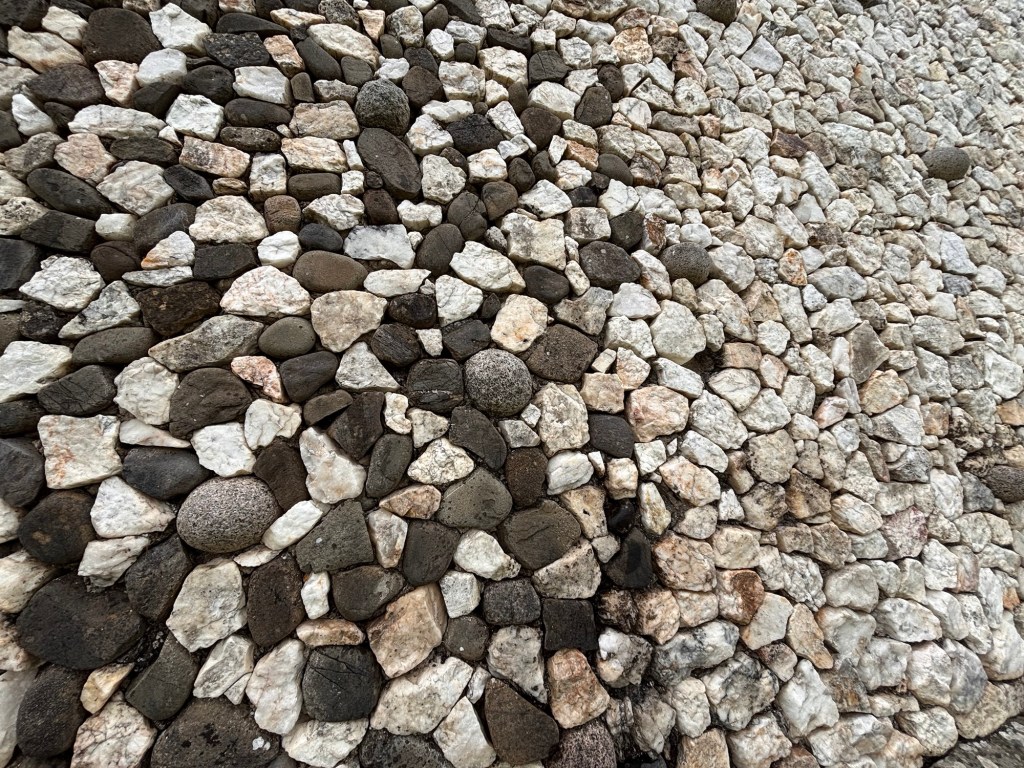
The entrance to Newgrange—the opening above the door that allows light to enter is called “the roof box.” It was ingeniously designed to align with the rising sun during the winter solstice, allowing sunlight to illuminate the inner chamber—an extraordinary feat of Neolithic engineering and astronomy.Detail of the Kerbstone at the entrance to Newgrange. No photography was allowed inside the tomb (a rule I reluctantly obeyed!), but there was a magnificent stone inside the chamber with a similar (but perfect) tri-spiral.This is a postcard picture of the tri-spiral in the chamber. Isn’t it beautiful? What do you think it means? The experts can only guess. The exterior wall of Newgrange This is a replica of one corner of the Newgrange chamber in the Visitors Center. It shows how the light first comes in on the winter solstice. The actual chamber was much bigger and very tall when we stood inside it, with large recesses on three sides for sacred objects, including one with the perfect tri-spiral stone.
It is believed that the passage tombs of Brú na Bóinne were Stone Age burial sites for high-status individuals, where cremated human remains were placed in stone basins within the chambers. These tombs reflect a Neolithic belief system centered on death, ancestor worship, and a deep reverence for cosmic cycles—especially the sun.
In addition to human remains, archaeologists have found animal bones—including those of cattle, birds, and dogs. It is thought they had ritual significance, possibly as offerings or symbolic companions in the afterlife, reflecting complex spiritual beliefs that linked humans, animals, and the natural world.
Pre-Christianity is fascinating, right?? Because nobody really knows what they believed or were actually thinking! What do you think?
After Kilkenny, it was onwards to Dublin—the great capital city of the Republic of Ireland. We approached Dublin from the south, which was described as the “posh” side of town.
After a lovely lunch surrounded by ancient giant trees at The Fern House (and quick shopping in the attached Avoca store), we headed to the city for something completely different— a moving tour of Kilmainham Gaol.
The Fern House Cafe
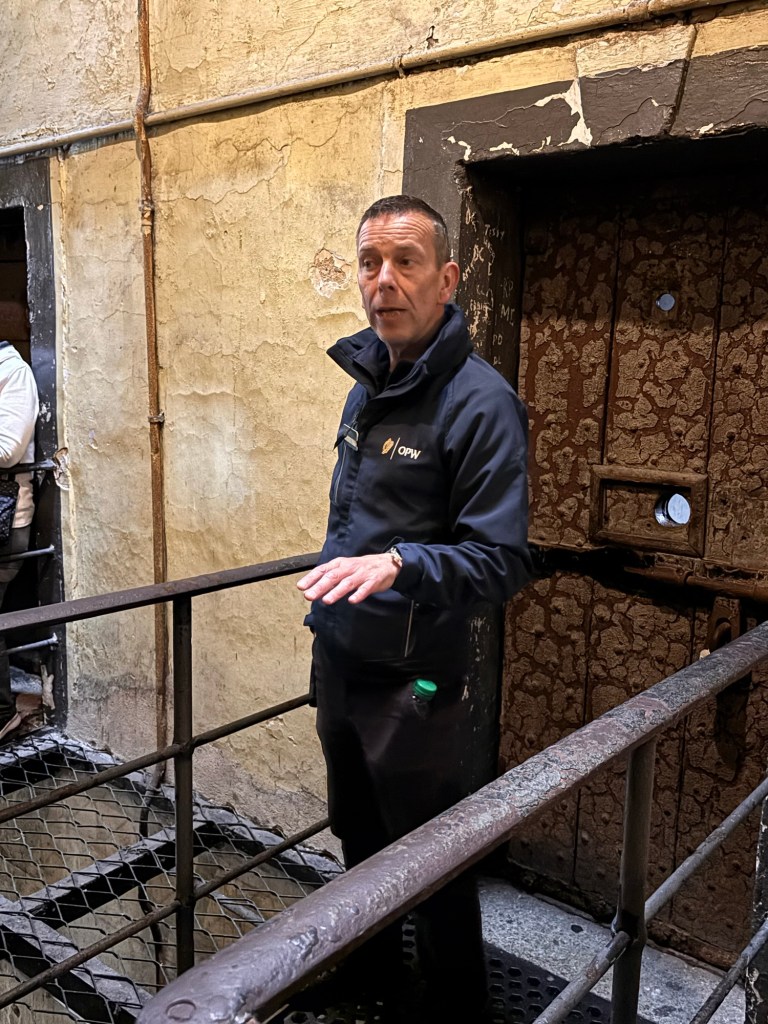
Our tour guide at the Gaol (jail) was very dramatic and deadly serious about Ireland’s history and struggles for independence against “the colonizer” (aka Great Britain).
This historic prison is a powerful symbol of Irish nationalism, as it held many leaders of Ireland’s rebellions, including the 14 men executed after the 1916 Easter Rising. (On the way to the prison, the guide played Rod Stewart’s beautiful song Grace about Joseph Plunkett—one of the 14 rebellion leaders—who was allowed to marry his childhood sweetheart Grace shortly before his execution.)
Kilmainham Gaol
The next morning, the sun came out and we did a walking tour and saw many of the city’s iconic sites:
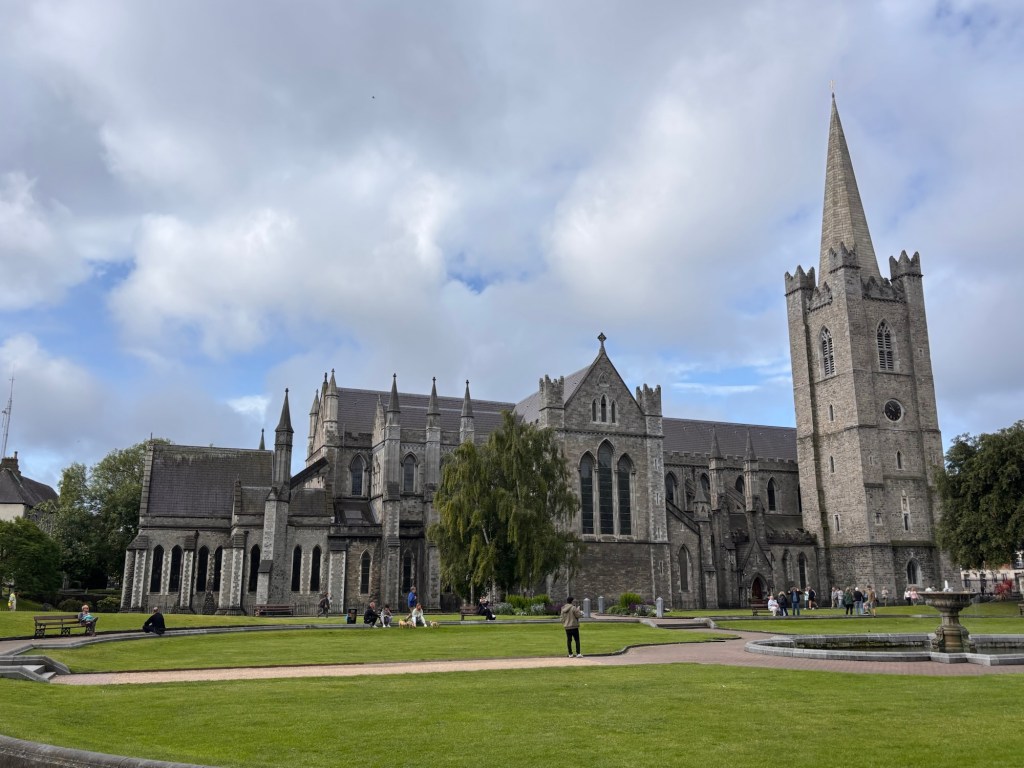
St. Patrick’s Cathedral, Dublin
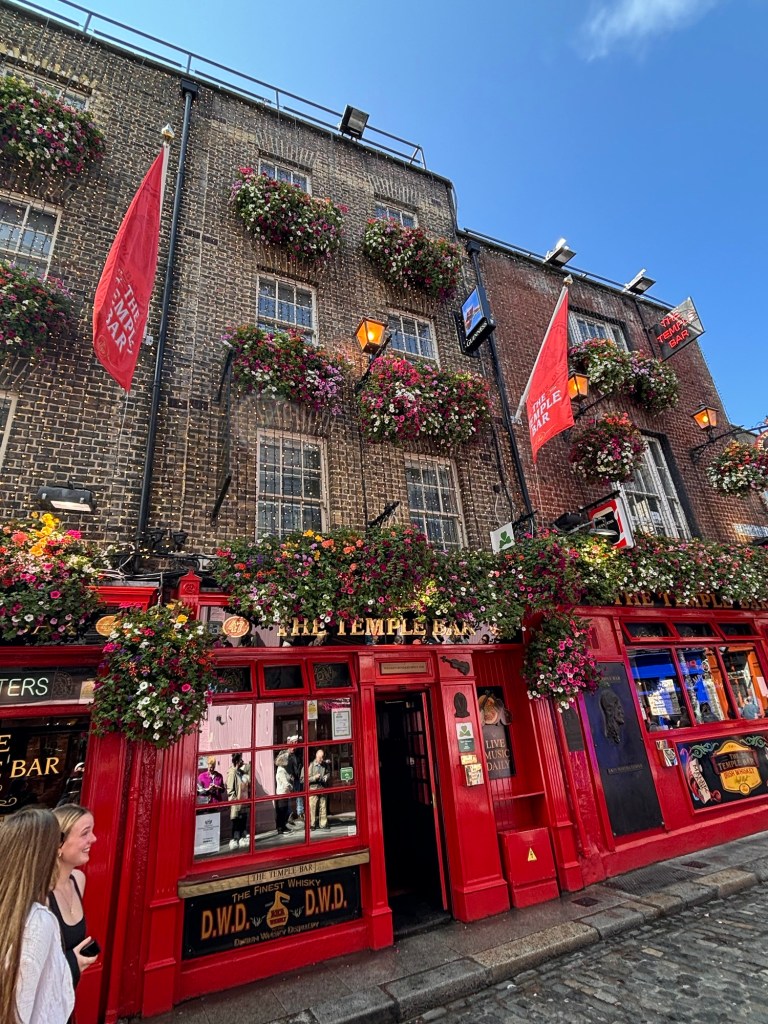
The Long Library at Trinity College, Dublin, which you enter after viewing Ireland’s most famous artifact—The Book of KellsThe Temple Bar, Dublin
Meanwhile, my son John (who had been in Sweden for work) joined us in Dublin, which was fantastic. It was so great to spend time with him!
My son and me at a pub on Camden Street
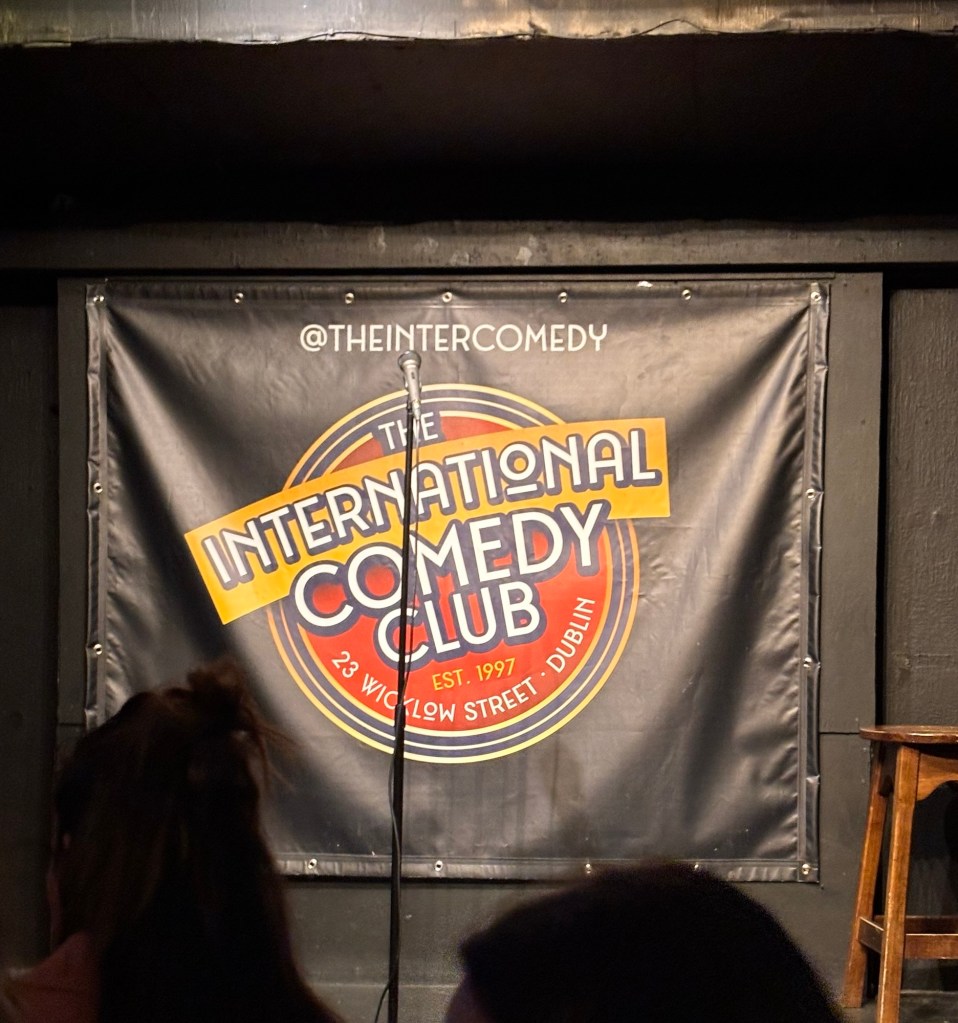
We did several more museums with him, including EPIC (the Irish Emigration Museum) and the National Museum of Archeology. We also went to many pubs, stores and even a sold-out comedy show, where we were the only Americans and the comedians knew it. 🤣 (They did not hold back on the Trump jokes, which was awesome.)
Check out the International for great stand-up
And NOW, if you’re still reading, here’s the most amazing thing that happened in Dublin. You may remember that this trip was inspired, in part, by my Irish roots. Thanks to my mother’s extensive genealogy research, I have a lot of information about my great grandmother’s family, including the names and addresses of her parents—and their parents.
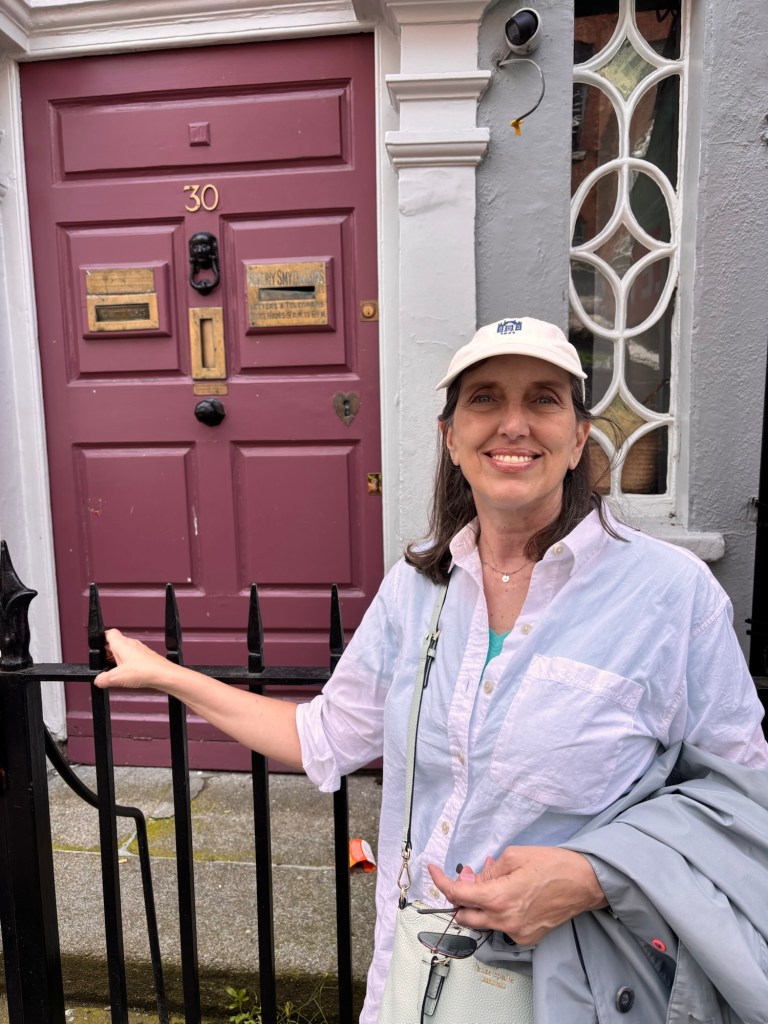
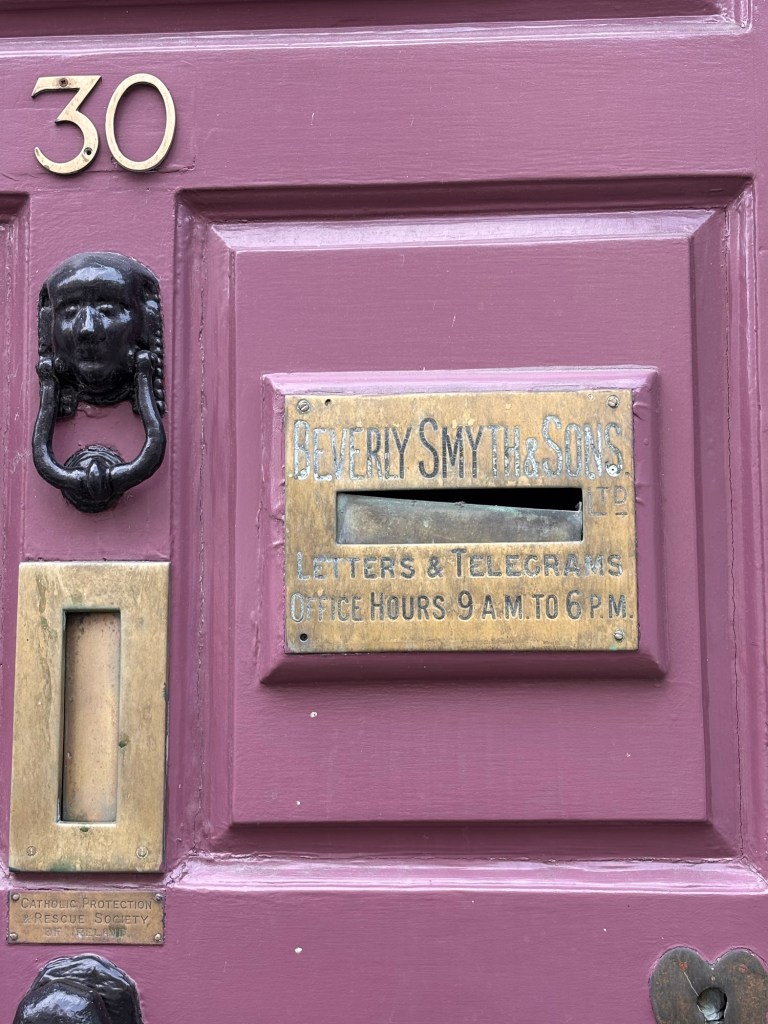
One night we walked by the address of the home where my great grandmother’s mother grew up and believe it or not, her father’s name is STILL on the door: Beverly Smyth.
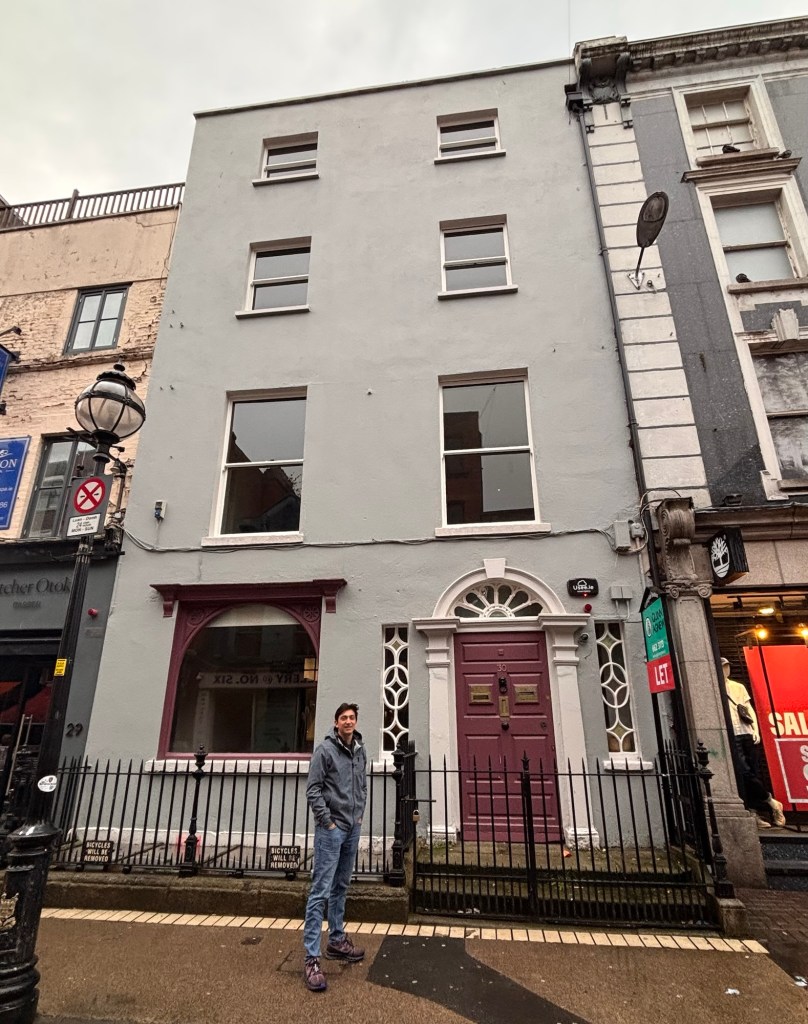
30 South Anne Street is right in the middle of all the action in Dublin City Center—just off Grafton Street. Beverly Smyth (1817-1898) was my great, great, great grandfather. The company he started in 1846 (Beverly Smyth & Sons) is still in existence. It’s now a well-established Irish moving and storage company known as Oman Beverly Smyth.My maternal grandfather, Henry Beverly Powell (1906-1964) reportedly hated having “Beverly” as his middle name and only ever went by Henry B. Powell, but it turns out that Beverly (his mother’s grandfather) was a successful Dublin businessman.
I also found the church where my grandfather’s maternal grandparents got married in 1879:
St. Andrew’s Church, Westland Row, Dublin
And of course, I went inside the church too, because I’m like that!
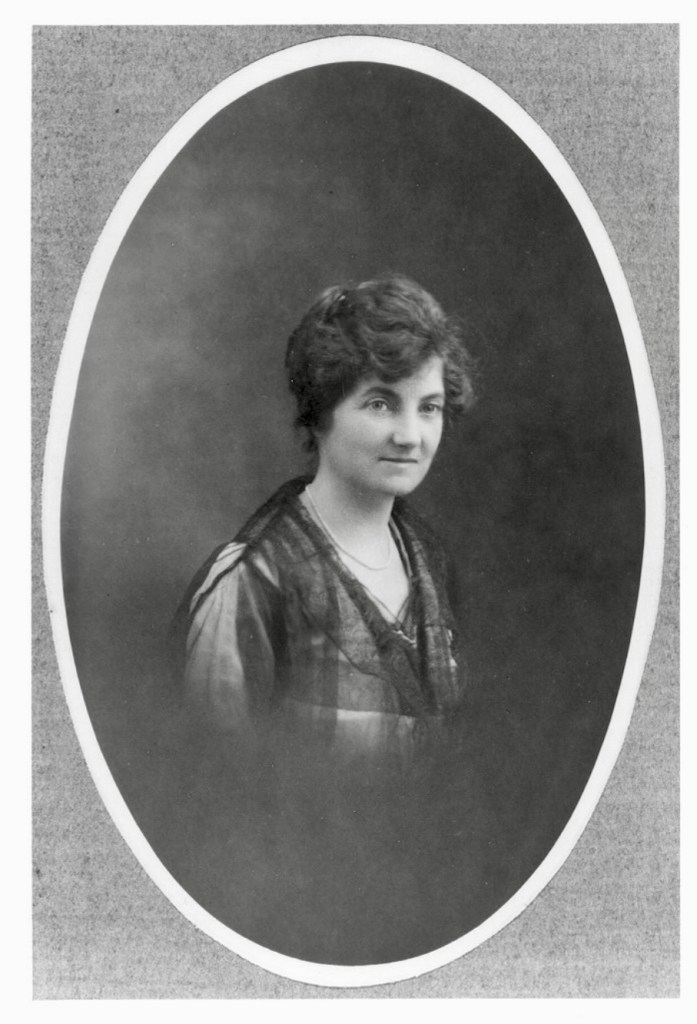
My great great grandfather John Barry (1846-1881) married Beverly & Bridget Smyth’s daughter Mary in St. Andrew’s Church in 1879.Their eldest child Mary Barry (so many Marys! Very confusing!!) was born a year later — in 1880. She then emigrated to America (Brooklyn, NYC) in 1903 at age 23. She died in 1952, just 12 years before her son (my grandfather).
I had two other Dublin addresses for the Barrys, but did not have time to see them when I was there, so I’ll have to go back.
But the bottom line is: I’m a DUBLINER people. My people were city folk. They were not digging potatoes in County Cork. So the next time I go to the Dubliner bar in Boston, I’ll know I belong.
My son John in front of his great great great great grandfather’s house in Dublin
It really is in a prime city location and currently up for rent! Here’s the street it’s on:
According to the realtor, the “Beverly Smyth & Sons” nameplate can never be removed because the property is on Dublin’s list of protected properties. So maybe someday my granddaughter will visit Dublin and see her great x5 grandparents’ home.
FINAL THOUGHT: we have far too many Johns and Marys in the family tree (on both the Irish and Italian sides). Giving your kids unique first names will help future generations keep it all straight. 😜
I got back Monday night from Ireland and it was a really great trip, though I did end up testing positive for Covid on Tuesday. I don’t feel too bad…just a slight sore throat and some coughing (no fever). (I am fully vaccinated.) I will be wearing a mask when out until next week and I’ve moved into the guest room, so my husband hopefully doesn’t get it.
I have too many pictures! After leaving the stunning Dingle Peninsula, we went to Kilkenny by way of the adorable thatched roof village of Adare and the iconic Rock of Cashel:
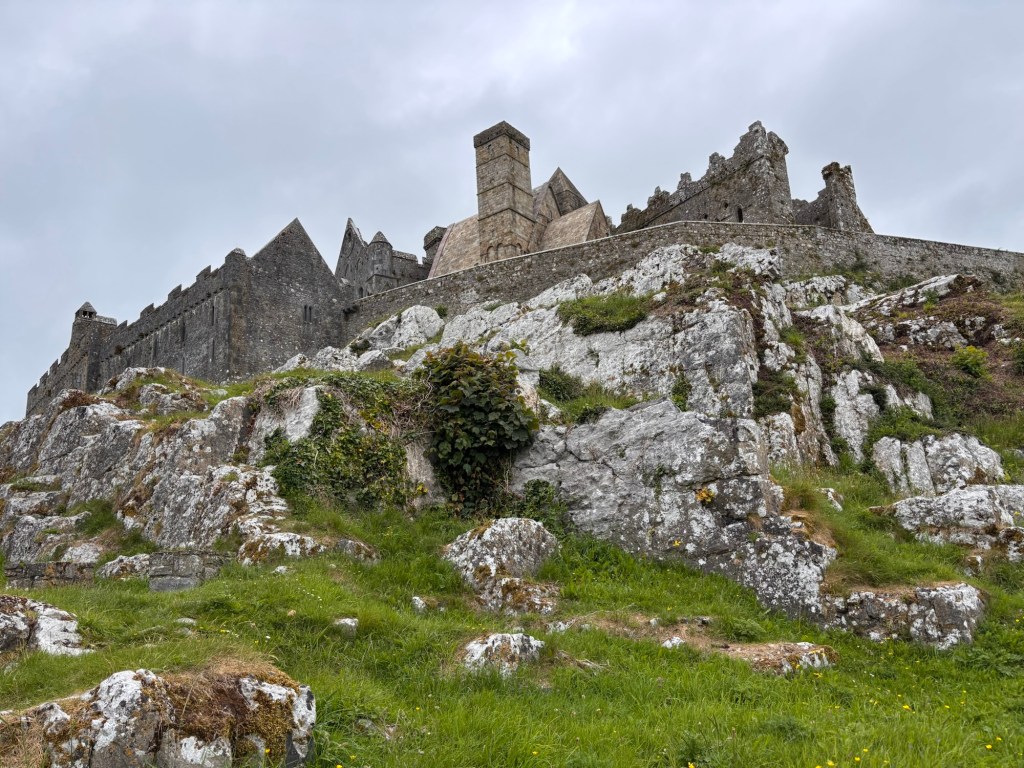
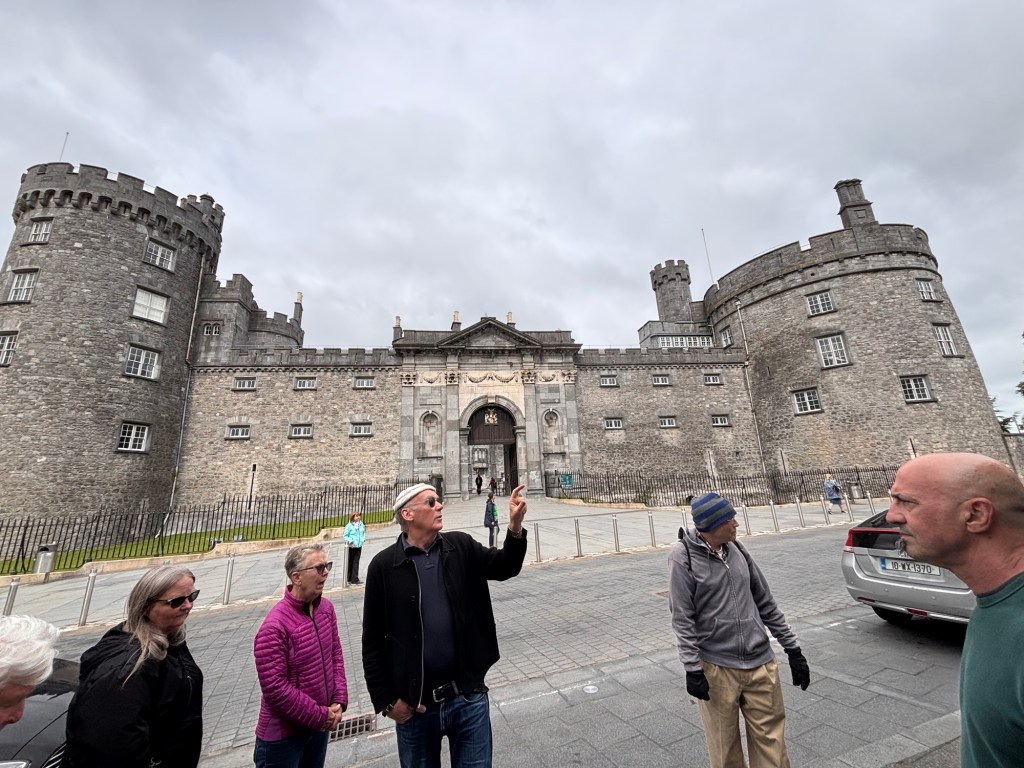
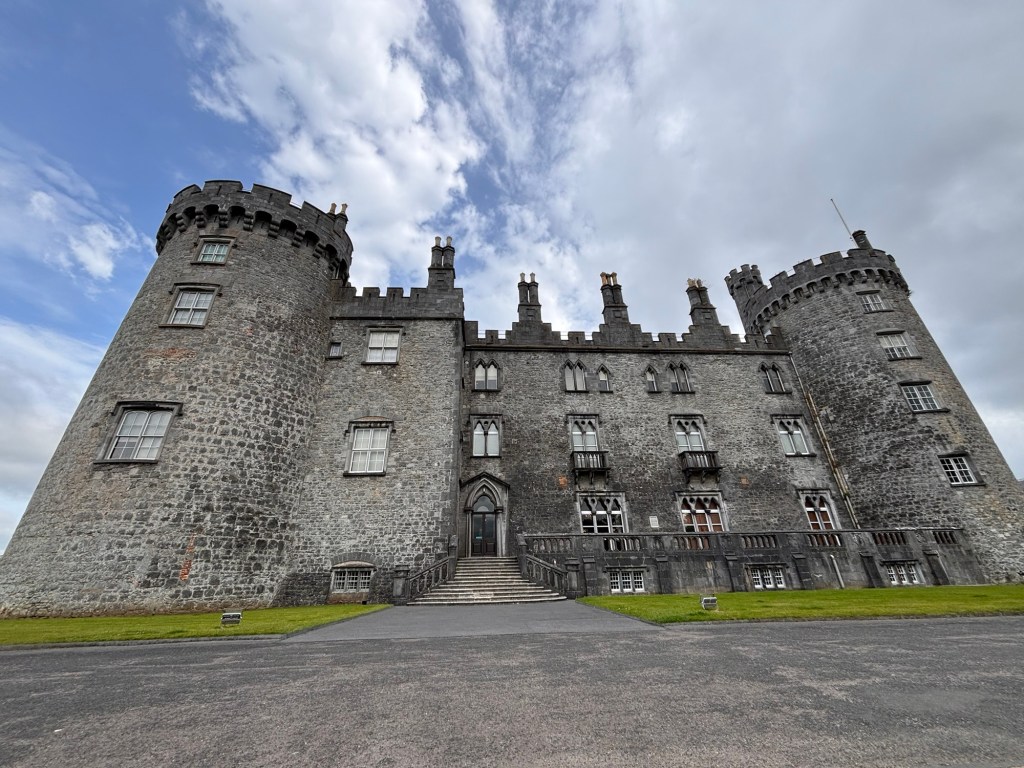
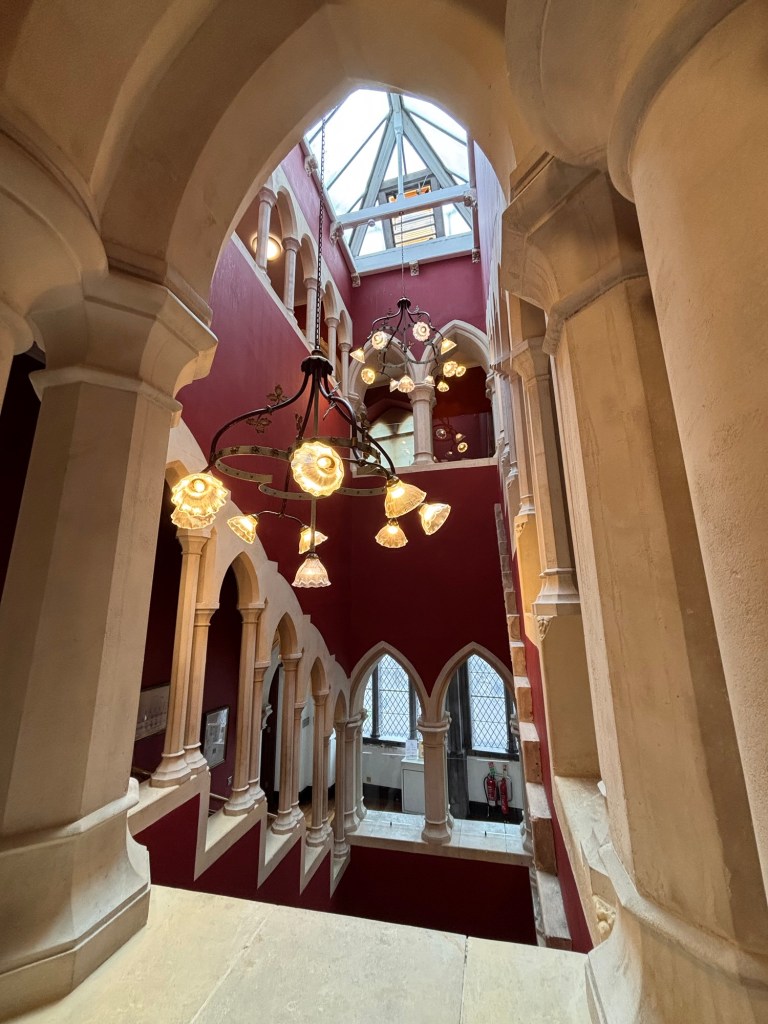
AdareThe very thick layers of thatchingOur tour group only allowed us to bring one carry-on sized bag, so this was my look almost every day: layers. I brought about 8 Eddie Bauer T-shirts, an Eddie Bauer long sleeved travel shirt & capris & my Land’s End raincoat. My ASICS sneakers are very comfy. And of course an umbrella— you gotta have a “brelly” in Ireland!The iconic Rock of Cashel is a major attraction Check out how my husband’s Google Pixel phone will remove all the people from his pics. (I kinda think that’s cheating.) The round tower at Cashel. Round towers are unique to Ireland and its medieval monastic ruins. Cashel is where St. Patrick supposedly converted the King Aengus to Christianity in the 5th century AD. “inside” The Rock of Cashel from the street belowOur tour guide Joe getting ready to lead us into Kilkenny castle Kilkenny Castle The “Moorish staircase” in Kilkenny Castle
After leaving Kilkenny, we went to Glendalough—a monastic site in County Wicklow, founded in the 6th century by St. Kevin. The weather was very misty/rainy that day, but I thought it added to the ancient mystique of the place.
Glendalough The round tower in the mist at GlendaloughSt. Kevin’s house at Glendalough A cute little red Irish deer at Glendalough The mist-covered lake at Glendalough. I needed both hood and umbrella that day.
A cat outside my window has awoken me early here in the westernmost part of Europe—the Dingle peninsula.
I’ve officially turned sixty and it’s OK!
I had two shots of Bailey’s before ascending the iconic Cliffs of Moher. Highly recommend.
Cliffs of Moher
The sun came out yesterday and it was spectacular.
“The Three Sisters” in the background View from Slea Head Drive, Dingle Peninsula I took a selfie with an owl (that takes skill people)
I’ve been to at least four pubs and had my first Guinness, which I liked. (I got a half pint, which you can do.) I’ve learned I do not like straight whisky.
Music abounds.
This GenX pub singer was great
They have free healthcare and college here! And I have not seen a single American chain—no Starbucks, no Dunkin, no McDonald’s. Weed is illegal here. So…🍻!
Billy Keane (son of writer John B Keane) behind the bar at his pub in Listowel
![A logo for "50 Happens," [a site dedicated to Gen X women with children and grandchildren] [who embrace life's challenges with humor and resilience], [featuring a modern and uplifting design] [that embodies strength and positivity] [with an elegant and playful style] [and a harmonious blend of colors like pink, fuchsia, purple, and blue].](https://50happens.blog/wp-content/uploads/2024/12/img-5uorrxvwartomopcpuhjfjd0.png?w=300)



































 50 Happens