Do you remember your favorite book from childhood?
I remember having “Pat the Bunny” as a very young child.
This favorite book for babies was first published in 1940.
Books by Dr. Seuss and his protégé P.D. Eastman (“Go Dog Go”) were good for both learning to read and being read to. Horton was particularly fascinating, perched on that nest while lazy Mayzie flew off to Palm Beach!
As I got older, nothing beat Judy Blume for real talk about real things that I actually cared about. “Deenie” was a favorite and of course, “Are you there God? It’s me, Margaret?”
Book banners like to target Judy Blume books, which is all the more reason to keep buying them, reading them, and giving them to your kids and grandkids.
The Grapes of Wrath by John Steinbeck gave me a much better understanding of the Depression and the Dust Bowl and that whole chapter in US history. The take home message that people were poor to the point of starving, with no safety net, is something that stayed with me.
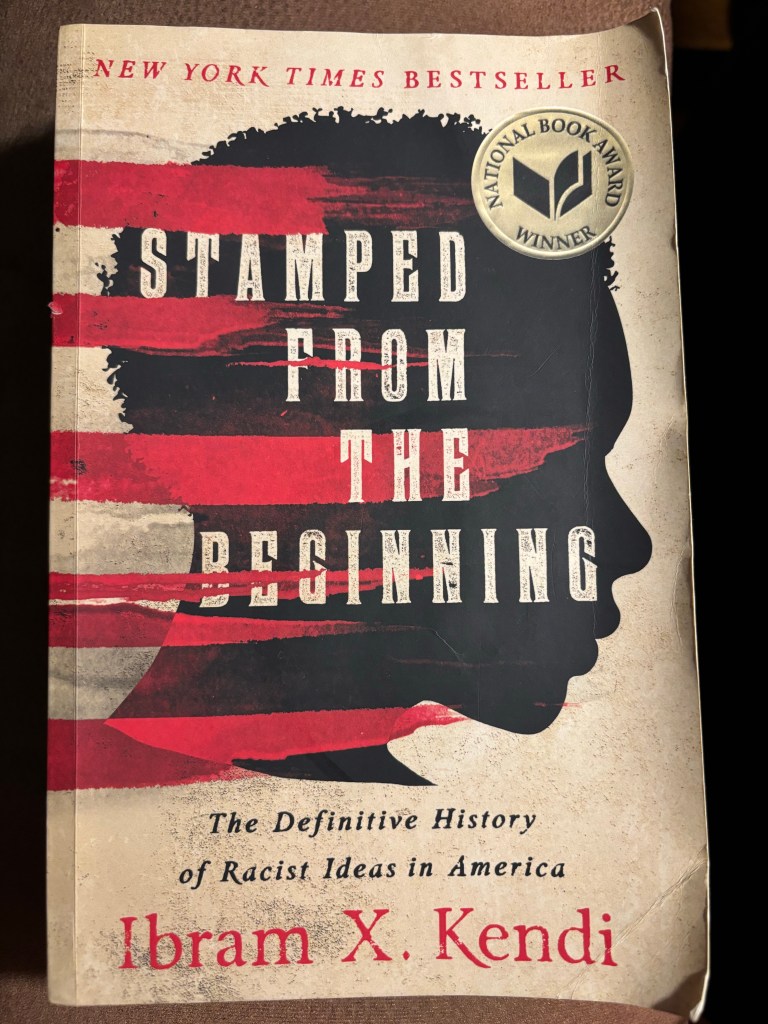
Stamped from the Beginning by Ibram X. Kendi was not an easy read, but I’m glad I made it through. It was one of several books that became bestsellers during the worldwide racial justice reckoning that followed the murder of George Floyd in May 2020. It’s a survey of the history of anti-Black racist ideas throughout American history. It helped lift the veil from my eyes.
I was having a hard time making it through this very dense and challenging material, so I started a short-term nonfiction book club with two friends over Zoom. I’m glad we read it together in the summer of 2020.
The Handmaids Tale by Margaret Atwood came out when I was in college and was a huge bestseller. This dystopian novel describes a Christian fundamentalist theocratic regime in the former United States where some women are forced to conceive and bear children in the most horrific way. It really motivated my involvement with the pro-choice movement of the 1980s. I recently read the sequel: The Testaments, which was published in 2019.
So much of Handmaid’s Tale horror has re-surfaced and resonated loudly since the Dobbs decision by the MAGA Supreme Court. It’s scary—and infuriating.
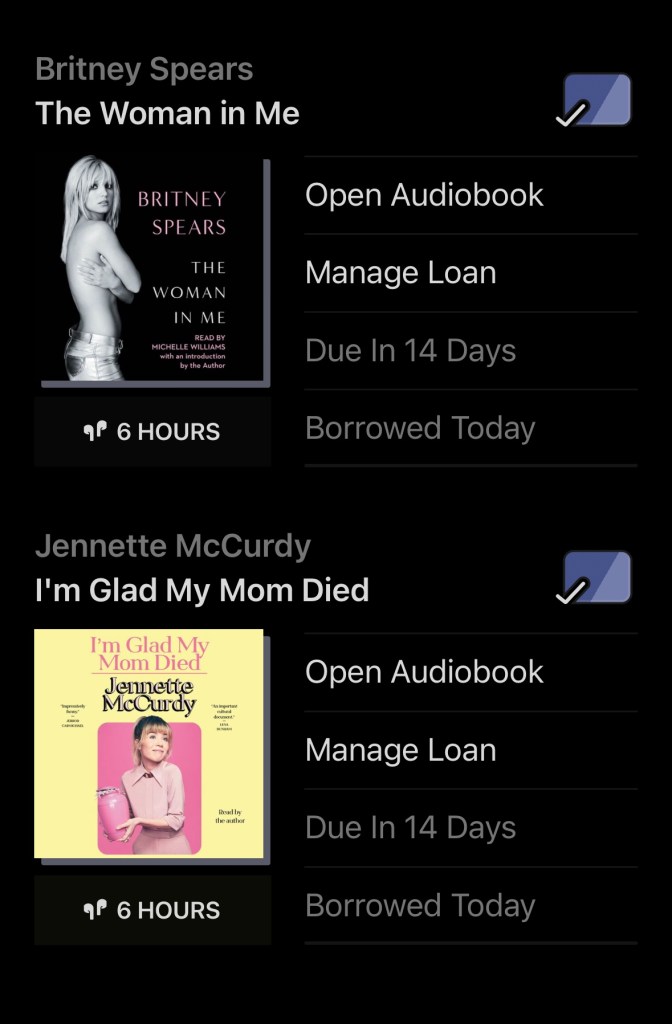
This prompt took me straight to FOOD. Maybe it’s because I just listened to “I’m Glad My Mom Died” by Jennette McCurdy—the bestselling memoir about a child star with an abusive mother and a really major eating disorder.
Having it all can mean the entire pint of ice cream, the whole row of Oreos, the full bag of chips. And yes, sadly, it is attainable.
Not to make light of eating disorders, but do my fellow GenXers remember those ubiquitous Alka-Seltzer ads? Before the famous “plop, plop, fizz, fizz” jingle, there was this guy (and his long-suffering wife) saying “I can’t believe I ate the whole thing.”
To this day, I don’t think I’ve ever taken an Alka-Seltzer. They say it’s for “upset stomach and headache,” which sounds like code for a hangover. Did Madison Avenue intend for adults to read between the lines? Have you ever taken an Alka-Seltzer? And if so, was it because you were hung?
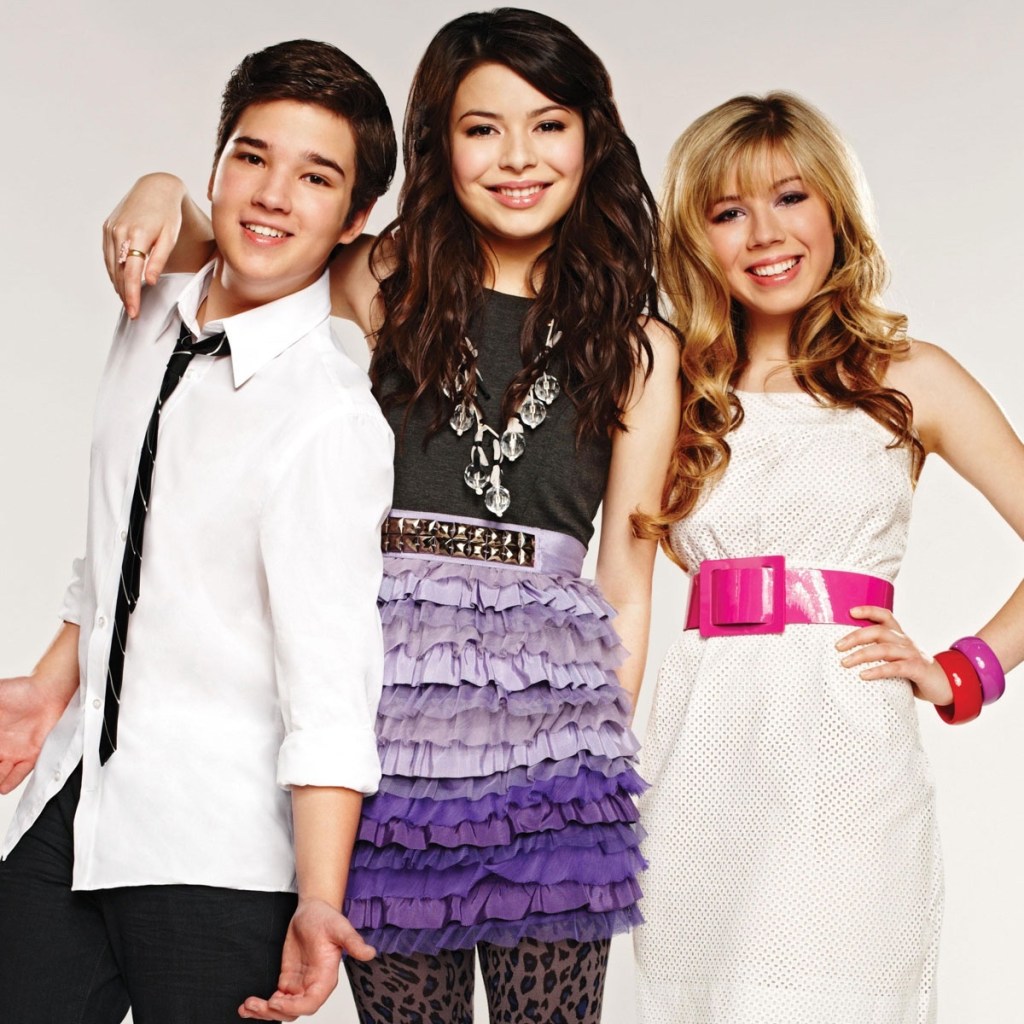
Jennette McCurdy (right) and her iCarly co-stars. Her award-winning memoir “I’m Glad My Mom Died” has sold over 2 million copies and been translated into ten foreign languages.
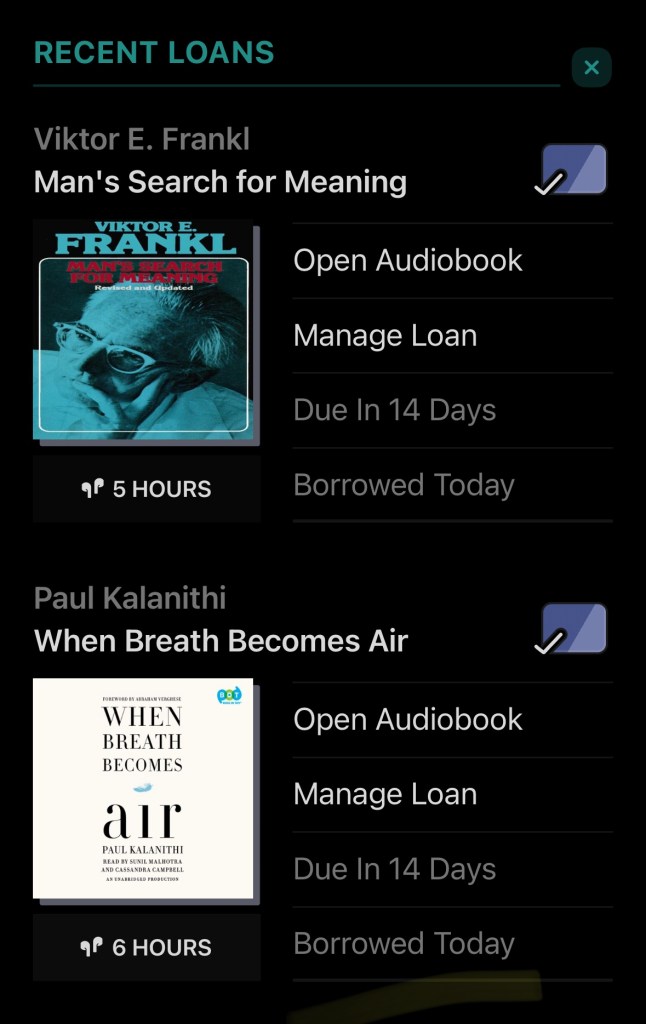
I’ve checked-out the only four audiobooks from the library that were available and short enough to finish during the 6-hour car ride. If anyone has read or listened to any of these books and has thoughts, please let me know.
I feel productive when I finish a nonfiction book. Not a memoir mind you, but a real nonfiction book about history or ideas. I’m a fan of novels, so reading nonfiction feels a bit like school—a completed assignment.
Recently, I finished The Persuaders—a NYT bestseller by the American journalist Anand Giridharadas. It’s been on my list for a long time due to recommendations from friends who are more serious activists than me. I wouldn’t say I loved it, but it gave me some things to think about.
In 2022, I read a nonfiction book by the American journalist Mark Leibovich, who now writes for The Atlantic. Leibo is actually an old friend of mine from my post-college party years so I tend to read his stuff. I think he’s hysterical. I enjoyed every single word of his bestseller Thank You for Your Servitude: Donald Trump’s Washington and the Price of Submission. Highly recommend. It was an amazing poolside read. Even better with wine.
I like talking about the zeitgeist—current events and popular culture (especially movies and TV). I also love talking about books with my book group and music with my choir peeps. I enjoy hearing about people’s travels (to a point). I’m not a big sports fan, but if a Boston team is in the playoffs, I like to know what’s happening with that. Go Celtics ☘️! (and Bruins, I guess)
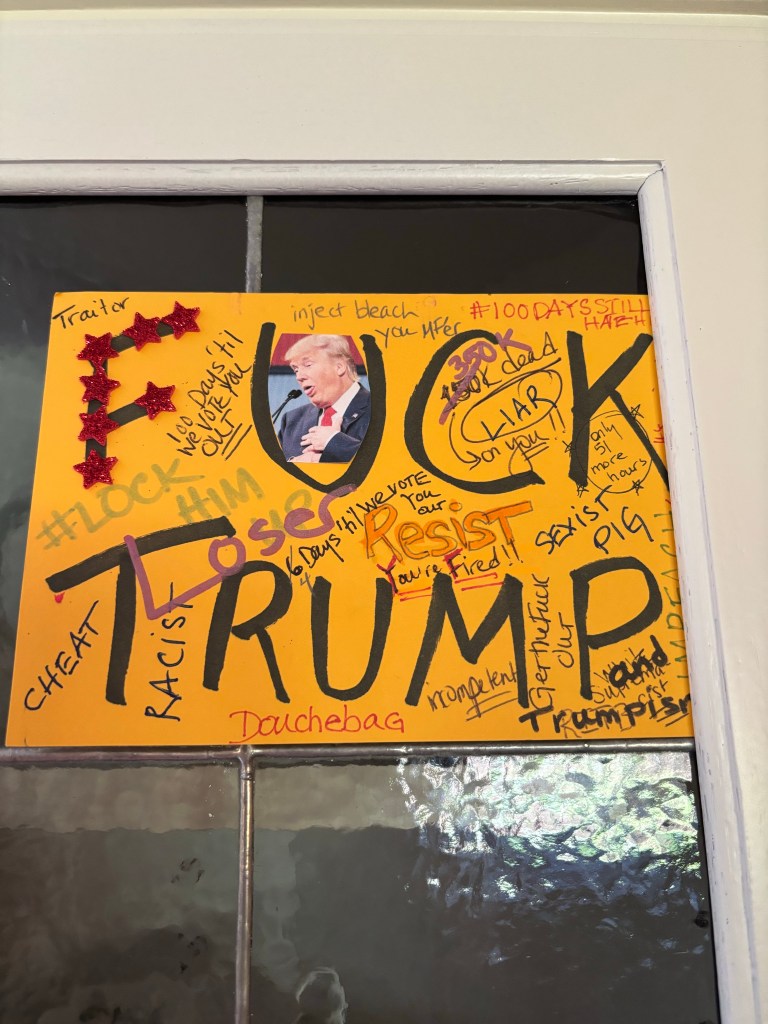
And as anyone who follows my blog knows, I despise Trump with a deep, burning, crimson hatred I’ve never felt for any other public figure in my lifetime, so I’m always up for any conversation which involves trashing him.
Am I the only one with a sign like this on display in my kitchen for the past 8 years?
Last year I read a book about the restaurant industry. It’s called “Your Table is Ready” by Michael Cecchi-Azzolina. It’s a memoir about the author’s experiences working “front of house” jobs (primarily maître d’) in various NYC restaurants. The main takeaway for me was that it’s extremely difficult for a restaurant to get it right and be successful. There are so many variables. And it’s not just the food, it’s the vibe that keeps people coming back. Would you rather walk into a restaurant where someone greets you warmly or one where you’re ignored?
We’ve got two local restaurants we go to a lot. One we call “the fish place.” They have reliably good fresh fish (it’s actually a fish market too) and nice servers, many of whom have been there for years. We typically sit at a table, but it’s got a very popular bar in the back of the restaurant that is not too loud. (It’s funny how “not too loud” has become one of my main criteria for restaurants.) I would describe the vibe as “neighborhood.”
The other is an Asian Fusion restaurant called Karma. The food is delicious and they make a cucumber cosmo that is my favorite cocktail ever. The vibe is younger and hipper than the fish place. Dark with jewel tones, the decor feels exotic (for lack of a better word). It also has a large bar which makes it lively, but again, not too loud.
I recently attended a “live literature” performance. A wonderful actor named J.T. Turner brought Robert B. Frost and his poetry to life. Frost was born in San Francisco in 1874, but his mother moved the family back East after Frost’s father died. He graduated from Lawrence High School (about 30 minutes from here) and spent most of his life in New England. He died in 1963 at age 88 in Boston.
Of course, I was familiar with many of Frost’s poems. They are especially well known here in New England. However, I was unaware of the many tragic events in Frost’s life. While achieving great success in his lifetime, including an unprecedented four Pulitzer Prizes, Robert Frost suffered unfathomable losses and a strong family history of mental illness.
After losing his father from tuberculosis at age 11 and moving to Massachusetts, his mother died of cancer. In 1920, he had to commit his younger sister Jeanie to a mental hospital, where she died nine years later. Both he and his mother suffered from depression, and his daughter Irma was committed to a mental hospital in 1947. Frost’s wife, Elinor, also experienced bouts of depression.
Elinor and Robert Frost had six children: son Elliott (1896–1900, died of cholera); daughter Lesley Frost Ballantine (1899–1983); son Carol (1902–1940); daughter Irma (1903–1967); daughter Marjorie (1905–1934, died as a result of puerperal fever after childbirth); and daughter Elinor Bettina (died just one day after her birth in 1907). Only Lesley and Irma outlived their father. Frost’s wife, who had heart problems throughout her life, developed breast cancer in 1937 and died of heart failure in 1938.*
During the performance, I learned that the cause of death of Frost’s beloved son Carol was suicide. He was 38 and a poet, like his father. The actor portraying Frost said that Carol had chosen the woods. Lovely, dark and deep.
I’ll never hear that poem in quite the same way again.
Frost believed, as many do, that poetry is meant to be read aloud and I agree. Here is a recording of Robert Frost reading his poem “Stopping By Woods On A Snowy Evening.”
When I was growing up in the 70s, there were not many exciting female book characters. There was Pippi Longstocking, Nancy Drew, Cherry Ames, Heidi, Jo March from Little Women, and the dutiful daughters of The Little House on the Prairie series.
I wasn’t a tomboy like Jo or a sleuth like Nancy, and I didn’t want to be a nurse like Cherry, or be motherless like Pippi or Heidi. And the prairie sisters (though I loved them) had far too many chores.
That leaves all the princesses, witches and bitches, plus the occasional fun nanny, and a fairy or two.
Ugh. No good choices here.
Honestly, maybe Tinkerbell is the best choice. At least she could fly and was a bit naughty – when she wasn’t in her cage.