![A logo for "50 Happens," [a site dedicated to Gen X women with children and grandchildren] [who embrace life's challenges with humor and resilience], [featuring a modern and uplifting design] [that embodies strength and positivity] [with an elegant and playful style] [and a harmonious blend of colors like pink, fuchsia, purple, and blue].](https://50happens.blog/wp-content/uploads/2024/12/img-5uorrxvwartomopcpuhjfjd0.png?w=300)
Below is a ChatGPT description of “Peter Pan Syndrome.”
****************************
Peter Pan Syndrome refers to individuals who struggle with accepting adult responsibilities, often exhibiting emotional immaturity. While it’s not an official psychological diagnosis, the concept identifies key behavioral traits. The six main signs often associated with Peter Pan Syndrome are:
1. Avoidance of Responsibility
Difficulty committing to long-term goals, careers, or relationships, and a tendency to avoid adult obligations such as financial independence or household management.
2. Emotional Immaturity
Difficulty handling criticism, conflict, or stress, often reacting in a childlike or overly defensive manner.
3. Fear of Commitment
Reluctance to commit to relationships, work, or life plans, often prioritizing short-term pleasure over stability.
4. Dependency
Relying heavily on parents, partners, or others for financial or emotional support instead of fostering independence.
5. Escapism
Seeking constant distraction or entertainment, such as video games, social media, or partying, to avoid facing responsibilities.
6. Narcissistic Tendencies
A self-centered outlook, prioritizing personal desires over the needs of others, with difficulty showing empathy or maintaining healthy relationships.
****************************
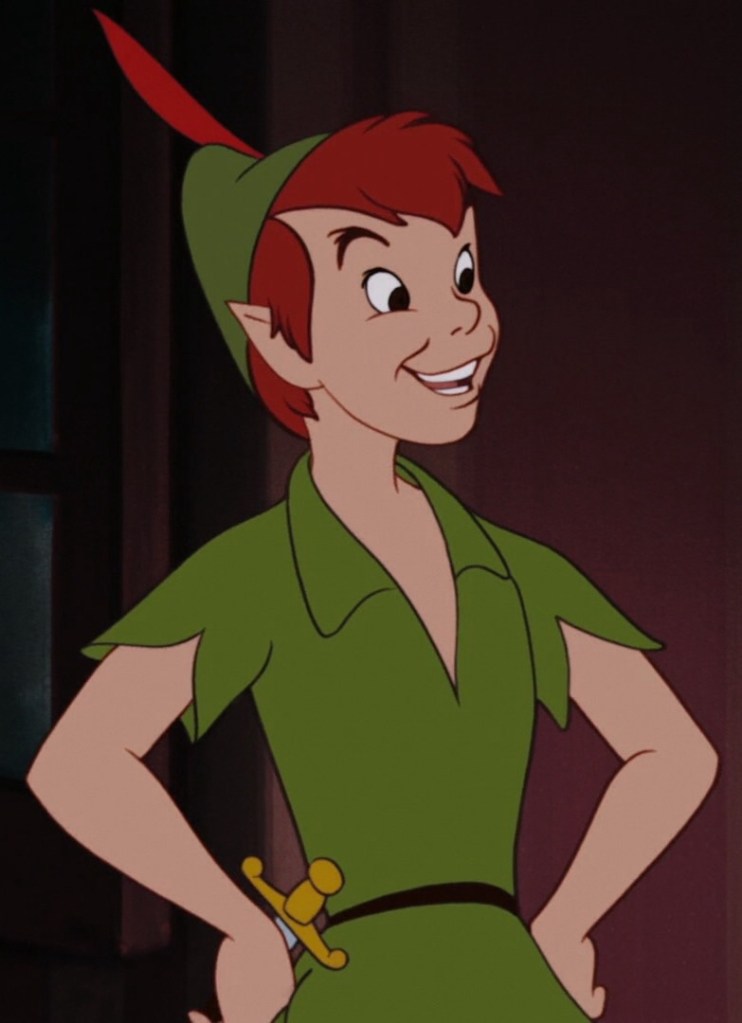
And parents: don’t raise a Peter Pan. It can (and most likely will) damage your relationship with your other children.
 50 Happens
That is fascinating. I don’t think I ever heard of Peter Pan syndrome, but the description particularly reminds me of the Russian classic of Superfluous Man who is less about emotional immaturity but more about intellectual paralysis for many reasons.
LikeLiked by 1 person
I just googled Superfluous Man. Interesting! Privilege is part of Peter Pan syndrome too. Thanks for your comment.
LikeLiked by 1 person
I’ve heard of Peter Pan syndrome but wasn’t quite sure about the specifics. It’s a little shocking to say the least. I just had a conversation with someone who has an acquaintance that for the first time has to become an adult and take care of themselves – at 55. I can imagine it’s scary for them, but I made the comment that her loving parents were too loving and didn’t do them any favors in the grand scheme of things. Not that I advocate kicking someone out of the house (or nest), but a gentle loving nudge may not have been all that bad.
LikeLiked by 1 person
Yup, sadly PP Syndrome can last into the 50s and beyond, especially if the parents are well off. Everyone wants their kids to be “happy” but enabling them to quit jobs, keep going back to school, move into places they can’t afford on their own, etc. can lead to permanent teenagers.
LikeLiked by 1 person
I think leaving the nest and living on their own can be a challenge, but teaches lasting life lessons.
LikeLiked by 1 person
My biological father. He would show up with puppies and fun things, helicopter rides or fancy dinners, but the day I asked him to help me pay for college he threw a giant toddler sized fit then disappeared for another five or so years til the next time.
LikeLiked by 1 person
Oh my goodness. I never thought about having a Peter Pan parent. That’s almost the worst version of it. I’m sorry 😞
LikeLiked by 1 person
I’ve been blessed with a lot of wisdom-making material. 🙂 Thanks, Mary. I was never close enough to him to feel a deep sense of loss over the personal relationship, only loss in a general sense.
LikeLiked by 1 person
“Wisdom-making material” – great way to frame it
LikeLiked by 1 person
Thanks, Mary. 🙂
LikeLiked by 1 person