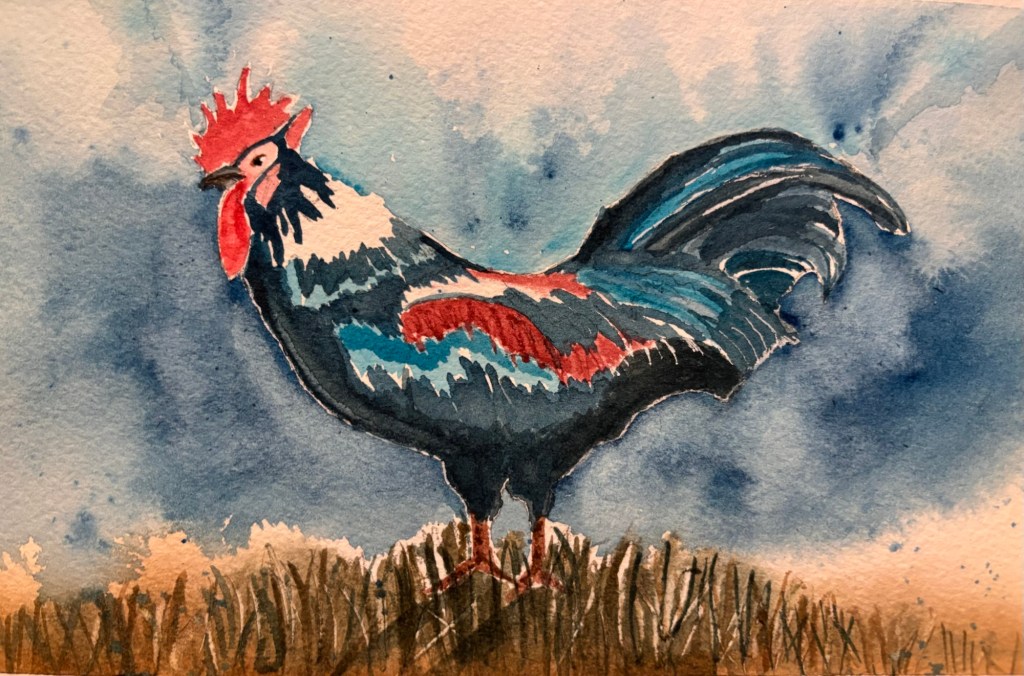
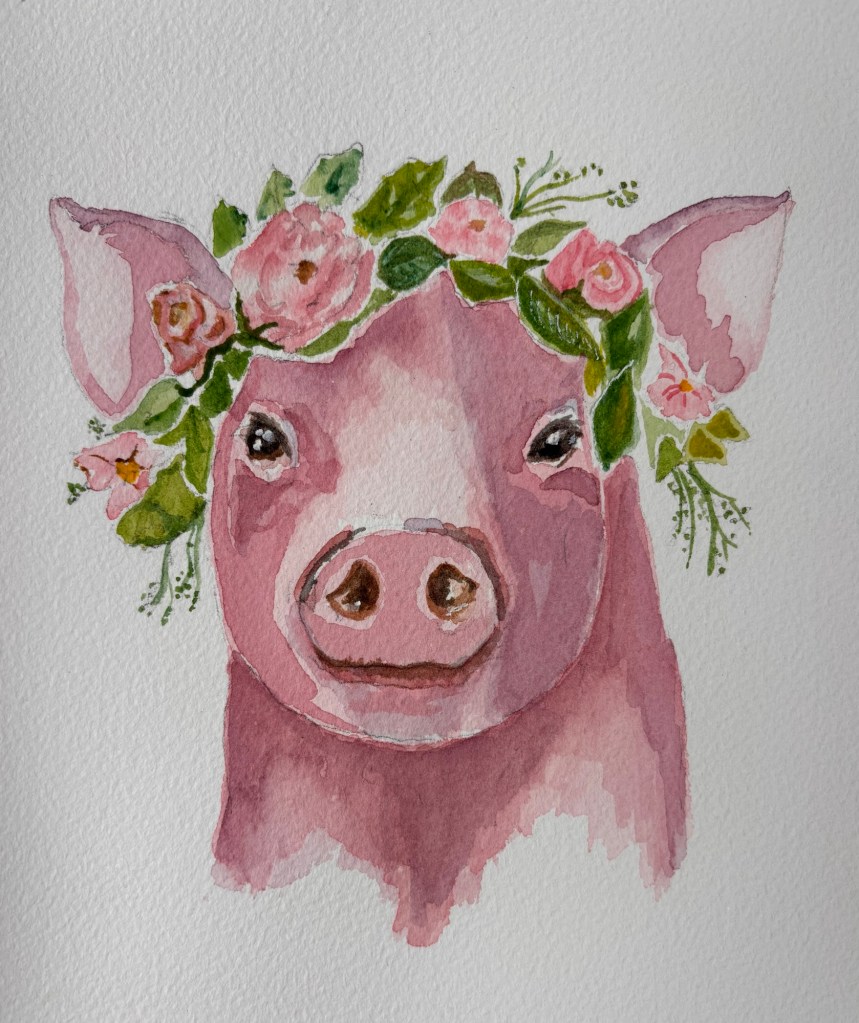
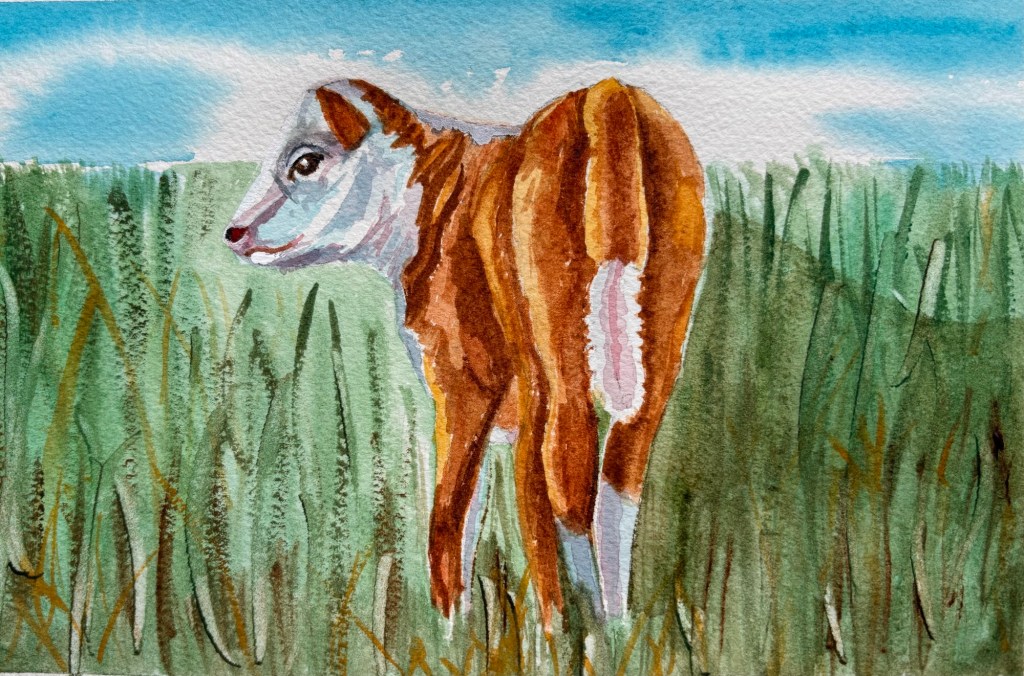
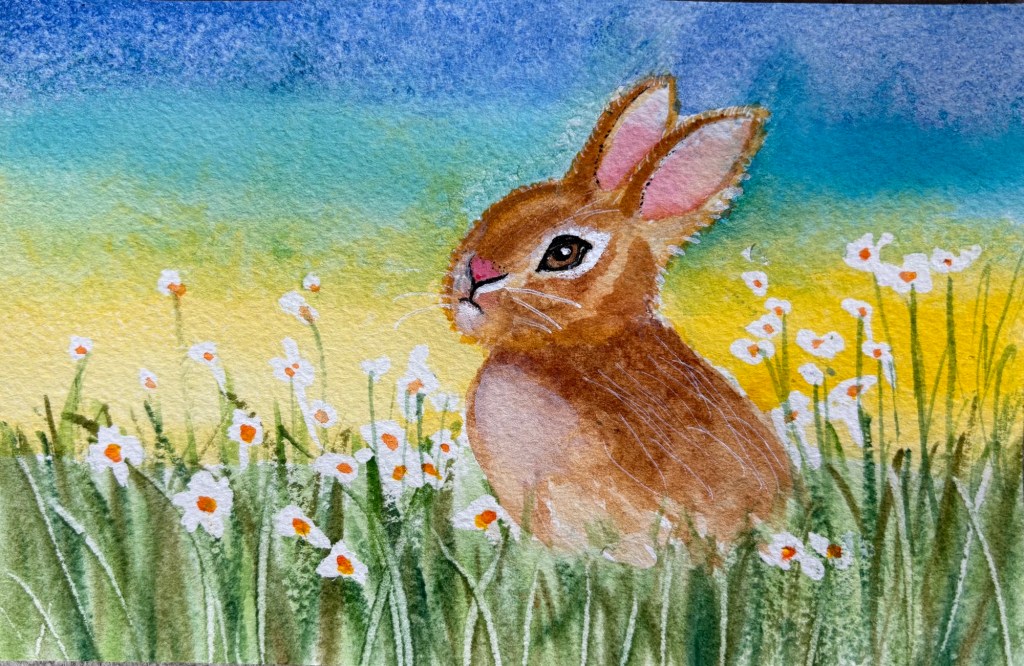
OK, last farm animal from my 5-week paint-along class and it’s not a baby! It’s a full-grown cock 😜
The teacher asked me point blank if I plan to return for the next session, which was awkward. I mean…I had some fun and learned a few things, but this paint-along-with-the-teacher style class is not really for me. I asked her to “please keep me on the mailing list.” Maybe I’ll return if she chooses a subject I really want help with, like sunsets.
Thank you to my very awesome WordPress blog friends who have patiently looked at all of my BFAs.
🙏🏼
By the way, “Old MacDonald Had a Farm” is one of my granddaughter’s favorite songs and I absolutely love singing it with her. It’s fun to take a long pause before you sing the next animal’s name. It adds drama and excitement!
Next week is the last week of my paint-a-long class. It’s been fun, but I don’t think I’ll take the class next session. I prefer to choose my own subjects.
I decided to try painting something to submit to an “Art for Democracy” contest being run by my church. It’s open to professional artists throughout New England and there are cash prizes, so I’m not getting my hopes up. I’m thinking of it as an “artistic prompt” (like the daily writing prompt here on WordPress).
Here’s the actual prompt:
Art is a powerful tool for social change. Unbound by age, culture or social location, it sparks the imagination and promotes meaningful dialogue. With the goal of encouraging civic engagement, artists across New England are invited to submit works on the theme of protecting and strengthening American democracy. Artworks should express the goals of promoting unity and the common good, which underscores the American ideals that all voices are important and that our strength lies in welcoming diverse perspectives. Our goal is to spur productive dialogue; showcase the work of New England artists; and celebrate democracy.
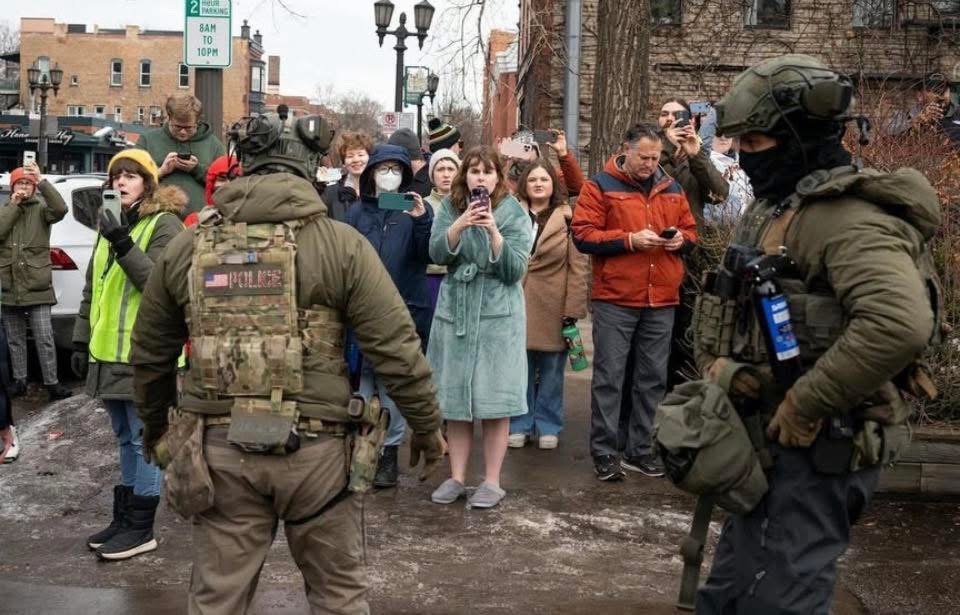
Like many people, I was inspired by the people of Minneapolis who bravely stood up to ICE in the frigid cold to try to protect their community, even after Nicole Good and Alex Pretti were assassinated. There was one viral photo by an unidentified photographer that really struck me. A woman went outside in her bathrobe and slippers to join a crowd of others documenting ICE actions in their neighborhood:
So I decided to paint that.
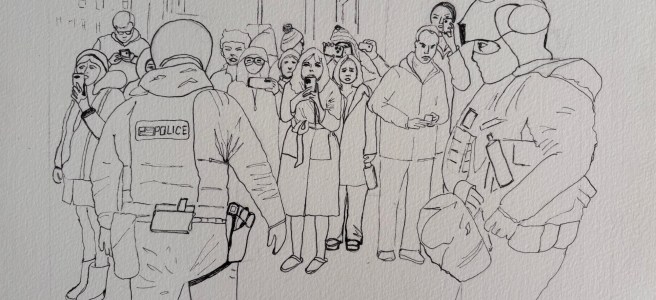
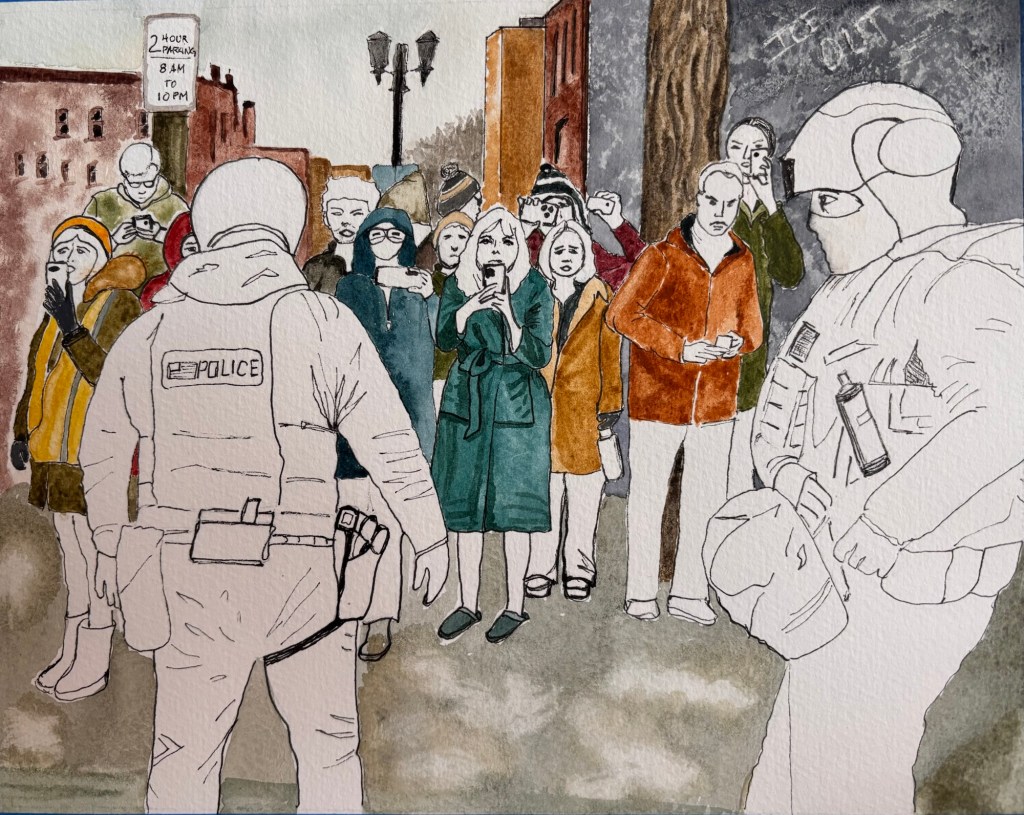
Here’s where I’m at with the painting now. I still need to paint the faces, pants, shoes, phones, etc. in the crowd.
So here’s the dilemma: Should I perhaps leave the two Police/ICE agents as unpainted line drawings? Do you think it might be effective like that? From my perspective, they are unwanted invaders in this community. Maybe the contrast with the good people of Minneapolis would be greater if I leave them unpainted. Ghosts in the Machine, so to speak. OR should I paint them monochromatic in shades of grey? What do you think? Which would make a better painting?
Week 3 of my paint-a-long class and I’m definitely getting flashbacks to high school—probably because the teacher is a retired high school art teacher. She talks to us like we’re 16, rather than 60+, sometimes. You can tell that she was one of those slightly grouchy teachers that was easily annoyed. It’s actually funny some of things she says to people: “Your perspective is totally OFF” or “I see you’re doing it your way—again”
Nobody seems to care. They’ve all known her a long time and they like her. They sign-up for her class semester after semester.
So far, she’s been pretty nice to me. No major criticisms and some nice compliments on my work. Just like in high school, art teachers like me.
Oh, and she plays the radio in the background while we paint. The station is perfect for us…it’s all soft rock from the 70 and 80s (our high school years). Some people sing along quietly.
I’ve been through the desert on a horse with no name…
I’m participating in a two-hour creativity workshop on Zoom today. The focus is on “exploring our art making process,” not learning particular techniques. It’s described “as a time to feed our souls and learn with and from each other.”
To prepare I need to:
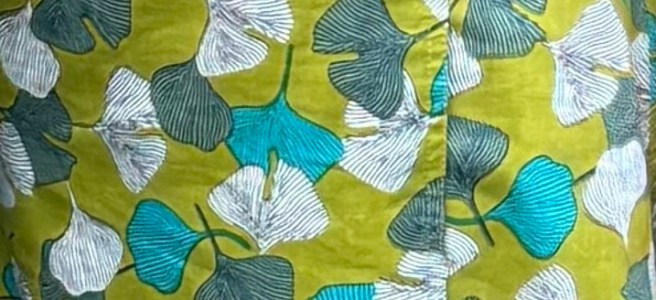
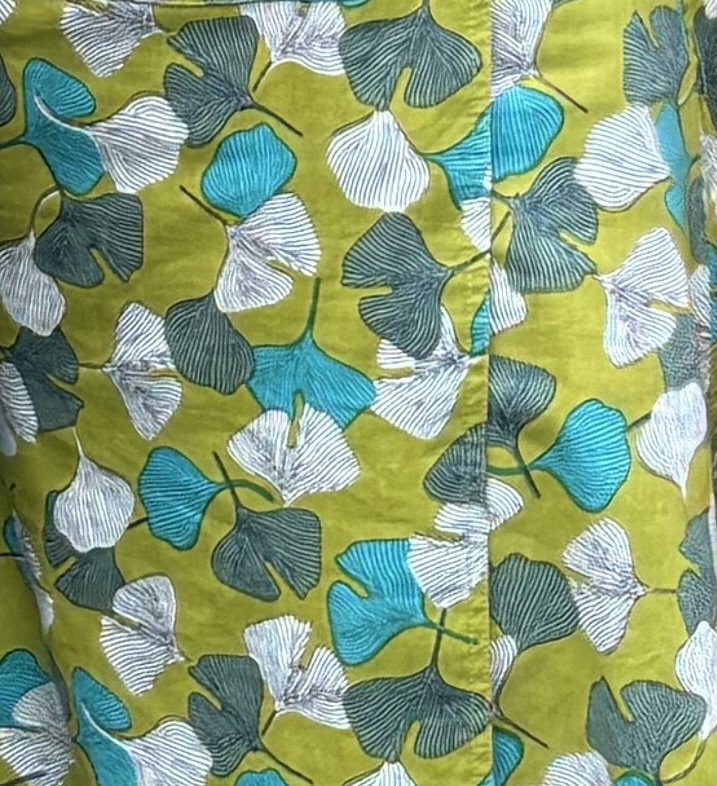
Find a piece of clothing or textile with an interesting pattern or texture and bring it to my artmaking space. Assemble a bunch of different drawing tools such as any drawing paper of any size, pen, markers, pastels, colored pencils, watercolor, charcoal…
OK, I’m good on drawing supplies, but a bit stumped on the textile. Maybe I’ll bring my favorite skirt. It’s reversible so it has two cool fabrics to choose from.
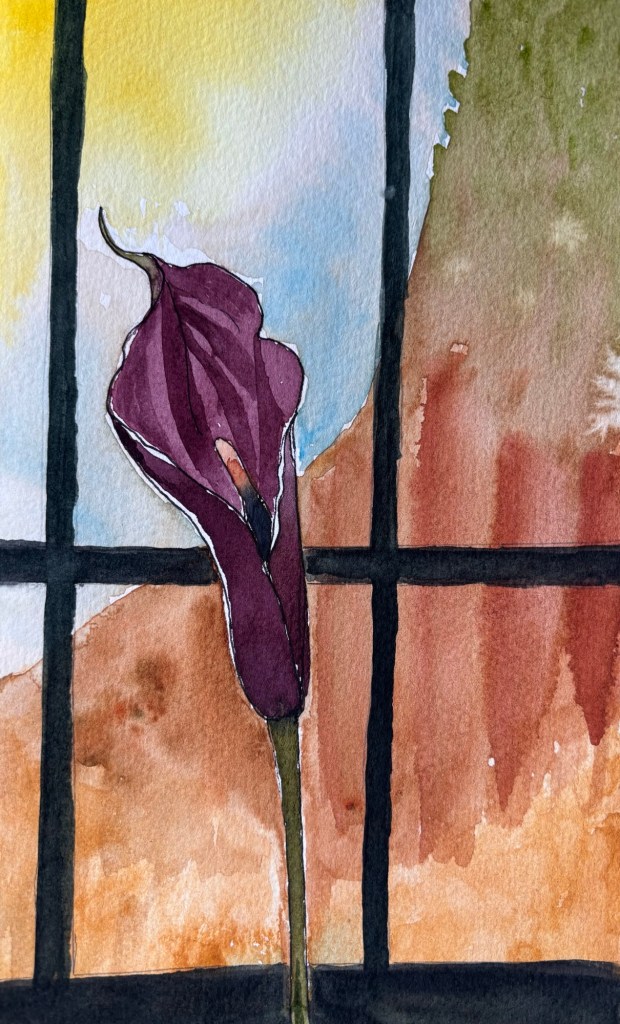
I’ve gotten lazy painting things that I didn’t draw myself, so I experimented with a Calla Lily yesterday.
Drawing is hard and can be tedious, but the only way you get better is to practice. Painting is the fun part, in my opinion.
I was mainly trying to draw/paint the flower. The scene behind was me not wanting to waste the paint and paper.
Update:
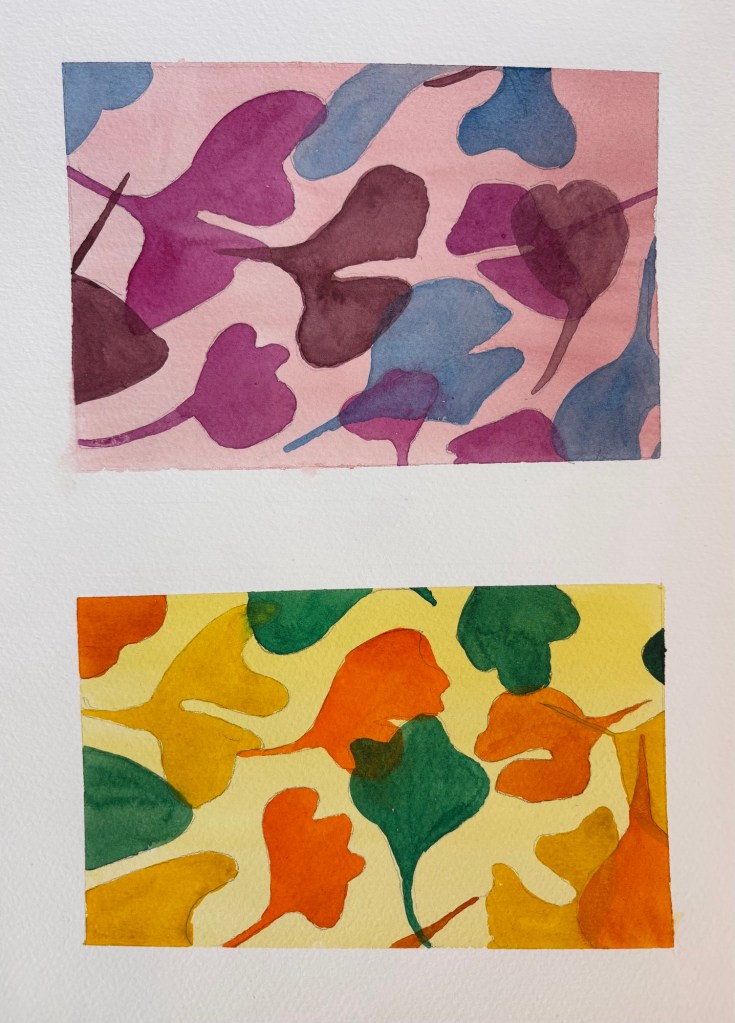
In the creativity “playshop” (rather than “workshop,” get it?) we looked at a section of our textile, and experimented with it in some way.
I experimented with changing the colors and layering the colors. The shapes were giving me sea creature vibes.
I started my 5-week class at a very nearby community arts center yesterday. I don’t like the set-up as much as the fancier arts center where I took my first watercolors class in the fall. The room is nice and sunny, but it’s quite crowded and no sinks. You have to use the restroom in the hall to get water and rinse your brushes.
The people seem nice. It’s a similar vibe to my first class. Lots of retired people who re-register each semester because they like the teacher and have gotten to know one another.
The difference is that we all paint the same subject each week, with the teacher giving a demo for each step. It’s not exactly a recipe for developing one’s own unique creative voice, but I’m sure I’ll learn some stuff by painting along with a pro.
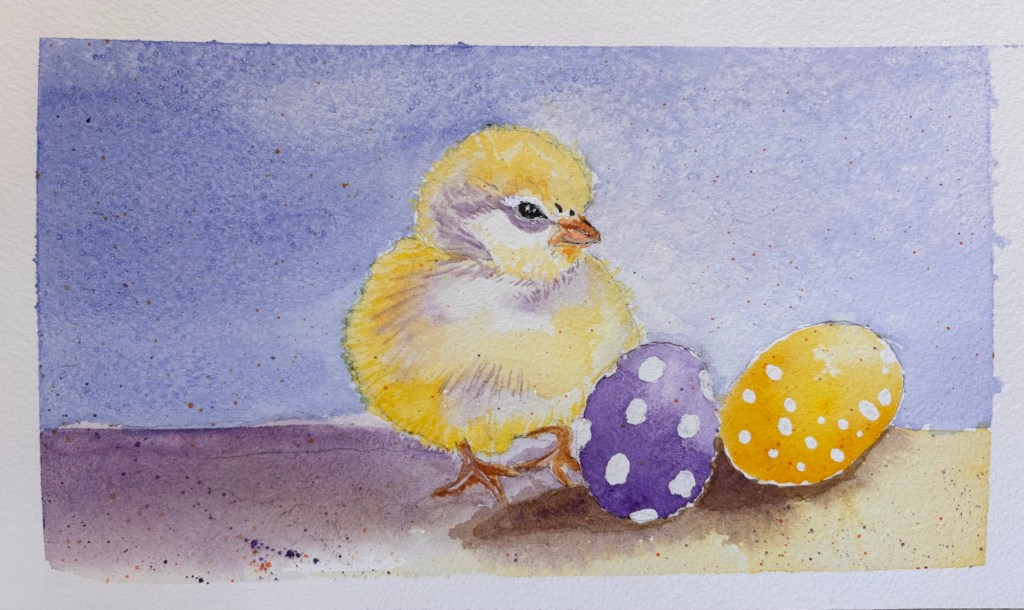
It’s surprisingly hard to make a chick’s face look “not mean.” I think the spotted Easter eggs help a bit.
We’re in a blizzard here in Massachusetts. Fortunately the power is still on, but we ain’t going anywhere for a looooong time.
Settling in.
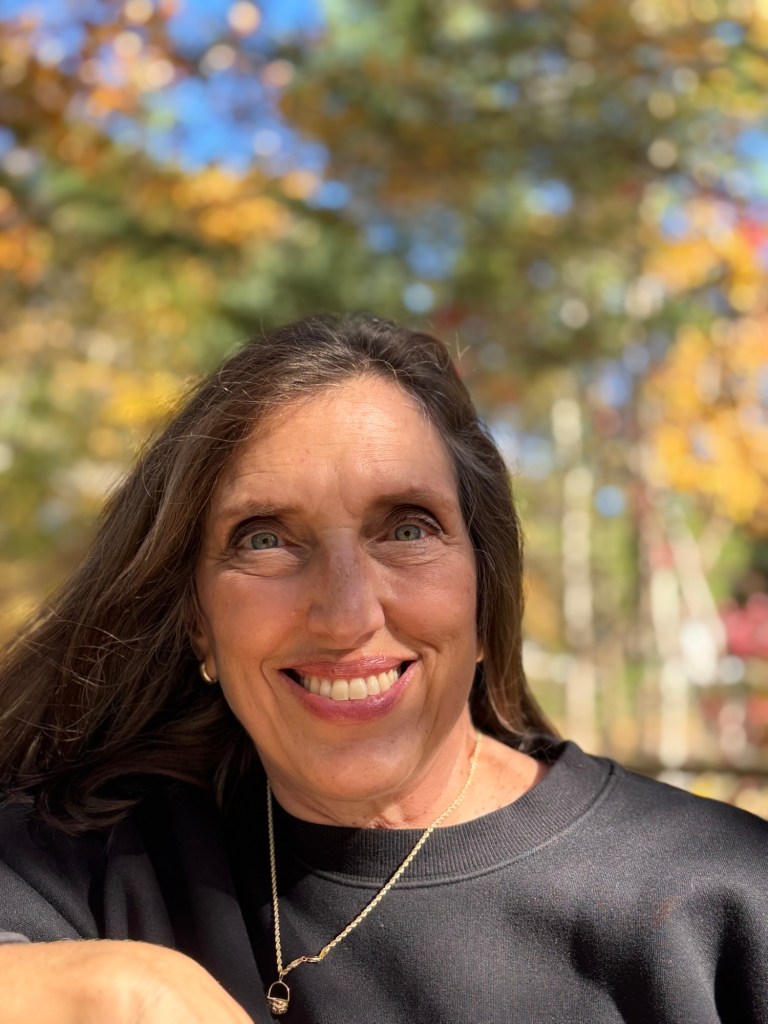
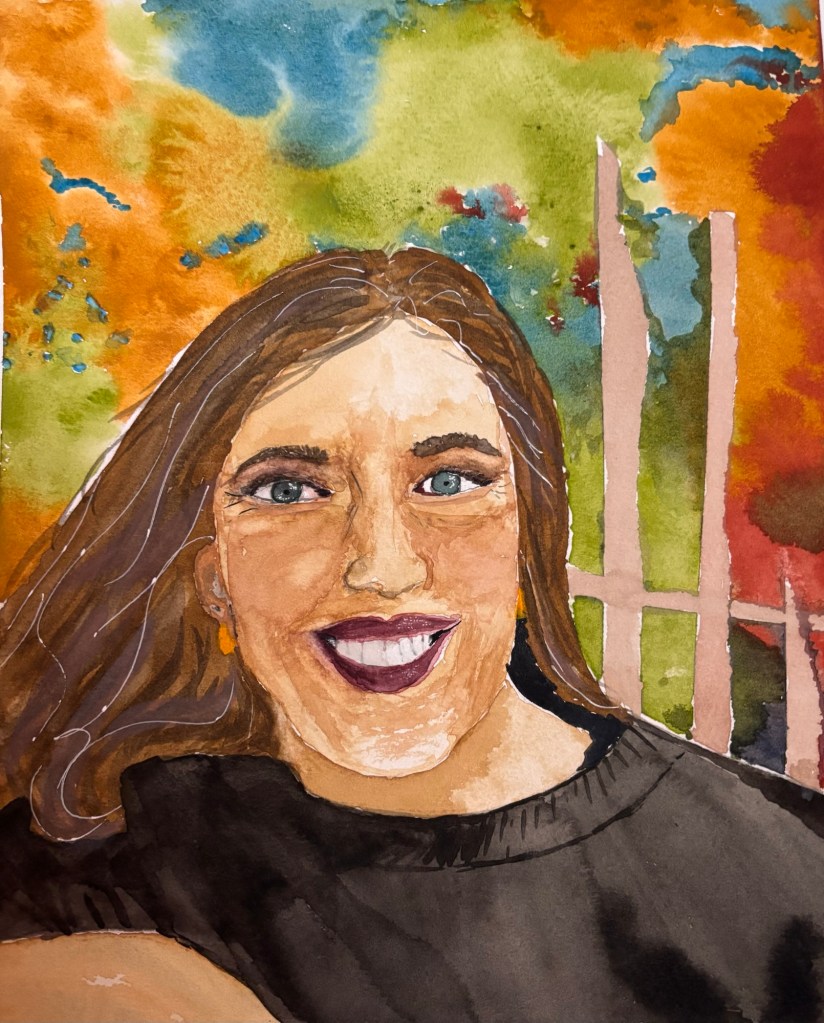
I decided to try painting another portrait (my own) based on a photograph.
Here’s the inspo pic from last fall:
Here my painting:
Portraits are hard! This makes me want to take another class with my teacher from last fall. She was good at portraits, but alas, I have registered for a different (cheaper) class, closer to home, where we will focus on “cute baby farm animals.”
ChatGPT gave me some solid feedback on the portrait though:
Lightly mapping planes (forehead plane, side planes of nose, cheek planes) before committing to color would increase dimensional accuracy.
The biggest difference between the painting and photo is contrast and value structure.
The photo has stronger: Shadow under the brow ridge Shadow on the right side of the face (viewer’s right) Cast shadow under the nose Subtle shadow under the lower lip
In the painting:
Midtones dominate. Shadows aren’t quite dark enough, especially around the eyes and under the cheekbones. This reduces form and depth.
Fix: Push darks 15–20% deeper in:
Eye sockets Side of nose Under cheekbone (viewer’s right side) Neck shadow under chin
That alone would dramatically increase realism.
Biggest Growth Area:
Value structure and form modeling
If you deepen shadows and increase plane awareness, this would jump from a good portrait to a very strong one.
OK, I can take that criticism (nicer than some human art teachers I’ve known) and I agree with it.
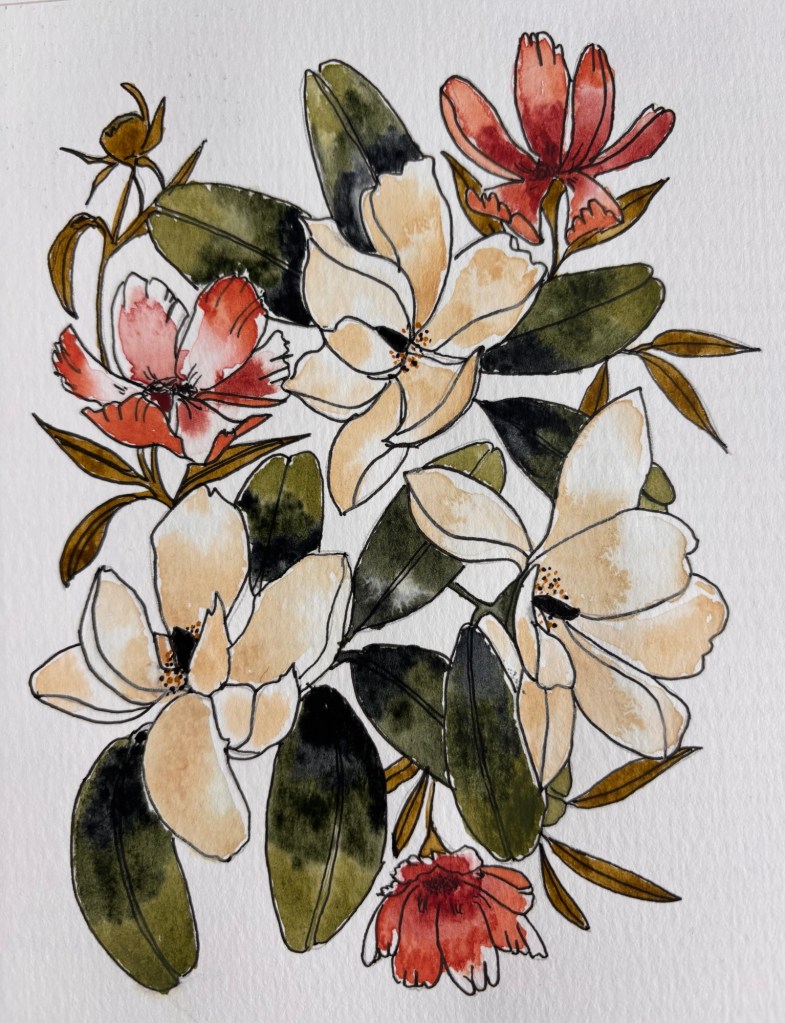
These are the last few pages in my botanicals “Watercolor Workbook” by Sarah Simon, a very thoughtful Christmas gift from my daughter.
It was great because it kept me painting through January and February in this very cold and snowy Winter of the Knee, where we’ve mostly just stayed home. (Part 2 of The Year of the Knee—aka “The Other Knee”—is now scheduled for March 16. 🙄)
I enjoyed inking the pre-printed designs with my new artists pens and learned a few good techniques for painting flowers and foliage. Also, I got a lot of useful color mixing information. Each page preserves my color recipes, which will be convenient for future reference.
Finally, hurray for flowers and plants! I’m bad at growing them, but they’re fun to draw, paint. and photograph.
🌺🌿🌷🌻🌼🪴🌱🌸
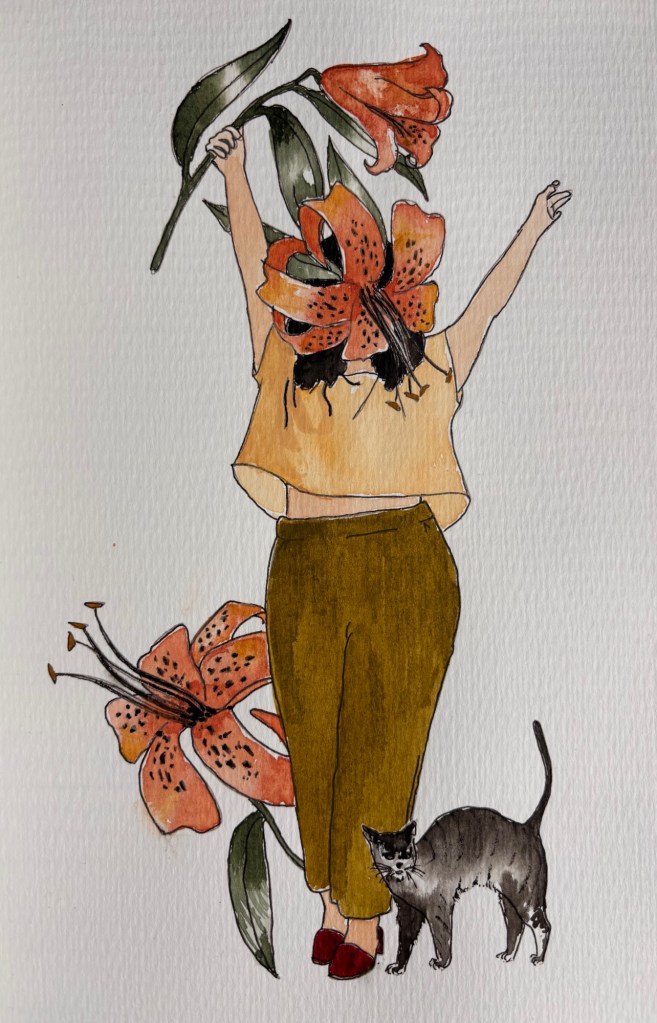
“Lady Lily” and her little cat 🐈⬛
Cosmos and Magnolias
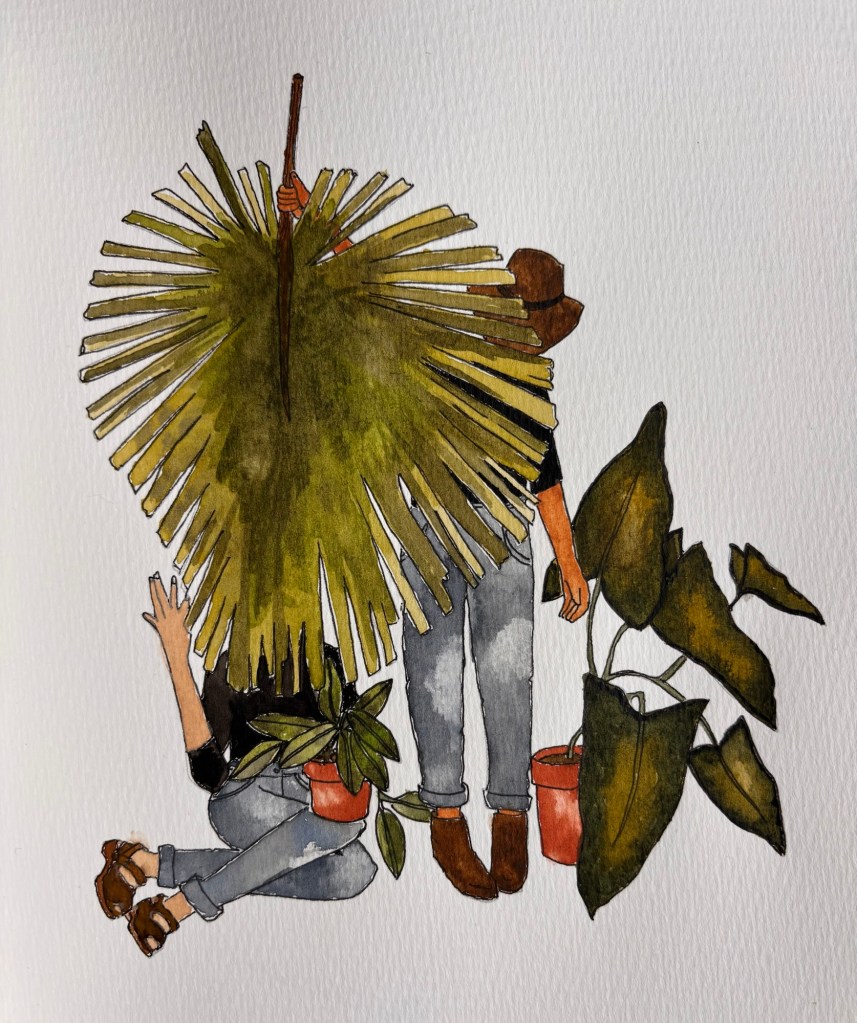
This design is called “Plant Lady Besties” 😊
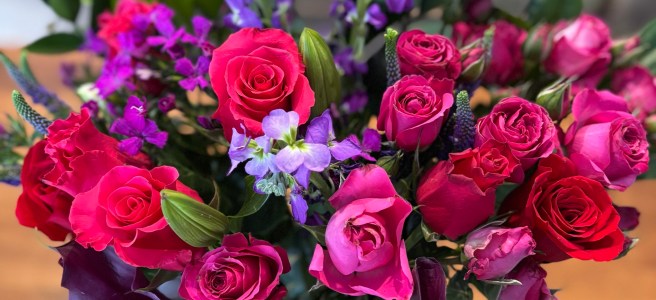
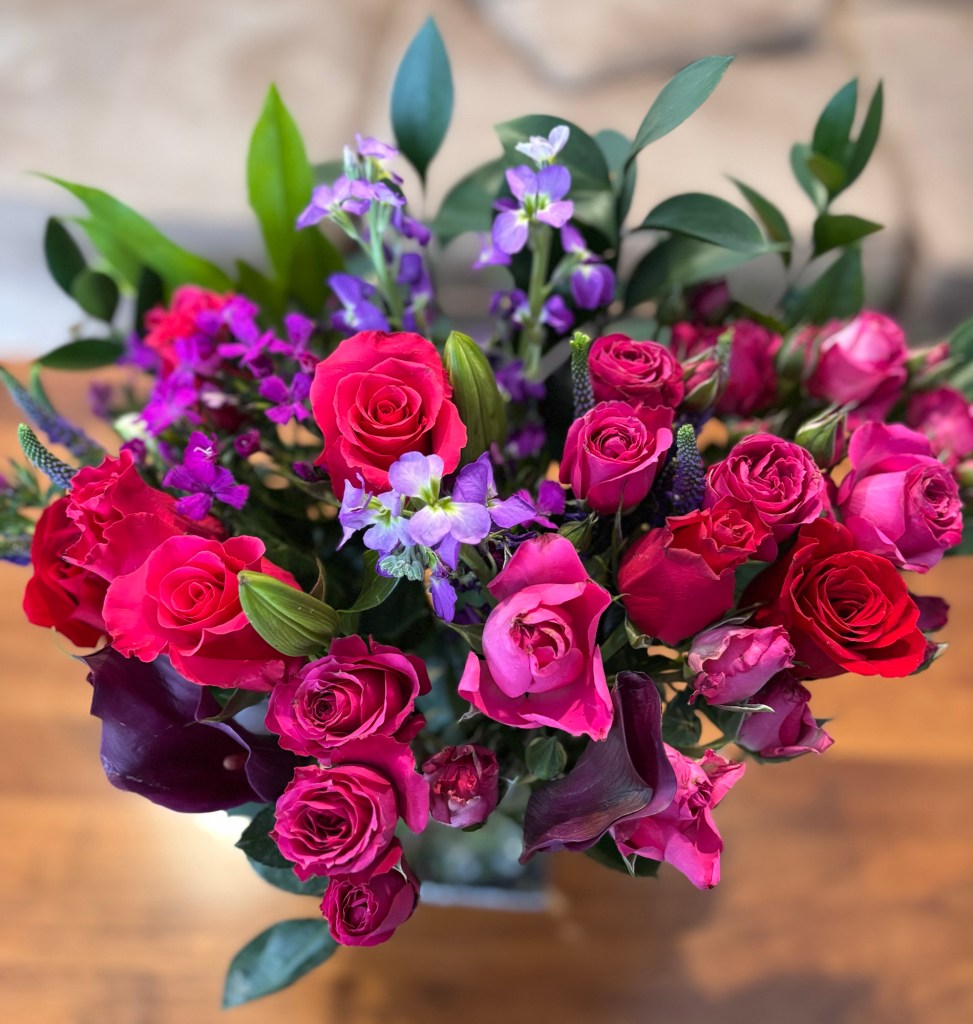
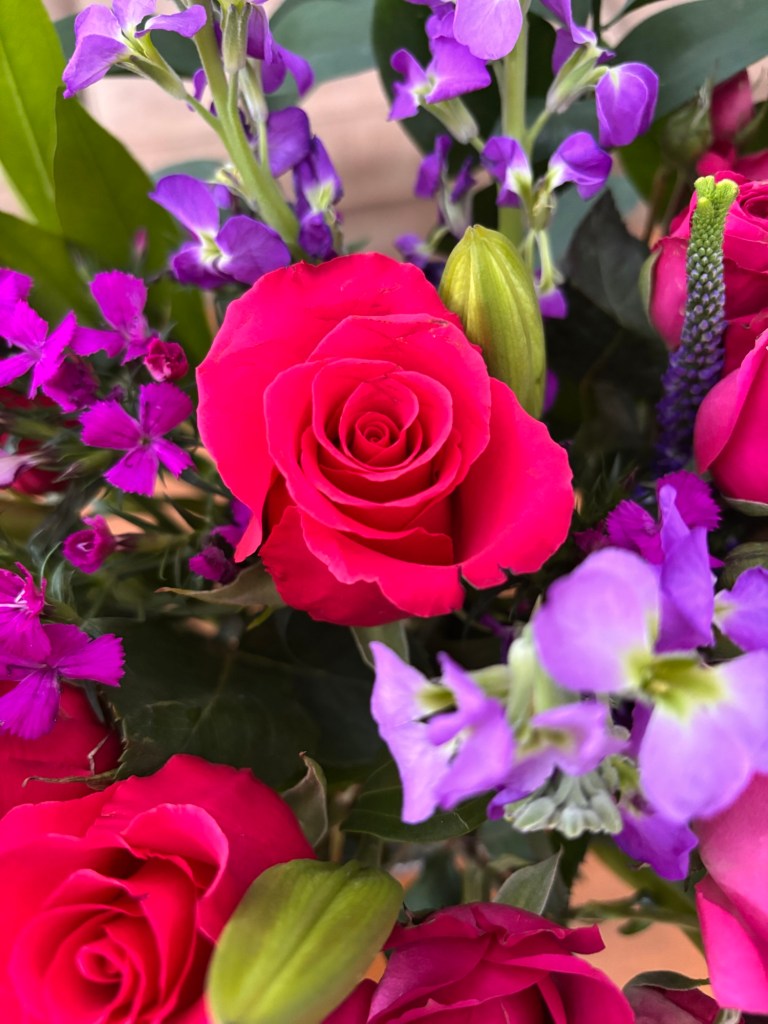
February flowers from BloomsyBox.com
Did you notice that iPhone has hidden “portrait mode” in a new place? I had to Google where to find it.
![A logo for "50 Happens," [a site dedicated to Gen X women with children and grandchildren] [who embrace life's challenges with humor and resilience], [featuring a modern and uplifting design] [that embodies strength and positivity] [with an elegant and playful style] [and a harmonious blend of colors like pink, fuchsia, purple, and blue].](https://50happens.blog/wp-content/uploads/2024/12/img-5uorrxvwartomopcpuhjfjd0.png?w=300)

 50 Happens