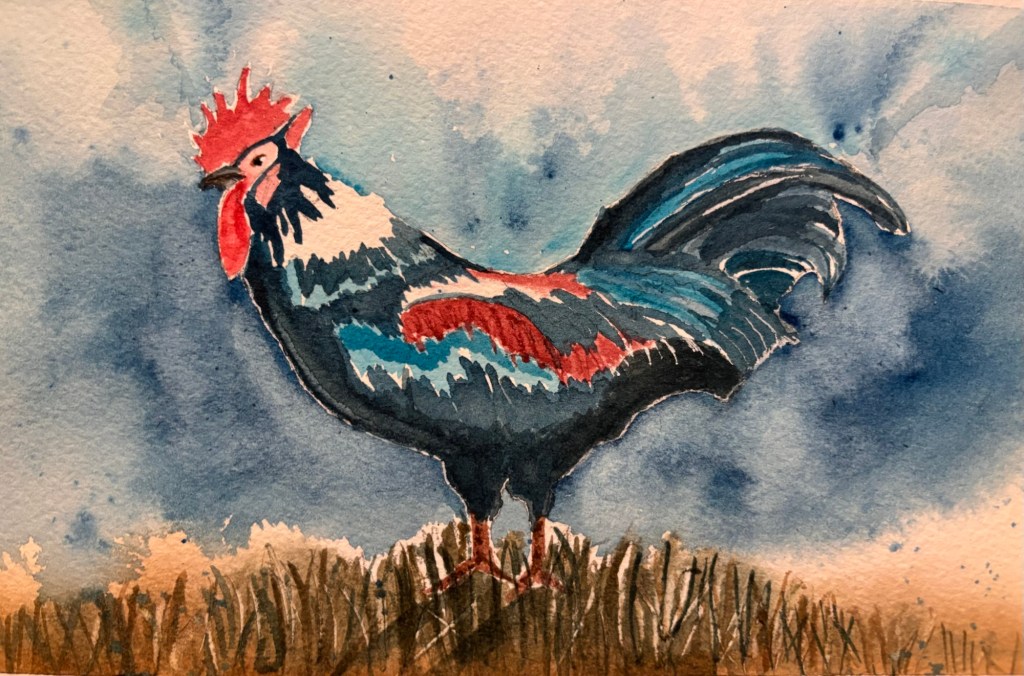
OK, last farm animal from my 5-week paint-along class and it’s not a baby! It’s a full-grown cock 😜
The teacher asked me point blank if I plan to return for the next session, which was awkward. I mean…I had some fun and learned a few things, but this paint-along-with-the-teacher style class is not really for me. I asked her to “please keep me on the mailing list.” Maybe I’ll return if she chooses a subject I really want help with, like sunsets.
Thank you to my very awesome WordPress blog friends who have patiently looked at all of my BFAs.
🙏🏼
By the way, “Old MacDonald Had a Farm” is one of my granddaughter’s favorite songs and I absolutely love singing it with her. It’s fun to take a long pause before you sing the next animal’s name. It adds drama and excitement!
Next week is the last week of my paint-a-long class. It’s been fun, but I don’t think I’ll take the class next session. I prefer to choose my own subjects.
Week 3 of my paint-a-long class and I’m definitely getting flashbacks to high school—probably because the teacher is a retired high school art teacher. She talks to us like we’re 16, rather than 60+, sometimes. You can tell that she was one of those slightly grouchy teachers that was easily annoyed. It’s actually funny some of things she says to people: “Your perspective is totally OFF” or “I see you’re doing it your way—again”
Nobody seems to care. They’ve all known her a long time and they like her. They sign-up for her class semester after semester.
So far, she’s been pretty nice to me. No major criticisms and some nice compliments on my work. Just like in high school, art teachers like me.
Oh, and she plays the radio in the background while we paint. The station is perfect for us…it’s all soft rock from the 70 and 80s (our high school years). Some people sing along quietly.
I’ve been through the desert on a horse with no name…
Yesterday I went to a “pastel painting demonstration” at my town’s community arts center. (This is not the center where I’m currently taking a watercolors class OR the one where I took a class in the fall. I guess I’m lucky to have three different community arts centers within striking distance of my house!)
People reference “pastels” a lot and I know there are many different types—hard, soft, oil, etc. (Years ago, when I was a teenager, I worked with pastels and enjoyed them. I think they were primarily soft pastels back then, but I’m not even sure.)
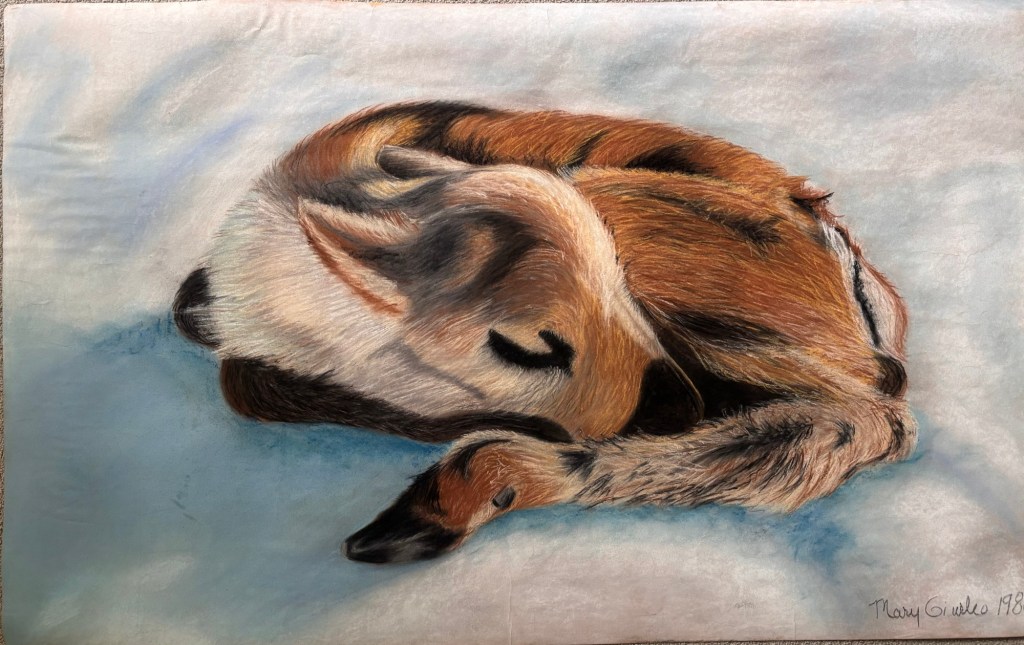
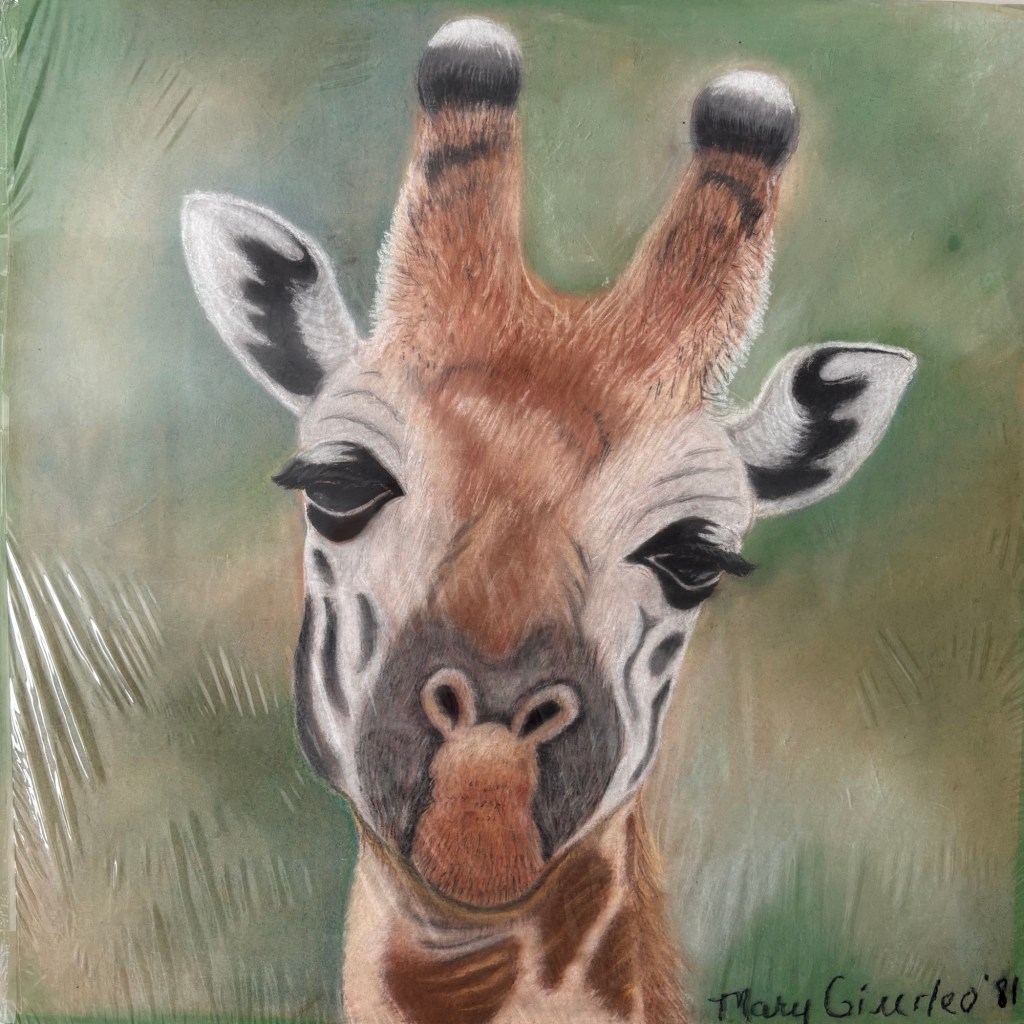
Huge pastel fawn that I did in high school
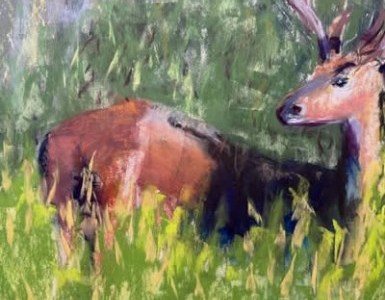
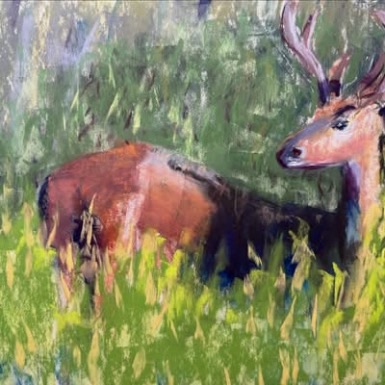
I had been thinking about trying pastels again, so when I saw the free demonstration advertised, I went. The artist “painted” a deer. (When I asked why he called it “painting” when I always thought of pastels as “drawing,” he said that it’s because pastels are the most pure/intense form of pigment. So even though you don’t use brushes, it’s called Pastel Painting.)
He started with a pencil sketch on UART sanded paper (400) and then added “hard pastels” as the first layer (he called it “the under painting”)—marking out the major color areas of the piece. He worked from dark to light (opposite of how most do watercolors). Then, he used a fairly big square brush dipped in rubbing alcohol to sort of smudge it all and work the major shapes. The alcohol dries quickly.
Then, he moved to soft pastels—and he had boxes upon boxes of them. Every color imaginable! “Ludwig” seemed to be his favorite brand (quite expensive). He used the soft pastels as the top layer to really define the piece and give it depth and beauty. He spent a lot of time on the face because he wanted that to be the focal point.
Pastel deer from a demo by professional artist John Forcucci
The artist had been primarily a watercolorist when someone gave him a “plein air” (outdoor) pastel class as a gift and he fell in love with the medium. Sometimes he combines watercolors and pastels. Many of his finished pieces were on display in the gallery at the arts center and some were really impressive. He mostly paints animals in the wild.
My thinking now is this:
Pastels look fun and I might like to try them again someday, but not now. I’m not ready to invest in the supplies and the dust they create is somewhat of a concern (both because of the mess and the potential toxicity).
I like the idea of painting “plein air” (outdoors) at some point, but that would require me to purchase an easel and other supplies. I’ll keep my eyes open for a workshop or other class that’s not too expensive. In the meantime, I have a full set of colored pencils, I should really just head outdoors with those and do some drawing, when the weather gets warm.
Bottom line: you can spend all kinds of money on fancy, new-fangled art supplies but they might not help you become a better artist. The only way to do that is practice. I feel I should keep working with the supplies I have and see where things go.
The other “problem” with pastels, is that you really need to put them behind glass (with separators) if you want to display your work, which is expensive. Watercolors typically require glass frames too, but at least you can just stick them in cheap frames from Michael’s. Pastels have a delicate, powdery surface. (In the old days, we sprayed our pastels to set them, but this artist strongly discouraged that.)
Still, pastel paintings can be absolutely exquisite and unique. Check out @CindyCrimmin on Instagram for some truly stunning examples of pastel painting.
If you read this to the end, thank you! I’m basically thinking out loud here. I feel like my blog is turning into a retirement journal and is very boring to anyone but me.
I started my 5-week class at a very nearby community arts center yesterday. I don’t like the set-up as much as the fancier arts center where I took my first watercolors class in the fall. The room is nice and sunny, but it’s quite crowded and no sinks. You have to use the restroom in the hall to get water and rinse your brushes.
The people seem nice. It’s a similar vibe to my first class. Lots of retired people who re-register each semester because they like the teacher and have gotten to know one another.
The difference is that we all paint the same subject each week, with the teacher giving a demo for each step. It’s not exactly a recipe for developing one’s own unique creative voice, but I’m sure I’ll learn some stuff by painting along with a pro.
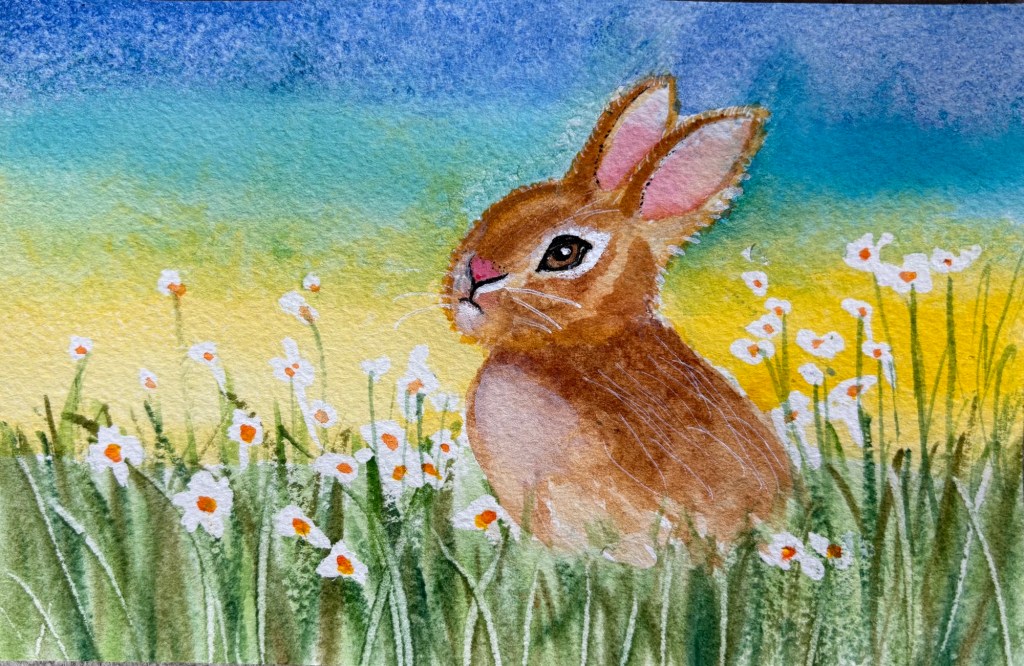
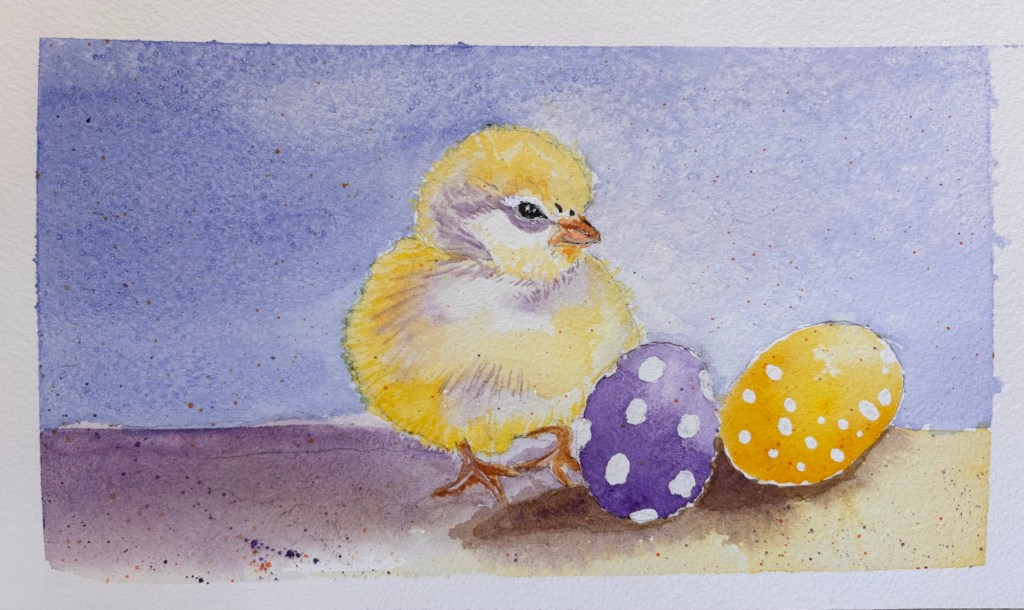
It’s surprisingly hard to make a chick’s face look “not mean.” I think the spotted Easter eggs help a bit.
In case you didn’t hear (because you were at work or something), those of us in the U.S. without jobs were faced with an Olympic dilemma this afternoon. We had to choose between watching the US v Canada women’s ice hockey Gold Medal game OR the women’s figure skating long program finals. They occurred simultaneously. So, if you wanted to watch them live, you had to choose.
Truth be told, it was not a hard decision for me. There is no world in which I would choose to watch a hockey game over figure skating—even a women’s hockey game. I mean, go hockey girls, but I’ll take spins and jumps and rhinestone-covered costumes over slashing, bashing, and hitting the boards any day of the week.
Even so, I was reluctant to get too invested in the women’s figure skating finals after the gut punch of the men’s. I was able to watch the first group of skaters live at my daughter’s house and was heartened that my favorite American skater, Amber Glenn, redeemed herself after a bad short program. (Still, it was highly unlikely she’d get a medal.) After Amber, I had to drive home and was on the road during several of the top skaters performances, including Alysa Liu. But by the time I got home and turned on the TV, Alysa was in first place with only two Japanese skaters left to go. The Japanese skaters weren’t perfect and Alysa held on to the top spot and won the GOLD! The free spirit from Oakland with face piercings and crazy Zebra-striped hair came out on top. SO COOL.
I later watched her performance on the primetime version of the Games and it was awesome. She skates with such wild joy and abandon, crazy hair flying. She’s really the opposite of a traditional ice princess. (It almost made up for the Quad God fiasco.)
Definitely look up Alysa’s Gold Medal skate, if you didn’t see it yet. And her backstory is just as good as her skating. Check out the piece 60 Minutes did on her here.
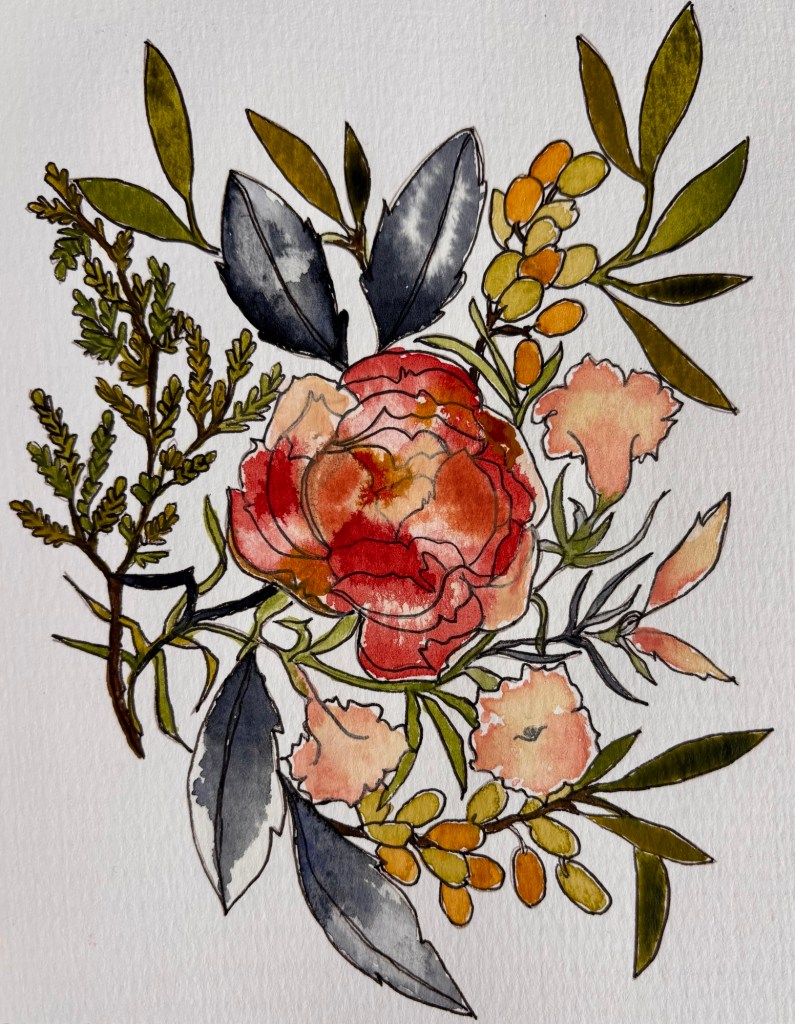
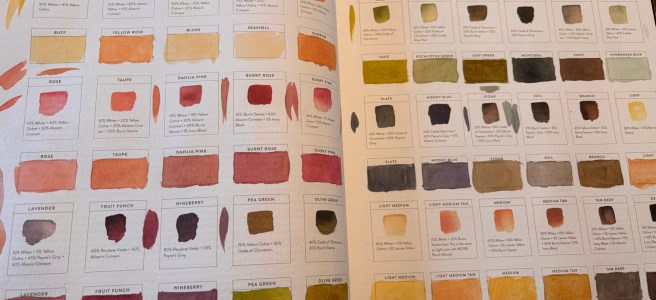
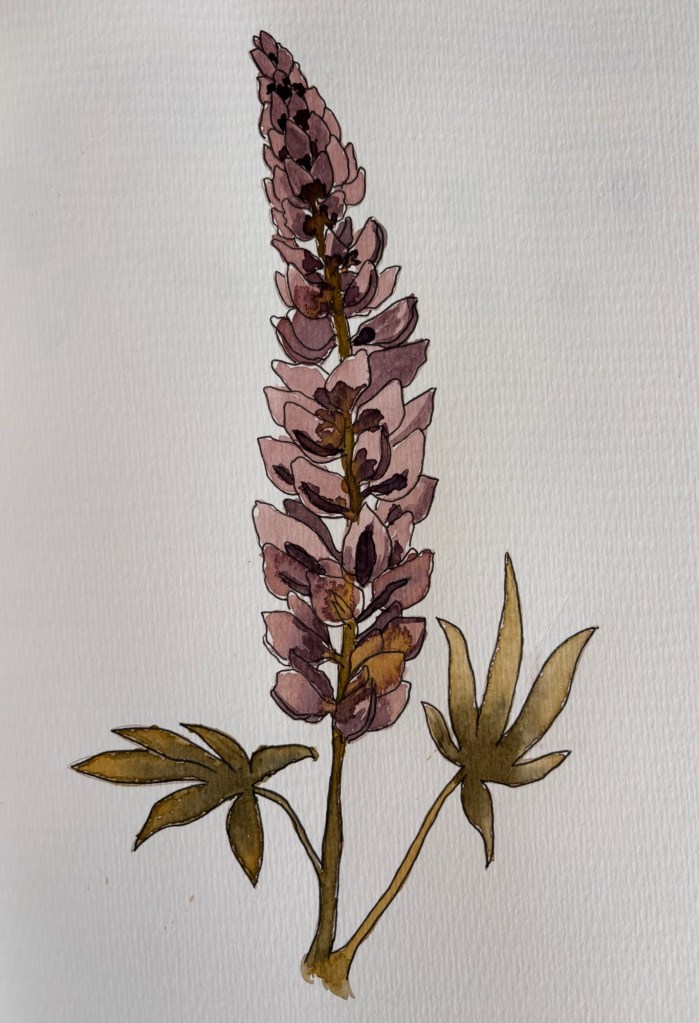
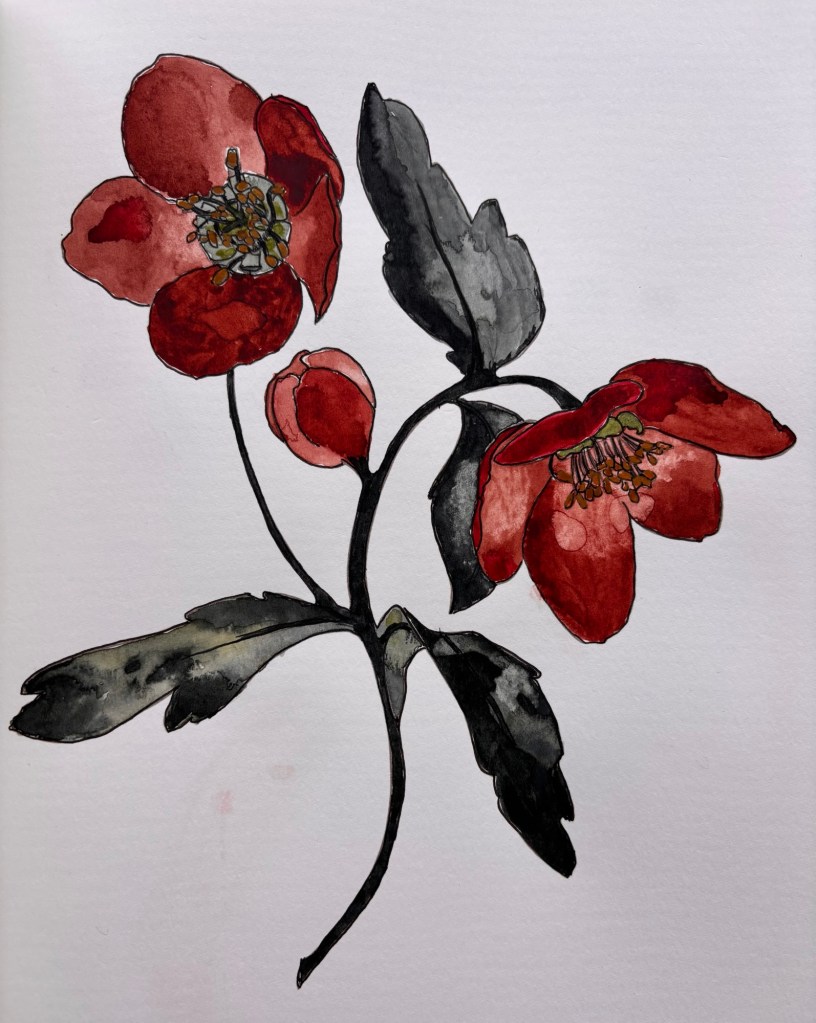
Almost done with my Watercolor Workbook by Sarah Simon.
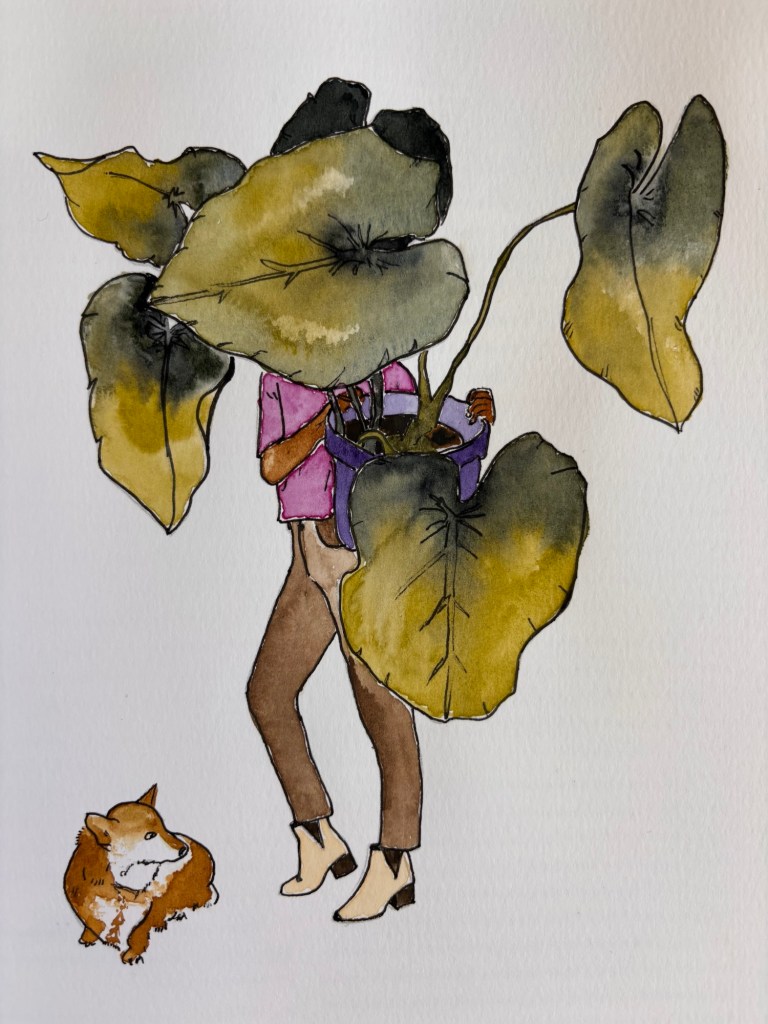
“Lady Monstera” and her little dog 🐶
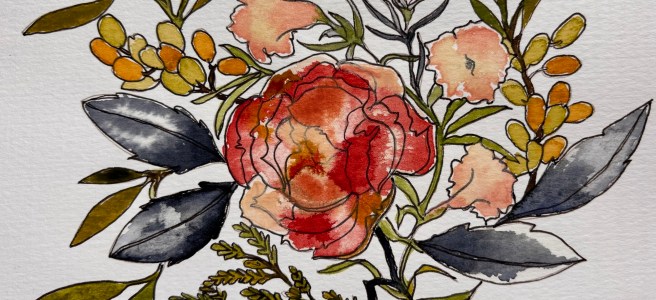
Berries and Cyprus
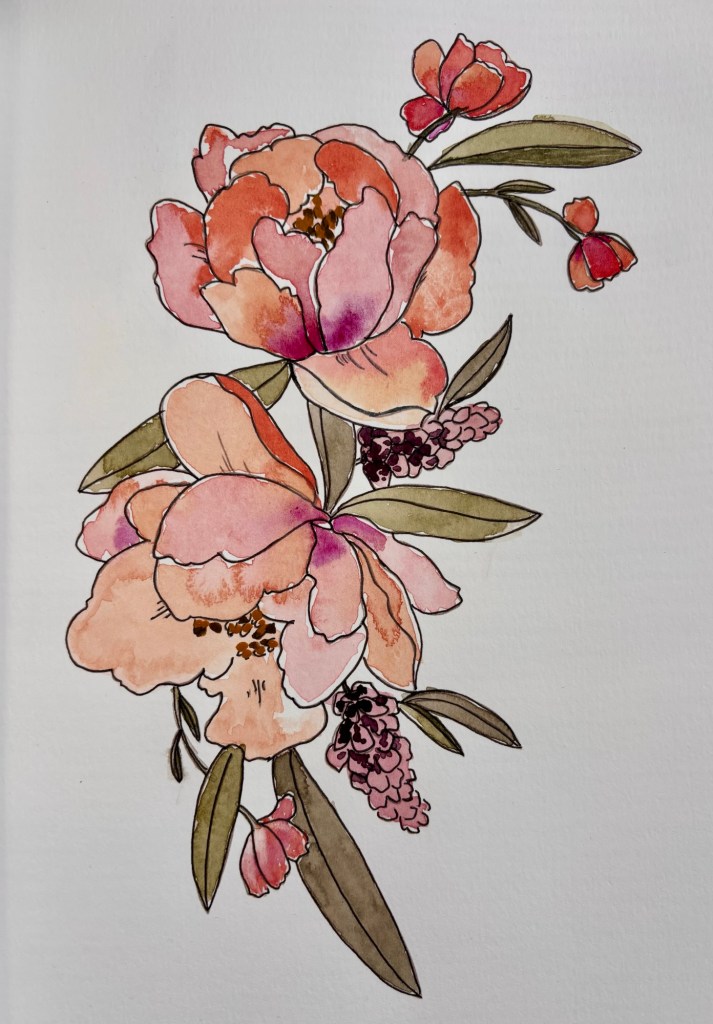
I painted the center flower as one big wet boundary, but I think it might’ve looked cooler if painted each petal separately. Would’ve taken longer though!
![A logo for "50 Happens," [a site dedicated to Gen X women with children and grandchildren] [who embrace life's challenges with humor and resilience], [featuring a modern and uplifting design] [that embodies strength and positivity] [with an elegant and playful style] [and a harmonious blend of colors like pink, fuchsia, purple, and blue].](https://50happens.blog/wp-content/uploads/2024/12/img-5uorrxvwartomopcpuhjfjd0.png?w=300)


 50 Happens