In relation to yesterday’s post about my Jamaican-born great grandfather, I wanted to show you his “Declaration of Intention” to become a citizen of the United States from 1915:
In general, it seems like pretty standard stuff.
Name: David Powell
Age: 38 years
Occupation: Fireman
Color: White
Complexion: Fair
Height: 5 feet 7 inches
Weight: 142 pounds
Color of hair: Brown
Color of eyes: Brown
Other visible distinctive marks: Scar on chin
Place of birth: Jamaica, British West Indies
Date of birth: September 11, 1876
Current residence: 342 29 St., Brooklyn, N.Y.
Emigrated from: Liverpool, England
Vessel name: Civic
Last foreign residence: Liverpool, England
Allegiance renounced: George V, King of Great Britain & Ireland
Port of arrival: New York
Date of arrival: On or about the ___ day of May, 1903
But the last part is interesting:
“I am not an anarchist; I am not a polygamist nor a believer in the practice of polygamy; and it is my intention in good faith to become a citizen of the United States of America and to permanently reside therein: So help me God.”
So, the two dealbreakers were anarchy and polygamy.
Those were the elements the US wanted most to keep out in 1915.
I guess they’d be disappointed to know that the hit reality show Sister Wives has been running strong since 2010.
You know the top secret security question we all get asked at some point:
What is your mother’s maiden name?
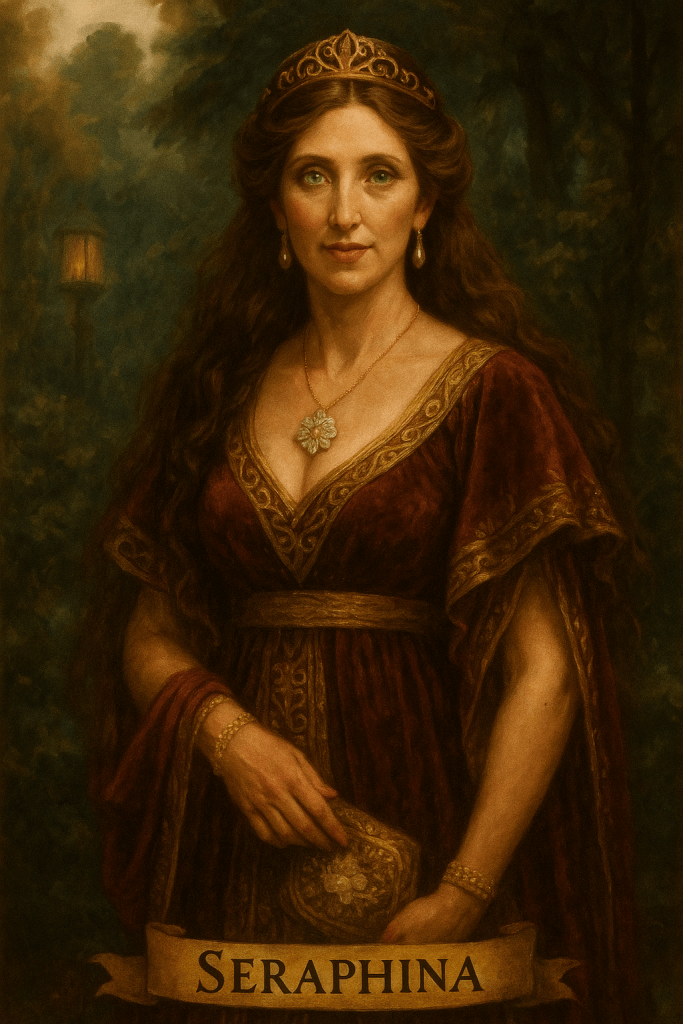
This is the first image that comes up in the WordPress free image library if you type the word “maiden.”
Well, I never seriously considered changing my last name when I got married. So my kids have it easy: my last name is the same as my “maiden” name. I’ve only ever had the one surname. [Actually, I just thought of this: maybe I should secretly choose a “fair maiden” name—like Guinevere or Seraphina—and tell only my kids so they can have an extra tight security question.]
But I digress…before I even start.
The point of this post is that my mother’s maiden name is Powell, which is neither Italian nor Irish—the two ethnicities I have explored the most. I’m half Italian (all of my father’s grandparents were born in Italy) and at least one eighth Irish. (I did a deep dive on that Irish great grandmother on my recent trip to Ireland.)
Well, the ethnicity of the man that my Irish great grandmother married and had six children with (including my grandfather) is more of a mystery. Thanks to my mother’s extensive research, we know his name was David Julian Alonzo Powell and that he was born in Jamaica in 1876. They married in Liverpool, England in 1903, shortly before emigrating to Brooklyn, NY.
He worked as a mechanic and a fireman and died of syphilis at age 43 in New York. His race was listed as “white” in census records and on his death certificate.
Now, David’s brother Henry, from the same two Jamaican-born parents, was classified as “mulatto” on the 1920 US census and worked as a minister in several black churches in the US south before returning to Jamaica.
One of the US churches he served was in Asheville, NC, where a newsletter noted that Rev. Powell was “a quiet cultured Christian gentleman, whose record in the city has been as clean as a hound’s tooth. He is every inch a priest in the Episcopal church. He has been a credit to the colored people in Asheville and they have in turn put a true evaluation upon him.”
Soooo, one brother (my great grandfather) lived as a white person in the US, and the other one (my great granduncle) lived as a mixed-race or black person in the US. Their father, William Henry Powell (my great great grandfather) lived his entire life in Montego Bay, Jamaica. His 1902 death certificate listed his occupation as “baker.” His race is not listed, but it seems almost certain that he and his wife Elizabeth were of mixed Afro-European descent. (Fully white Europeans were a very small percentage of the Jamaican population at that time and typically did not live and work in downtown Montego Bay, whereas Black Jamaicans and mixed-race Jamaicans frequently worked as bakers, carpenters, tailors, and other tradespeople.)
Of course, this begs one of the most challenging questions for those who seek out their roots: were any of my ancestors enslaved? And for mixed-race people, the even more more challenging corollary: were any of my ancestors enslavers? It seems likely, as slavery is how black people got to Jamaica in the first place.
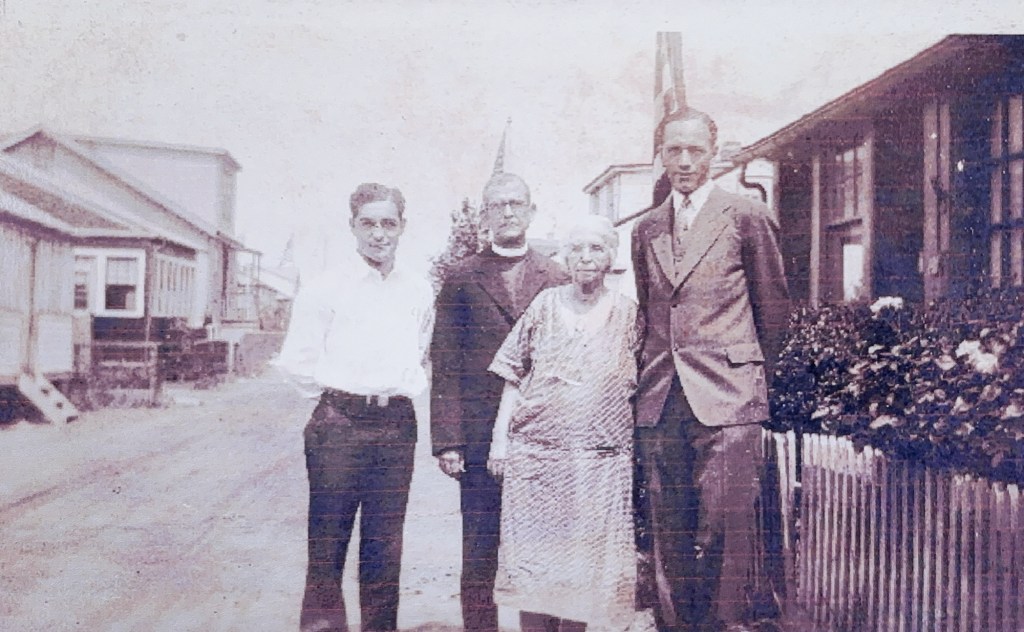
My grandfather (far left) and his brother (far right) with their minister uncle, Rev Henry Powell and his wife Bertha.
So, my mother’s maiden name leads to Jamaica 🇯🇲
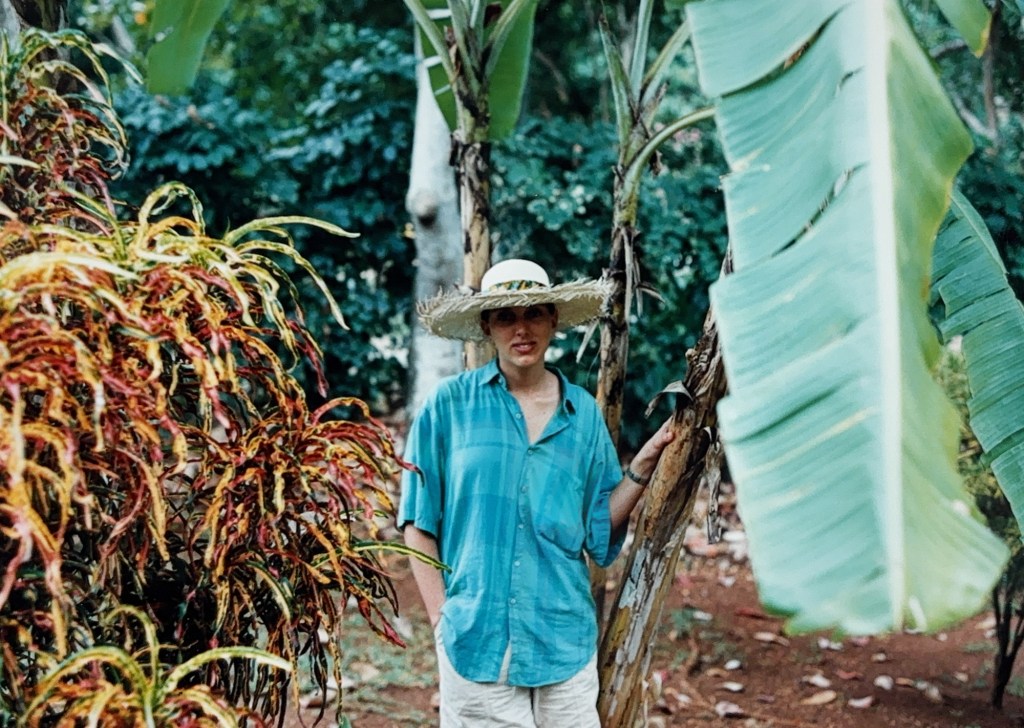
I went to Jamaica with a boyfriend in 1990—way before I had any idea of a genealogical connection with the country.
What’s behind your mother’s “maiden” name?
______________________________
UPDATE: I’ve just learned from Elle’s blog that today (August 1) is a very important national holiday in Jamaica. It’s Emancipation Day, which celebrates the abolition of slavery in the British colonies in 1834.
After Kilkenny, it was onwards to Dublin—the great capital city of the Republic of Ireland. We approached Dublin from the south, which was described as the “posh” side of town.
After a lovely lunch surrounded by ancient giant trees at The Fern House (and quick shopping in the attached Avoca store), we headed to the city for something completely different— a moving tour of Kilmainham Gaol.
The Fern House Cafe
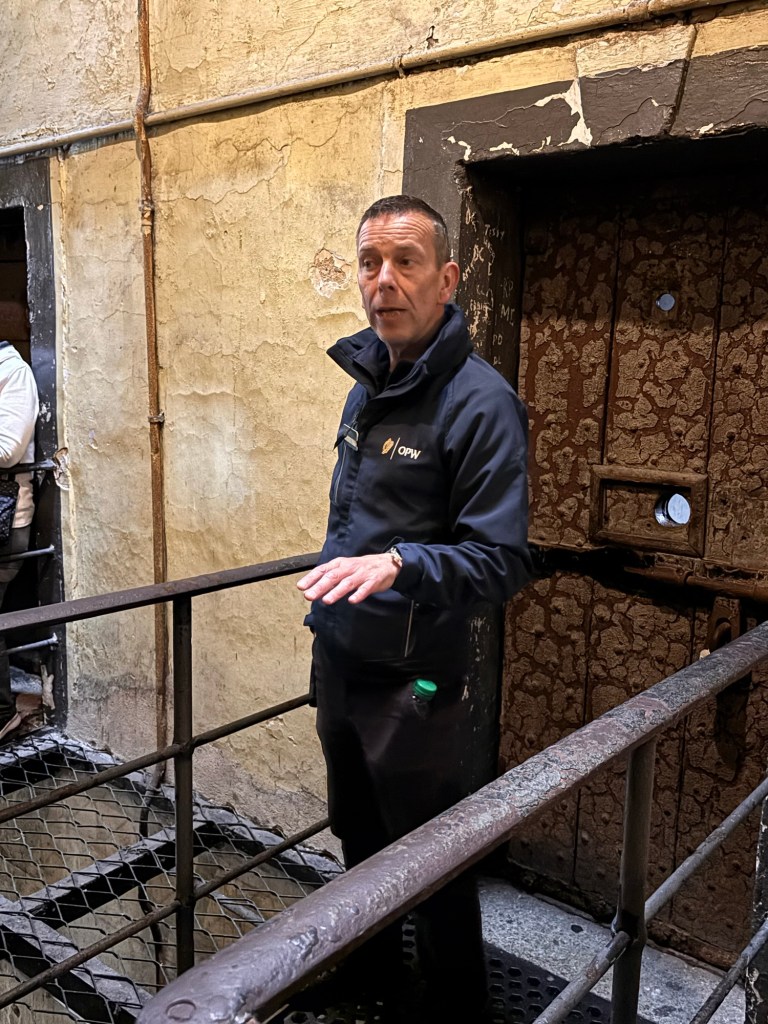
Our tour guide at the Gaol (jail) was very dramatic and deadly serious about Ireland’s history and struggles for independence against “the colonizer” (aka Great Britain).
This historic prison is a powerful symbol of Irish nationalism, as it held many leaders of Ireland’s rebellions, including the 14 men executed after the 1916 Easter Rising. (On the way to the prison, the guide played Rod Stewart’s beautiful song Grace about Joseph Plunkett—one of the 14 rebellion leaders—who was allowed to marry his childhood sweetheart Grace shortly before his execution.)
Kilmainham Gaol
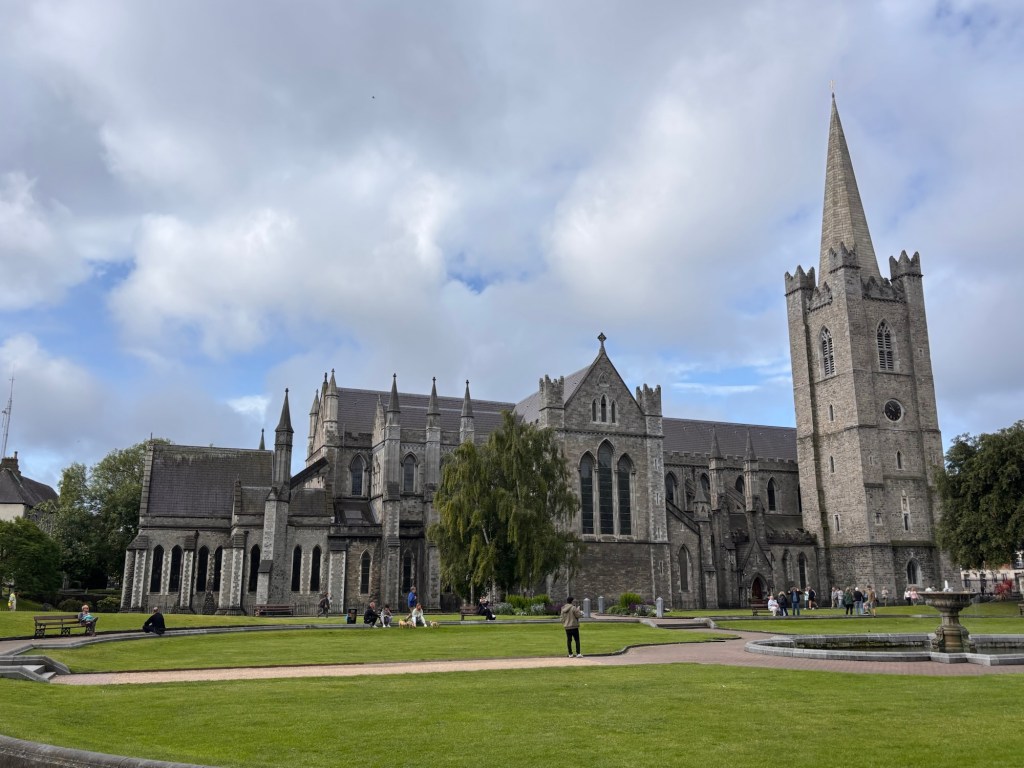
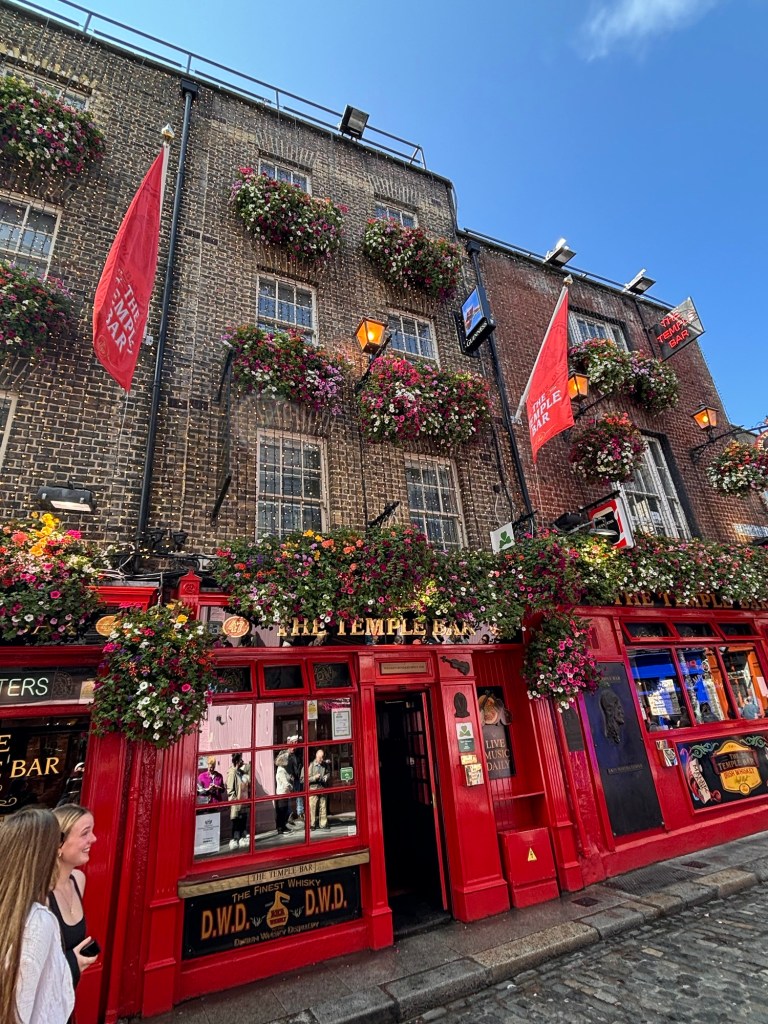
The next morning, the sun came out and we did a walking tour and saw many of the city’s iconic sites:
St. Patrick’s Cathedral, Dublin
The Long Library at Trinity College, Dublin, which you enter after viewing Ireland’s most famous artifact—The Book of KellsThe Temple Bar, Dublin
Meanwhile, my son John (who had been in Sweden for work) joined us in Dublin, which was fantastic. It was so great to spend time with him!
My son and me at a pub on Camden Street
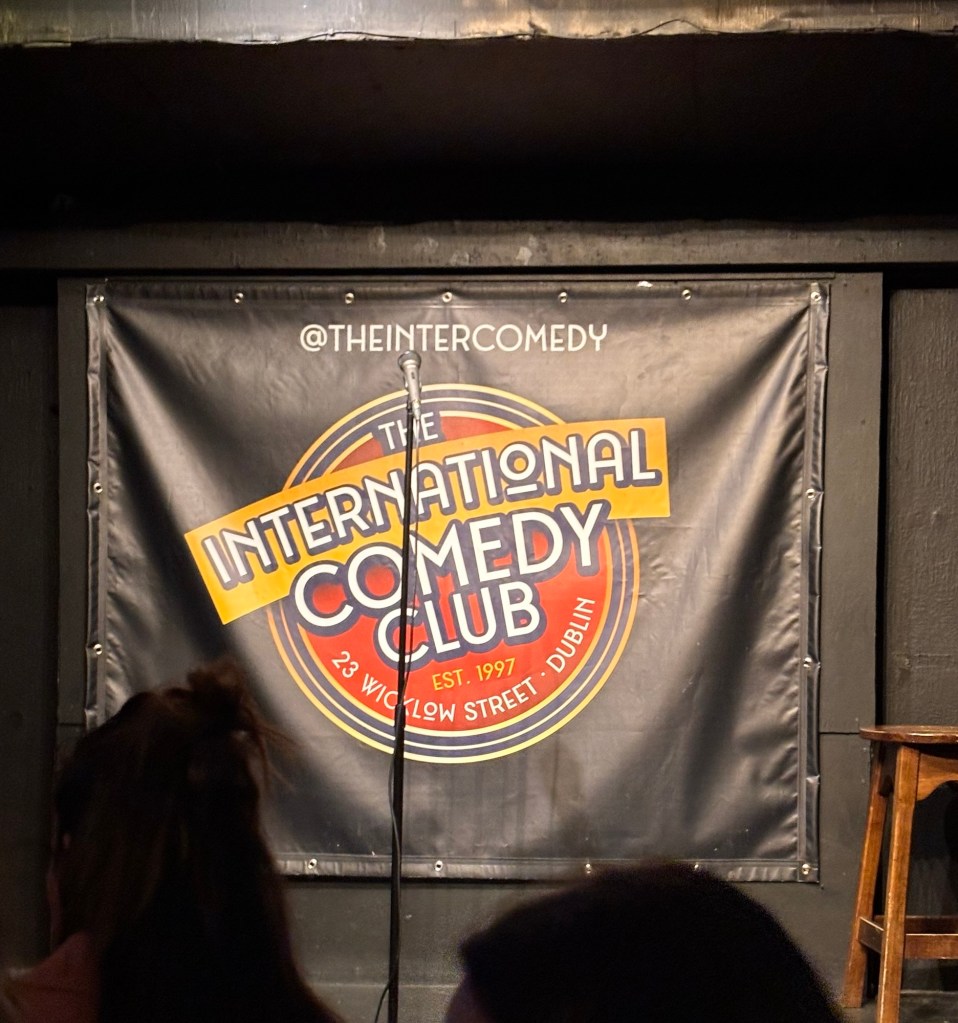
We did several more museums with him, including EPIC (the Irish Emigration Museum) and the National Museum of Archeology. We also went to many pubs, stores and even a sold-out comedy show, where we were the only Americans and the comedians knew it. 🤣 (They did not hold back on the Trump jokes, which was awesome.)
Check out the International for great stand-up
And NOW, if you’re still reading, here’s the most amazing thing that happened in Dublin. You may remember that this trip was inspired, in part, by my Irish roots. Thanks to my mother’s extensive genealogy research, I have a lot of information about my great grandmother’s family, including the names and addresses of her parents—and their parents.
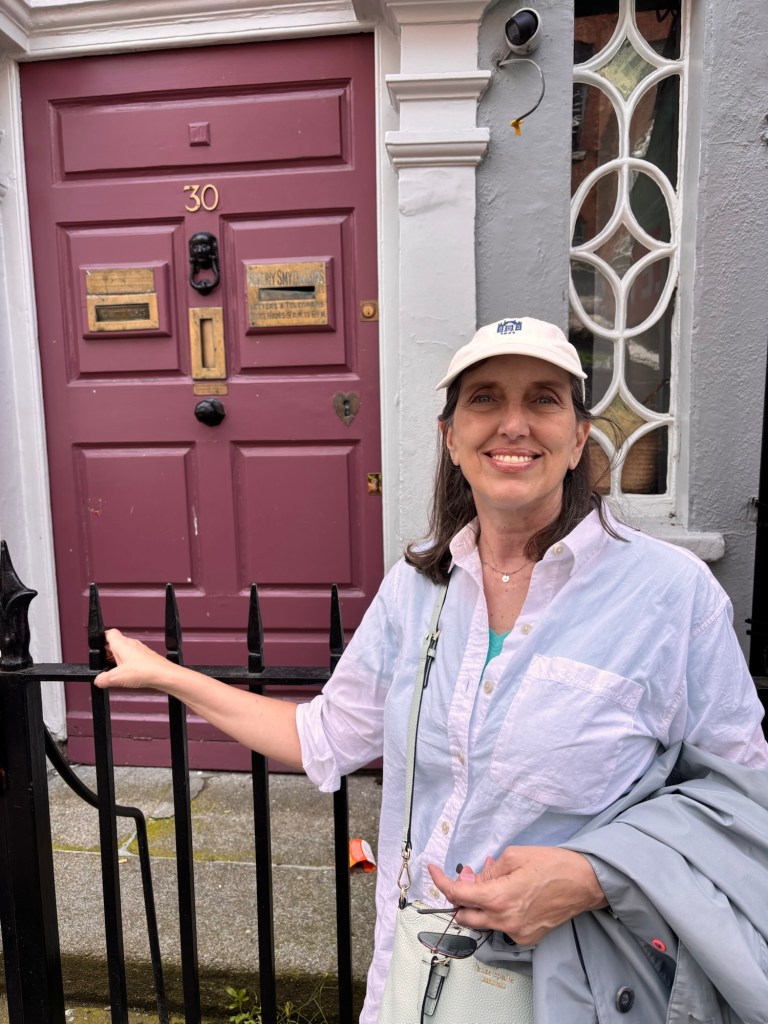
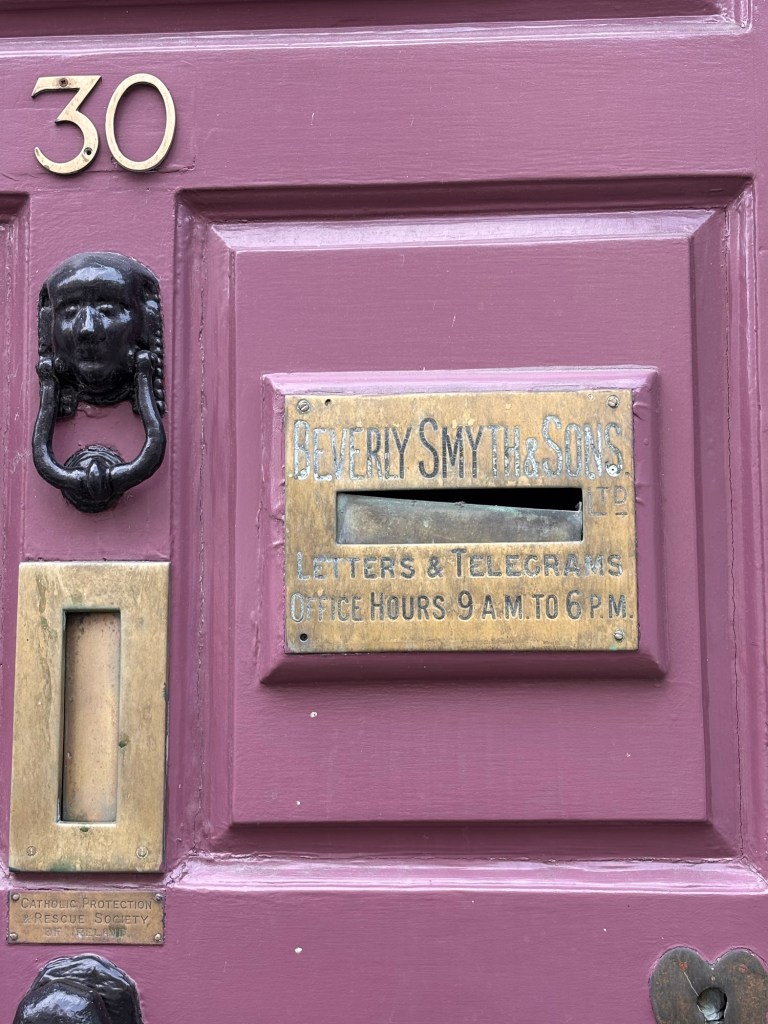
One night we walked by the address of the home where my great grandmother’s mother grew up and believe it or not, her father’s name is STILL on the door: Beverly Smyth.
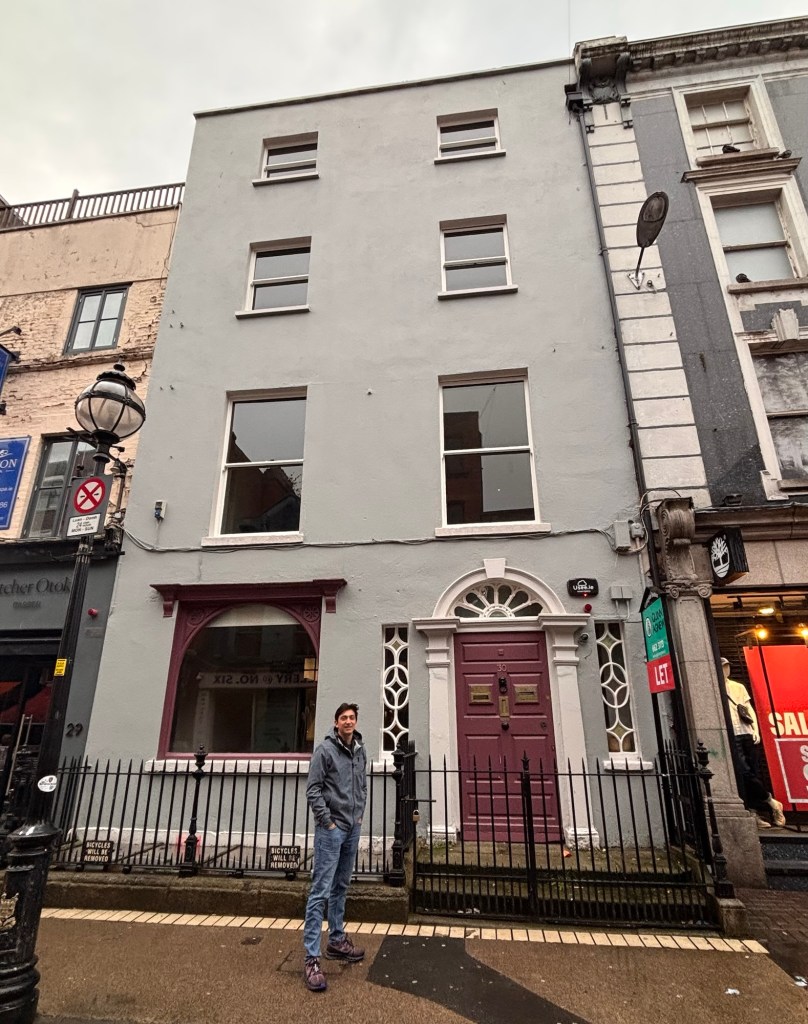
30 South Anne Street is right in the middle of all the action in Dublin City Center—just off Grafton Street. Beverly Smyth (1817-1898) was my great, great, great grandfather. The company he started in 1846 (Beverly Smyth & Sons) is still in existence. It’s now a well-established Irish moving and storage company known as Oman Beverly Smyth.My maternal grandfather, Henry Beverly Powell (1906-1964) reportedly hated having “Beverly” as his middle name and only ever went by Henry B. Powell, but it turns out that Beverly (his mother’s grandfather) was a successful Dublin businessman.
I also found the church where my grandfather’s maternal grandparents got married in 1879:
St. Andrew’s Church, Westland Row, Dublin
And of course, I went inside the church too, because I’m like that!
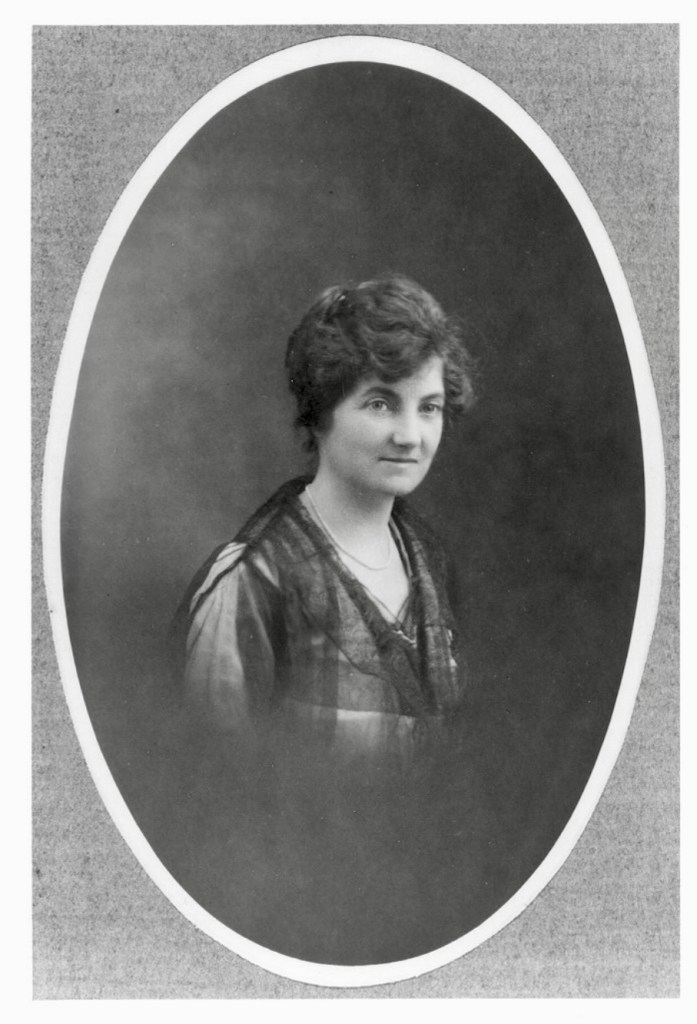
My great great grandfather John Barry (1846-1881) married Beverly & Bridget Smyth’s daughter Mary in St. Andrew’s Church in 1879.Their eldest child Mary Barry (so many Marys! Very confusing!!) was born a year later — in 1880. She then emigrated to America (Brooklyn, NYC) in 1903 at age 23. She died in 1952, just 12 years before her son (my grandfather).
I had two other Dublin addresses for the Barrys, but did not have time to see them when I was there, so I’ll have to go back.
But the bottom line is: I’m a DUBLINER people. My people were city folk. They were not digging potatoes in County Cork. So the next time I go to the Dubliner bar in Boston, I’ll know I belong.
My son John in front of his great great great great grandfather’s house in Dublin
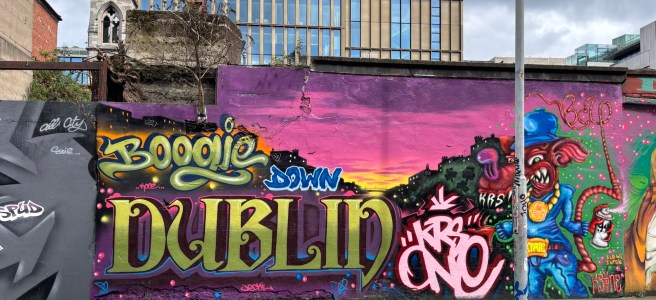
It really is in a prime city location and currently up for rent! Here’s the street it’s on:
According to the realtor, the “Beverly Smyth & Sons” nameplate can never be removed because the property is on Dublin’s list of protected properties. So maybe someday my granddaughter will visit Dublin and see her great x5 grandparents’ home.
FINAL THOUGHT: we have far too many Johns and Marys in the family tree (on both the Irish and Italian sides). Giving your kids unique first names will help future generations keep it all straight. 😜
![A logo for "50 Happens," [a site dedicated to Gen X women with children and grandchildren] [who embrace life's challenges with humor and resilience], [featuring a modern and uplifting design] [that embodies strength and positivity] [with an elegant and playful style] [and a harmonious blend of colors like pink, fuchsia, purple, and blue].](https://50happens.blog/wp-content/uploads/2024/12/img-5uorrxvwartomopcpuhjfjd0.png?w=300)









 50 Happens