![A logo for "50 Happens," [a site dedicated to Gen X women with children and grandchildren] [who embrace life's challenges with humor and resilience], [featuring a modern and uplifting design] [that embodies strength and positivity] [with an elegant and playful style] [and a harmonious blend of colors like pink, fuchsia, purple, and blue].](https://50happens.blog/wp-content/uploads/2024/12/img-5uorrxvwartomopcpuhjfjd0.png?w=300)
No one to stop him
Laws and norms and allies crushed
Grief and fear growing

No one to stop him
Laws and norms and allies crushed
Grief and fear growing
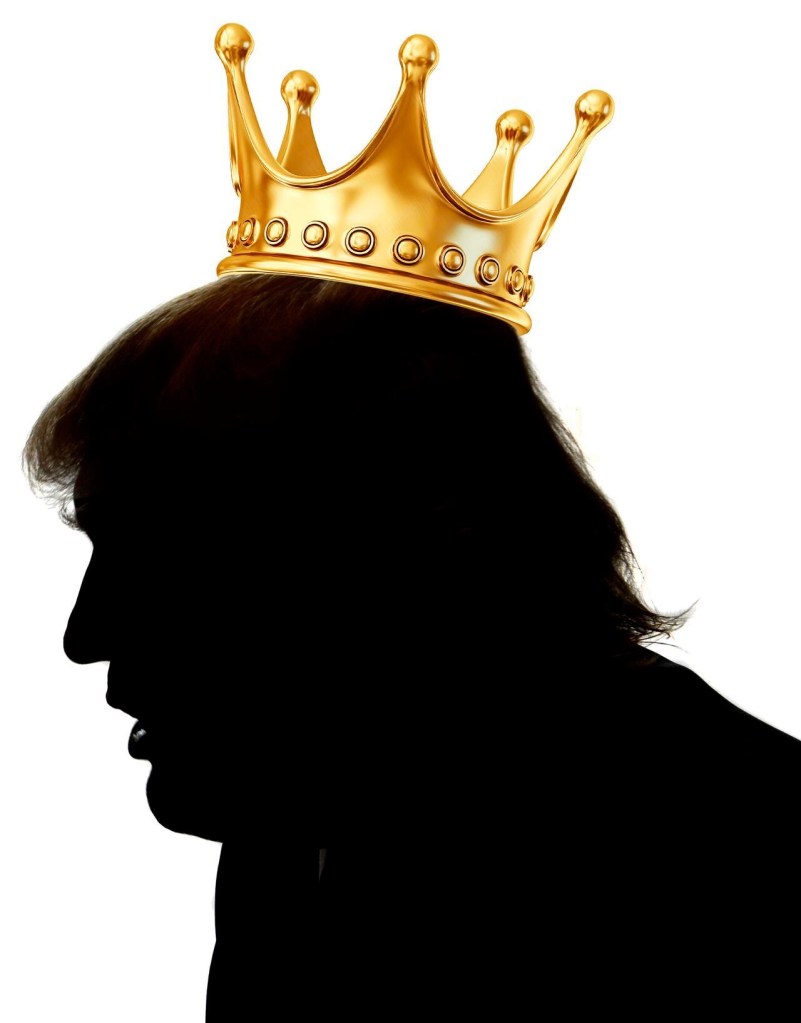
Ohio’s trash dad
Obsequiousness oozing
From his smug, fat face


If it looks like a duck, walks like a duck, and quacks like a duck, then it probably is a duck.
“In what ways specifically is the second Trump administration acting like a fascist regime?” ~ question to ChatGPT
The second Trump administration has implemented several policies and actions that critics argue exhibit characteristics commonly associated with fascist regimes:
1. Pardoning January 6 Participants: In his first week back in office, President Trump issued pardons to approximately 1,500 individuals involved in the January 6 Capitol attack. This move has been interpreted as condoning political violence and undermining democratic institutions.
2. Withdrawal from International Agreements: The administration withdrew from the World Health Organization and the Paris Climate Agreement, actions that signal a retreat from global cooperation and a preference for unilateral decision-making.
3. National Emergency on Migration: Declaring a national emergency on migration, the administration sought to cancel birthright citizenship and suspended refugee admissions, reflecting nativist and exclusionary policies.
4. Attacks on Diversity, Equity, and Inclusion (DEI) Initiatives: The administration has aggressively targeted DEI programs, rescinding long-standing anti-discrimination executive orders and mandating investigations into DEI practices in the private sector. Critics argue that this undermines civil rights protections and could lead to systemic discrimination.
5. Anti-Transgender Policies: An executive order was issued recognizing only “two sexes, male and female,” affecting policies related to passports and access to single-sex spaces. This move has been condemned by advocacy groups as discriminatory and regressive.
6. Consolidation of Power and Suppression of Dissent: The administration enacted executive orders targeting undocumented immigrants, canceling federal diversity programs, and removing anti-corruption inspectors. A significant purge of senior officials and attempts to control government spending have been perceived as efforts to consolidate power and suppress dissent.
7. Dehumanizing Rhetoric: The administration’s rhetoric has increasingly dehumanized political opponents and marginalized groups, with President Trump referring to adversaries as “vermin” and employing language reminiscent of authoritarian regimes.
These actions have led to widespread concern among scholars, political analysts, and human rights organizations, who argue that the administration is exhibiting traits characteristic of fascist regimes, including authoritarianism, suppression of dissent, and the erosion of democratic norms.
———————————————————

This prompt gives me pause.
I mean, I like to think of myself as being a serious person that people listen to, but I’ve not held many traditional leadership roles in my life. I can’t think of one committee that I ever chaired or co-chaired. Maybe that will change, as I’ve been appointed to my church’s executive team for next fiscal year.
At work, I was always a respected “individual contributor” (as they say in HR). I never managed a team.
With my family, I’d say I’m pretty much the leader (CEO), with my husband as CFO (and let’s face it, CTO—I’m clueless about technology), but with my son soon to be fully launched, I may be in more of an advisory role soon.
With my activist volunteer work, I’m definitely a follower. Tell me who to call or write, and what to say, and I’ll get it done. I respect the work of the smart and serious activists in my community and I gladly follow them. We’re united in our mission to create a blue wave in 2024 and save democracy from the MAGA cult. We’ve got new and different people showing up every week (including men—yay men!), plus many helping out from home.

National, statewide and local elections are all important. I always vote. I have a couple of friends who are very involved in town affairs. Sometimes I reach out to them before local elections. They advise me on who to vote for, when I’m unfamiliar with the candidates. There’s nothing wrong with that. If you have friends who share your values, you can ask them how to vote.
On the federal level in the United States, it’s all on the line in November. For those who missed the exceedingly well-researched TIME magazine cover story on how far Trump would go in a second term, here it is.
I hope voter turnout in November is huge and that people don’t waste their votes on third party candidates (or that creepy Kennedy who hates vaccines). Yes, Joe Biden is very old, but he’s the only candidate with a realistic chance of preventing an “imperial presidency that would reshape America and its role in the world.”
On September 17, 1787, at the Constitutional Convention in Philadelphia, Benjamin Franklin was 81 years old and in terrible pain from gout and kidney stones. After hashing it out for more than two weeks (seven hours per day), he finally convinced thirty-nine convention delegates to sign the Constitution of the United States, with just three delegates refusing. (It would still need to be ratified by the states.)
At the end of the day, they all went out to dinner at the City Tavern in Philly. Delegate McHenry (Maryland) wrote a diary entry describing a conversation between Franklin and Elizabeth Willing Powel who said, “Well, Doctor, what have we got, a republic or a monarchy?” Benjamin Franklin responded:
“A republic, if you can keep it.”
Source

Related post:


 50 Happens