Patriots Day

Patriots Day is a special Massachusetts holiday commemorating the start of the American Revolution. In case you don’t know the story: On April 18, 1775, British regulars (aka “Red Coats” because they wore bright red uniforms) marched from Boston to seize weapons stored by colonial militias in Concord. Paul Revere and others rode ahead to warn colonists. At dawn on April 19 in Lexington, Red Coats confronted about 70 militiamen (aka “Minute Men” because they could be ready to fight in a minute); a shot was fired—“the shot heard ’round the world”—and fighting began. Eight colonists were killed. The British continued to Concord but met fierce resistance. Amazingly, the Minutemen forced the Red Coats to retreat to Boston under heavy fire using fighting skills they learned from native people. A bunch of ragtag New England farmers chased the world’s most powerful army back to Boston with their tails between their legs. This marked the start of the American Revolutionary War.

Patriots Day is also the day they hold the Boston Marathon and many people have it off work.

This year, Massachusetts is kicking off the 250th birthday celebrations for the entire country. We’ve had all sorts of patriotic celebrations this weekend—all with a decidedly anti-Trump sentiment.

If you have time, it’s worth watching historian Heather Cox Richardson give an address at the Old North Church detailing the events leading up to the “midnight ride of Paul Revere.” One of her final points is that the two men who lit the lanterns in the steeple to start the process of warning the colonists that the British were approaching “by sea” were not doing anything extraordinary. They were just doing what they considered to be “the next right thing” at that time.

Since the heartbreaking election in November, I haven’t felt much like getting back out there and joining the resistance, but Patriots Day is special.

I was there in Concord for the Bicentennial in 1976, and wasn’t going to miss out this year. It felt like “the next right thing.”
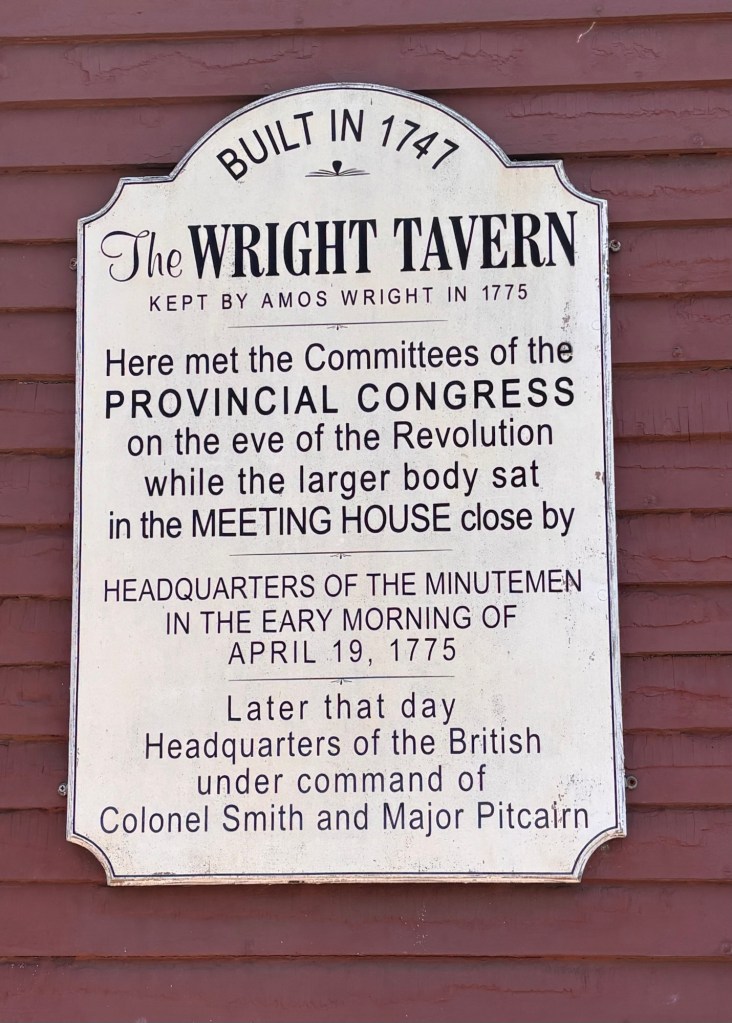
The American Revolution started here.
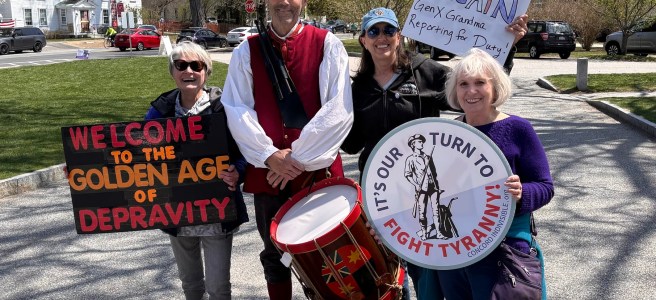
My friends and I with a Concord Minuteman
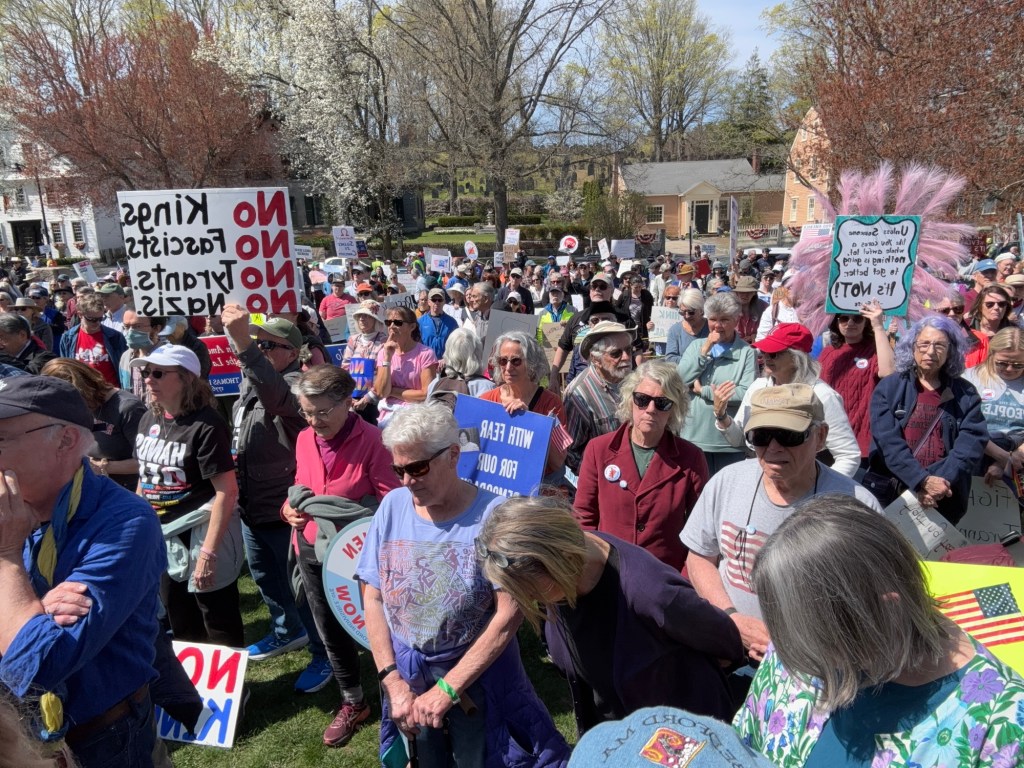
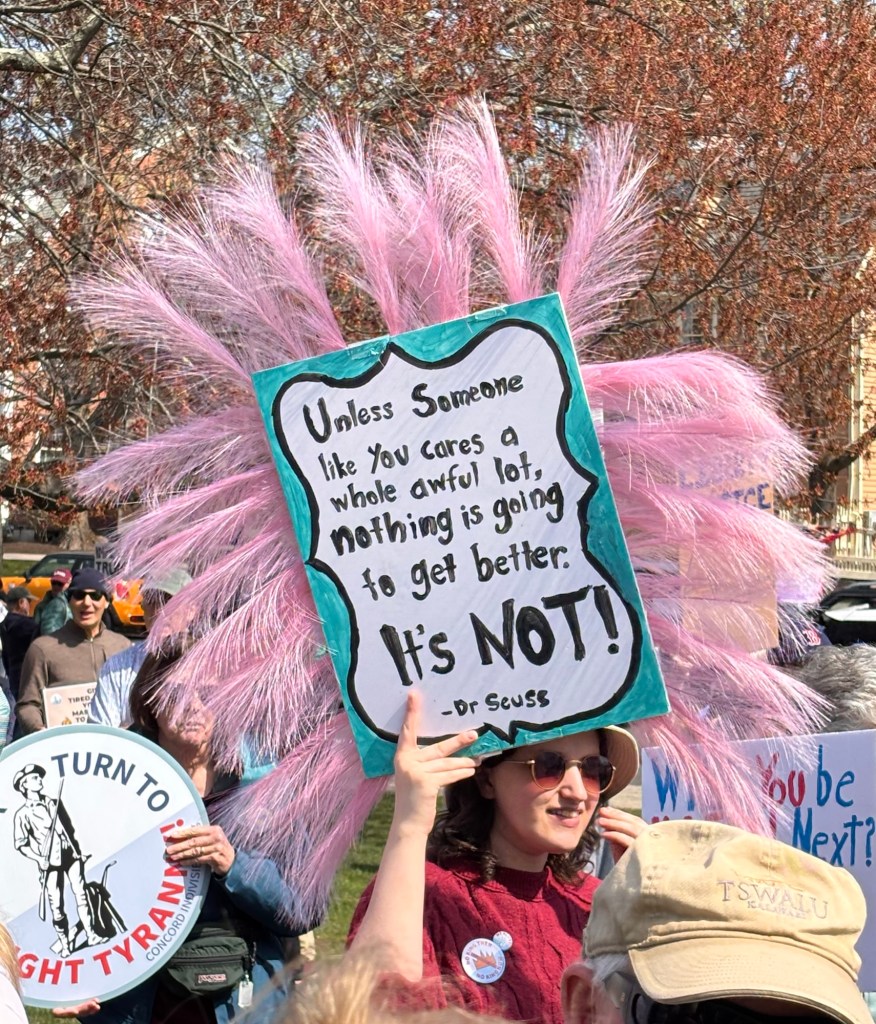
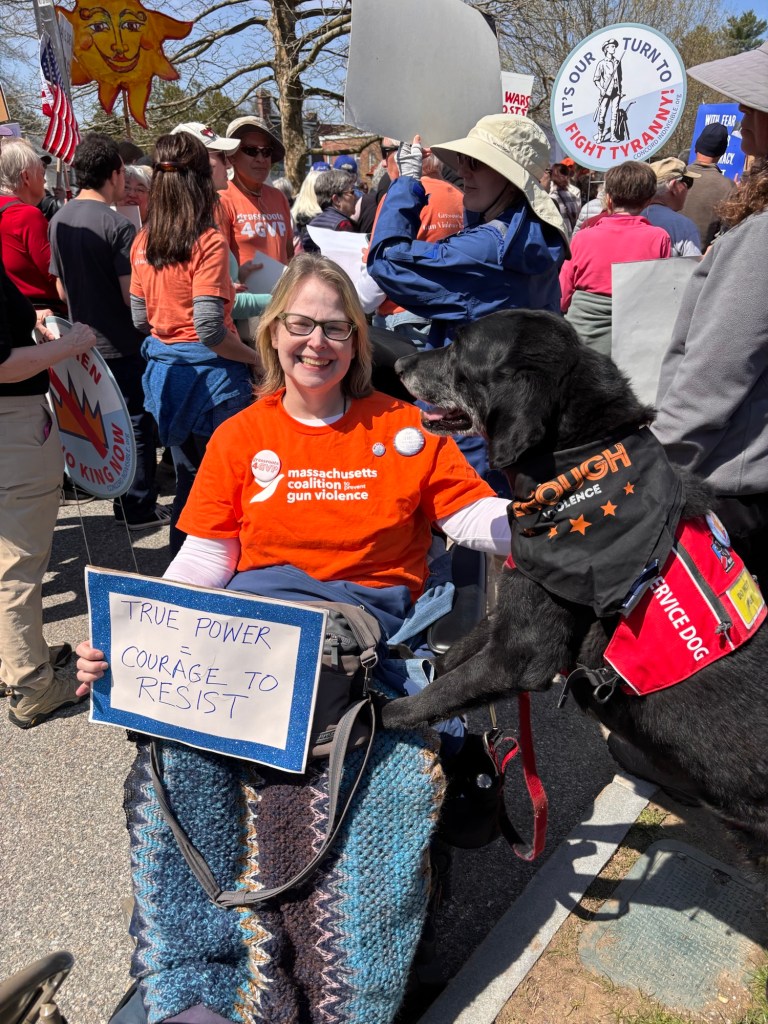
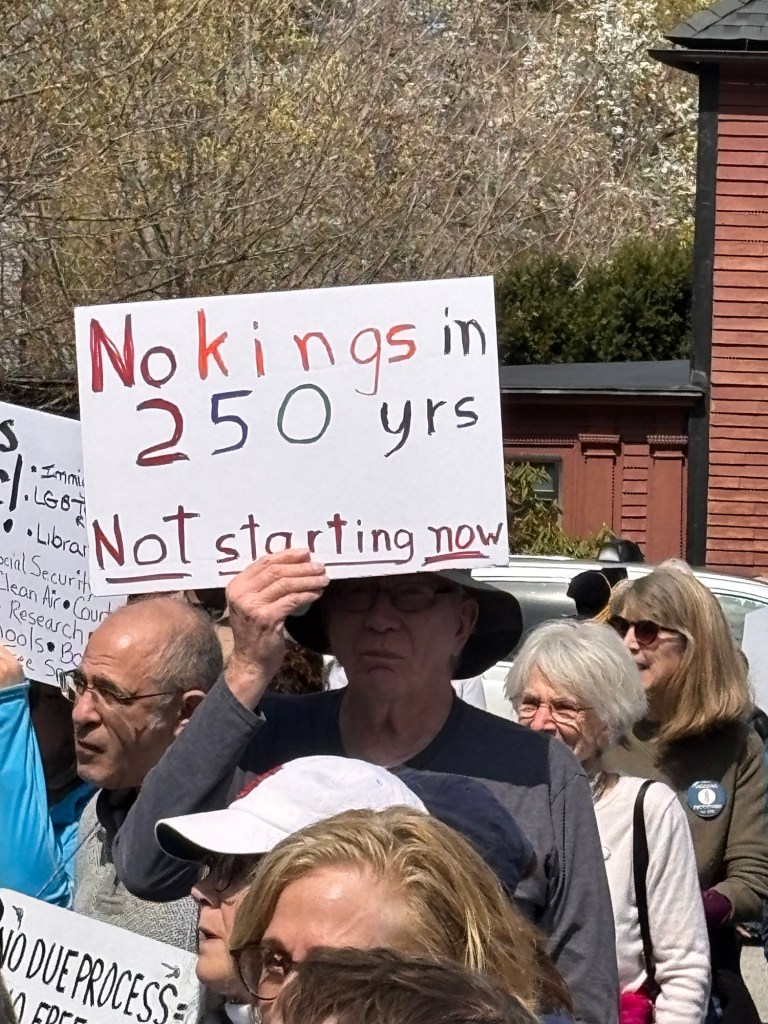
There was a huge anti-Trump crowd in Concord center for Patriots Day
Speakers and singers on the steps of the Unitarian Universalist church
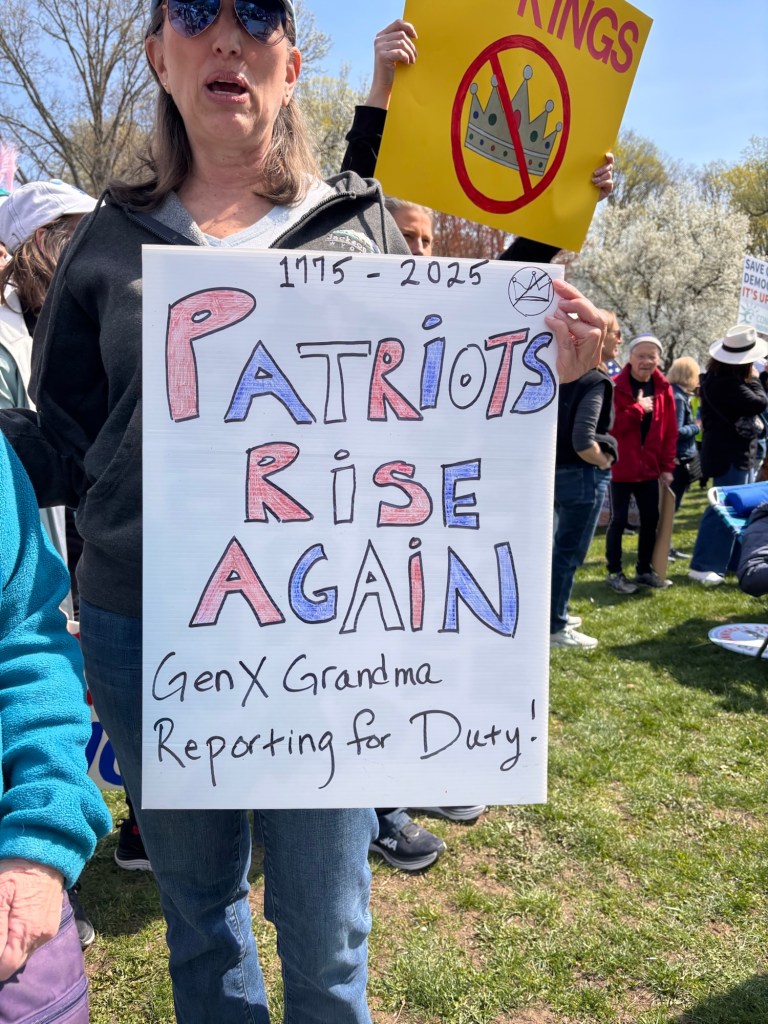
That’s me!

No Kings.

🇺🇸

One if by Land, Two if by Sea

I’m locked out of WordPress Daily Prompts (because I’ve already responded to all of them) and I don’t usually look back at my old responses, but in this case, I’m happy to report that I did something I said I would do!

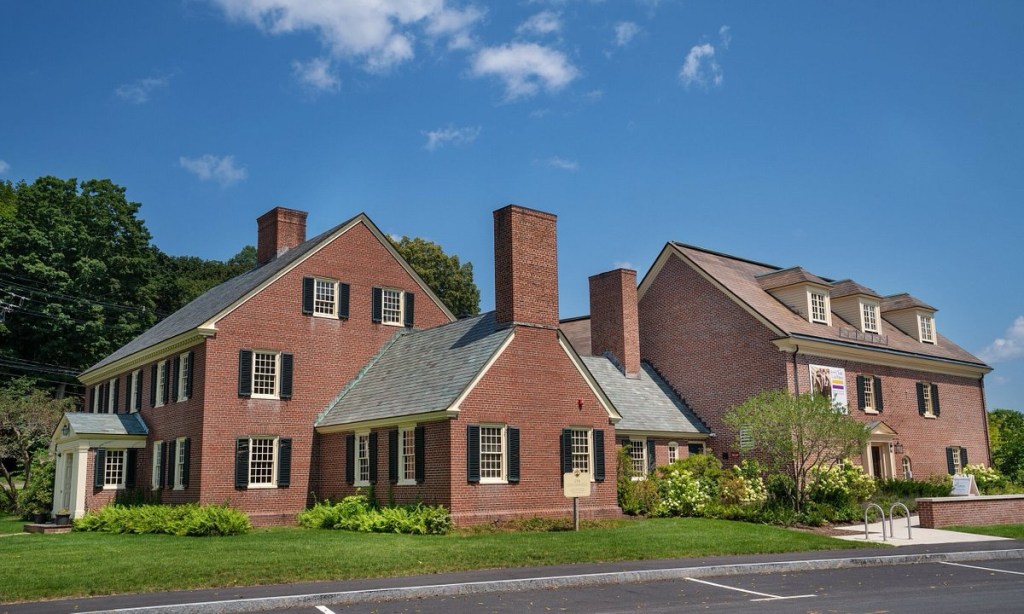
My husband and I visited the newly renovated Concord Museum in December and it was impressive.

This year, 2025, is the 250th anniversary of the start of the American Revolution, specifically the Battles of Lexington and Concord (April 19, 1775).

Along with the Old North Bridge Visitor Center, the Concord Museum is the place to learn about the American Revolution. If you don’t know the story of the lantern warning (“one if by land, two if by sea”) and Paul Revere’s famous ride from Boston to warn the colonists (“the British are coming!”), you’ll learn it here.

There’s also a ton of cultural information about Concord’s many famous intellectuals and writers like Louisa May Alcott, Ralph Waldo Emerson, and Henry David Thoreau. Many unsung leaders of both the abolitionist and suffrage movements also lived in Concord.


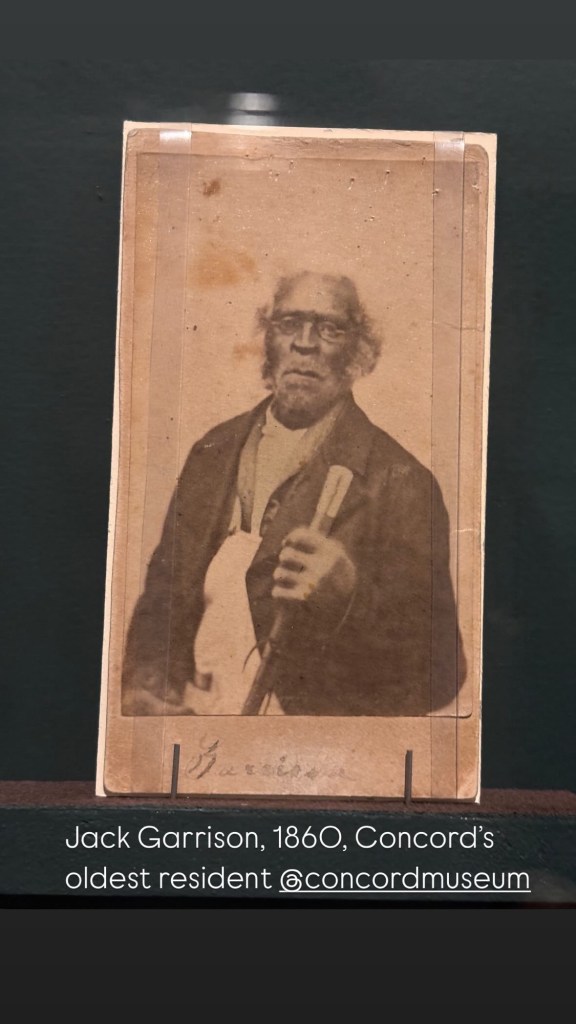
John “Jack” Garrison was an African American man who escaped slavery in New Jersey around 1810 and settled in Concord, Massachusetts. In Concord, he worked as a woodcutter and day laborer. In 1812, he married Susan Robbins, the daughter of Caesar Robbins, a Revolutionary War veteran. Together, Jack and Susan raised nine children, four of whom survived into adulthood. Despite the challenges of his early life, Jack became an integral part of the Concord community. He was known for walking around town with his saw-horse over his shoulder and his saw on his arm, even into his 60s. In recognition of his status as the oldest person in town, he was presented with a walking stick, which is now part of the Concord Museum’s collection. Jack’s life in Concord was marked by both acceptance and the persistent threat of capture due to the Fugitive Slave Acts.
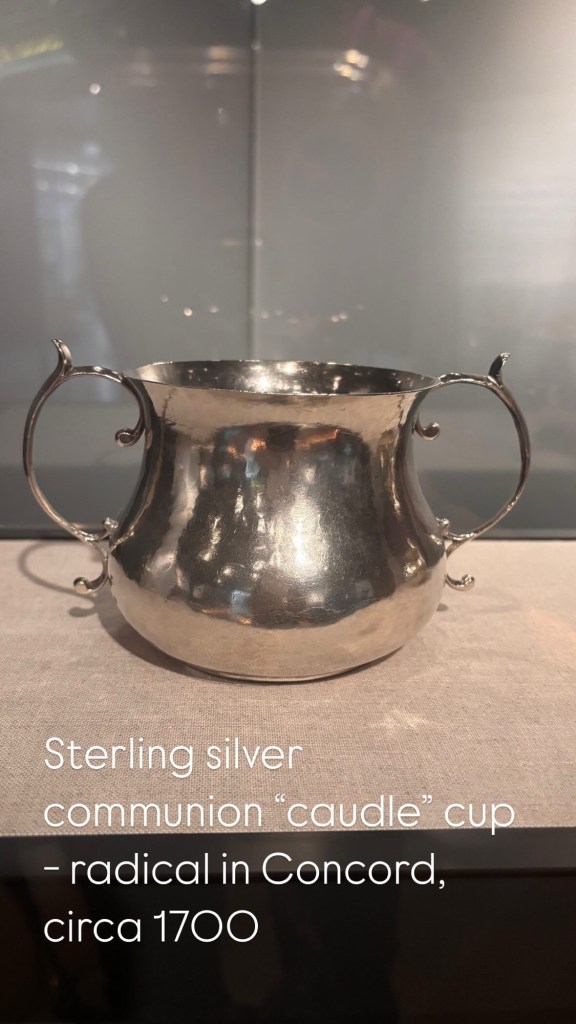
Colonial era silver on display at the Concord Museum

Something new I learned is that a lot of “privileged” white Concord ladies used their influence for good, mainly by talking some sense into the white men. For example, did you know that Ralph Waldo Emerson had to be convinced that slavery was bad? Seriously, Ralph?? And guess who convinced him. Women. Especially Elizabeth Palmer Peabody, a close friend and vocal abolitionist, and his aunt, Mary Moody Emerson.

I’m so old, I remember the…

Daily writing prompt
What major historical events do you remember?

BICENTENNIAL

This prompt sent me thinking back on many events — some happy, some sad — but the earliest memory I have of a major historical event is the Bicentennial. Yes, I’m THAT old.

I grew up in the birthplace of the American Revolution. I could ride my bike to both the Lexington Green and the center of Concord, Massachusetts. My hometown, Bedford, was best known for having the nation’s oldest battle flag. As you can imagine, the Bicentennial was a huge deal for us.

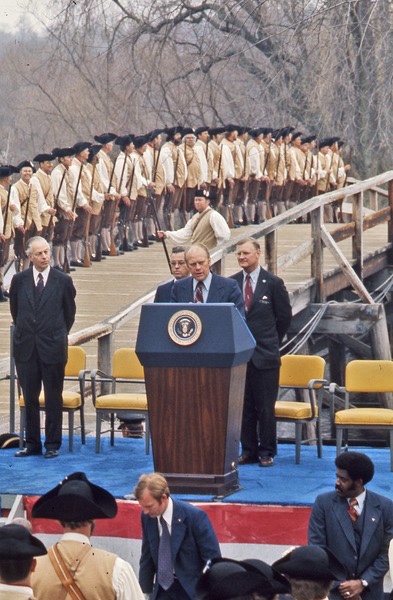
President Ford visited the area for Patriot’s Day in April 1975 to kick-off the nation’s big birthday year. (Patriot’s Day is a special Massachusetts holiday where we celebrate the beginning of the American Revolution: “the shot heard round the world”) I went to see President Ford speak in Concord at the Old North Bridge. I was nine. I mainly remember my oufit. My mother made full colonial dresses with aprons and hats for my sister and me. She actually made us two hats each — a bonnet (in the picure) and a white colonial Martha Washington hat. We wore those outfits a lot that year. (Parades, parades, and more parades!) I vaguely remember seeing President Ford at the Old North Bridge, but the secret service frogmen in the water under the bridge made a bigger impression. The idea that the President needed intense, 24-hour protection was new to me.

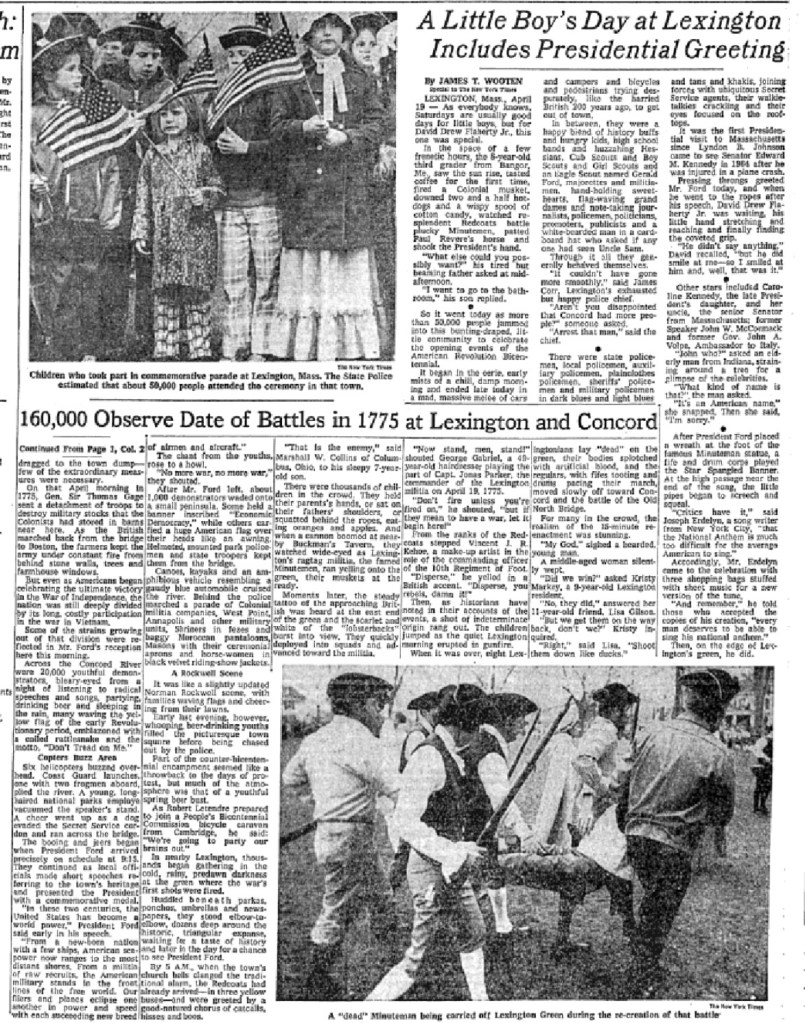
The funny thing is that last year I took a visiting friend to The Old Manse in Concord and the tour guide told us about a whole different side of that same day. Apparently there were thousands of teenagers (including her) and some well-known musicians camped out near the bridge. They were supposedly protesting Ford’s visit to Concord (he had pardoned Nixon the year before), but she said it turned into a wild, debauched party, with fantastic music. She made it sound like a mini-Woodstock! It was weird because I didn’t remember hearing about any of that, but I did find a story about it in The New York Times. Somebody needs to make a documentary about what really went on in Concord that day.

President Ford at the Bicentennial Commemoration, Old North Bridge, April 1975
“Across the Concord River were 20,000 youthful demonstrators, bleary-eyed from a night of listening to radical speeches and songs, partying and drinking beer, sleeping in the rain, many waving the yellow flag of the early Revolutionary period emblazoned with a coiled rattlesnake and the motto, “Don’t Tread on Me.”
Me in my Bicentennial costume, made by my mom