I’m sad about Rob Reiner and Michele Singer being murdered by their drug-addicted son.
I mostly feel badly for their other three adult children.
I have no idea what went on in this family, but I can relate to the situation of having a sibling for whom life is considered “more difficult” and is therefore indulged and supported endlessly—especially financially.
In my opinion, parents of adult children should keep careful track of how much money they give to each adult child. They should also consider the huge and selfless undertaking of raising children (aka their grandchildren) when sharing their resources.
If one adult child is allowed to act like a teenager into adulthood (aka Peter Pan Syndrome), you’re going to have problems.
Equity matters. Sometimes tough love is required. Never ask a healthy, functioning adult child to get involved in their sibling’s problems. (That’s up to them, if they want to do that.)
Having multiple children is a choice. Siblings may or may not get along later in life. One way you can increase your chances of family harmony is to expect adult behavior from adults. And keep track of how much financial support you provide each adult child. This may sound cold and calculating, but it can help you see things more clearly, when needed.
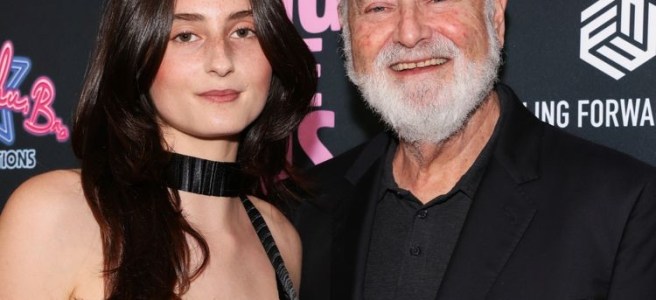
27-year old orphan Romy Reiner with her late father Rob. This poor girl found her parents’ bodies and had to name her brother as the killer. How did it get to that point? What choices were made?
The healing process for my husband’s knee replacement is ongoing. Sadly, we had to cancel dinner with our son for his 25th birthday tonight, because my husband just isn’t ready for restaurants yet. There’s still a ton of pain, swelling, and stiffness, which apparently is normal at this stage (3 weeks post-op), but he’s never dealt with anything like this, so it’s pretty hard.
I decided to try a recipe I saw on NYT Cooking “most popular recipes of 2025” list—Slow Cooker Garlic Butter Chicken. It looked easy and it was. My husband loved it. He said the flavor was great and it really was. I even made my own croutons, which soaked up the delicious sauce perfectly.
New England is experiencing real “depths of winter” cold right now. (It’s giving late January vibes.) Given the very cold weather and the knee, I think this was a success. And so easy.
Next time I’ll put the croutons in the dish first to absorb as much sauce as possible 😋
I’m afraid the 2025 holiday season will be forever remembered as the “Year of the Knee.” Arthroplasty is rough, people. My husband is doing OK, but the pain is quite brutal. Thank goodness for opioids. I honestly don’t know how anyone gets through this without a partner. (I know they can and do, but it would be really hard.) Outpatient PT has started and now I get why folks call the PTs “Physical Terrorists.”
But on to happier things…
I have been enjoying looking at the lovely, happy holiday posts and photos from Scillagrace and others.
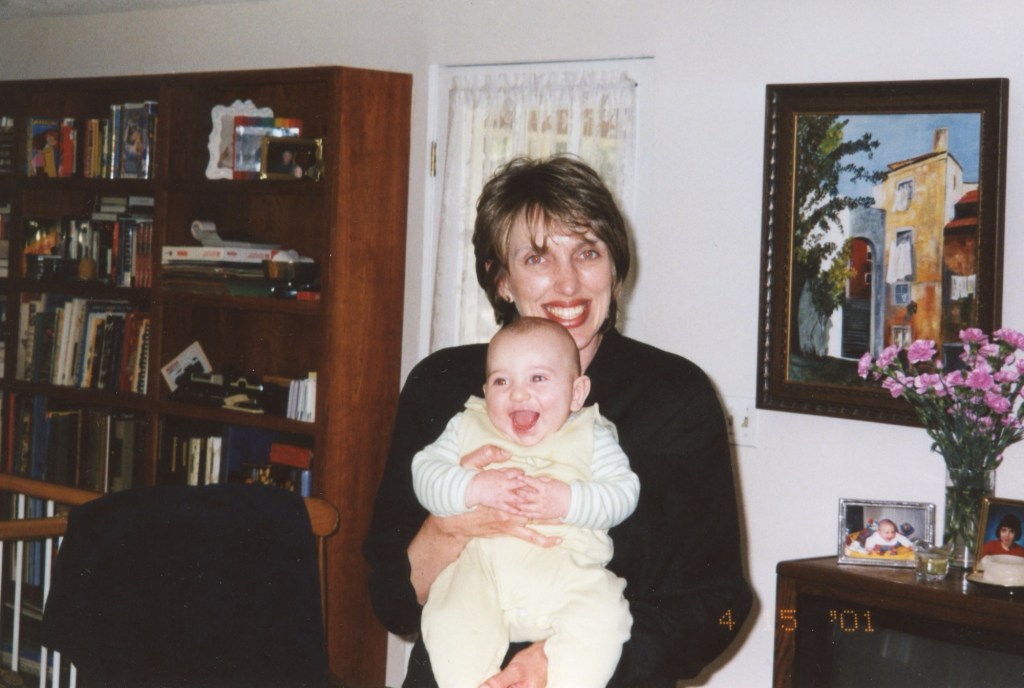
Last year was such a special Christmas because we had my brand new baby granddaughter—so perfect in every way. After the sting of the horrible election in November 2024, she gave me so much hope. She was—and is—a miracle. All babies are. I thank my wonderful daughter for the greatest gift of all last Christmas. Infants are pure love, pure light, pure joy.
My granddaughter and me last December Our tree last year The new mom managed to decorate—and even bake—last year. Hand-dipped and decorated Oreo cookie ballsWhite roses for Christmas last yearI got Christmas “crackers” from the British imports store and did special napkin folding last year.
I hope everyone can find some way to enjoy the season this year, despite whatever pain or hardships burden you. I recommend watching Sweden’s National Santa Lucia Day broadcast this Saturday, December 13. It’s always such a beautiful celebration of light in the darkness, with gorgeous choral music—including young children singing in tune. It’s typically available on YouTube the same day.
December Rx:
Music, lights, babies (if you can’t get your hands on a baby, watching young children sing is a good substitute)
In 2011, I started keeping a list of books I’ve read in my phone’s notepad, so I could remember them.
Here is my list for 2025 in the order I read them:
“Night Watch” by Jayne Anne Phillips (c2023)
“The Last Train to Key West” by Chanel Cleeton (c2020)
“Florida” by Lauren Groff (c2018)
“The Frozen River” by Ariel Lawhon (c2023)
“Intermezzo” by Sally Rooney (c2024)
“Small Things Like These” by Claire Keegan (c2021)
“Foster” by Claire Keegan (c2010)
“James” by Percival Everett (c2024)
“How to Lose Your Mother: A Daughter’s Memoir” by Molly Jong-Fast (c2025)
“Savannah Blues” by Mary Kay Andrews (c2002)
“The Director” by Daniel Kehlmann (c2025)
“Tom Lake” by Ann Patchett (c2023)
“The Covenant of Water” by Abraham Verghese (c2023)
“A Visit from the Goon Squad” by Jennifer Egan (c2010)
“The Candy House” by Jennifer Egan (c2022)
“The Summer Before the War” by Helen Simonson (c2016)
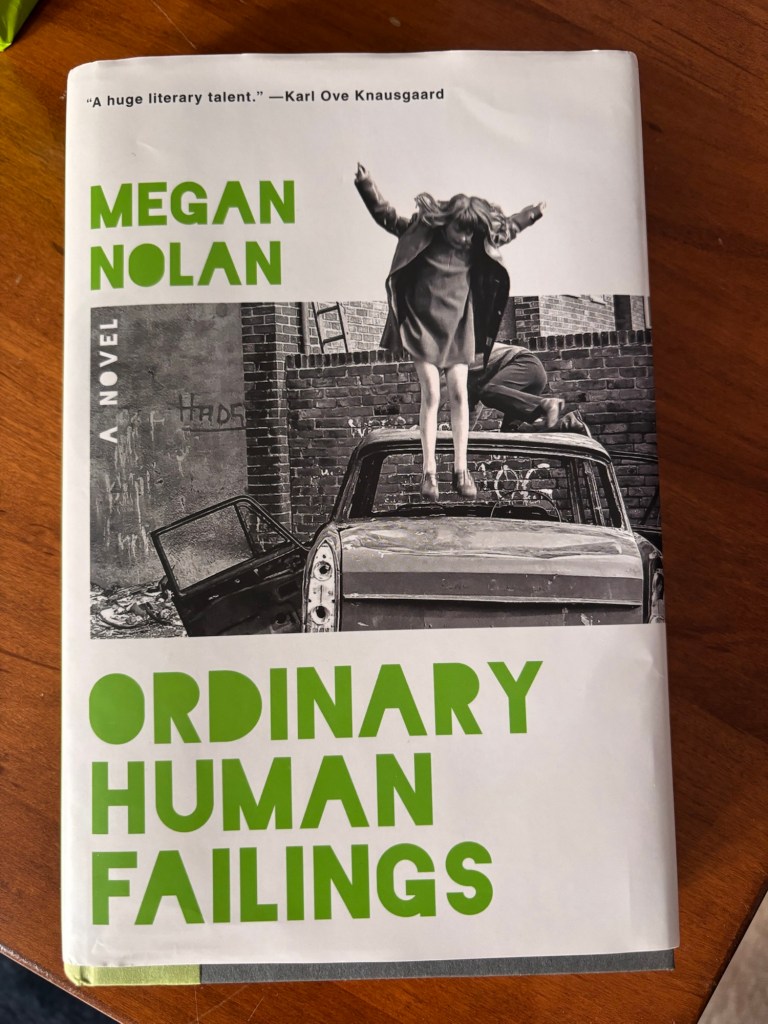
“Ordinary Human Failings” by Megan Nolan (c2024)
“Heart the Lover” (c2025) by Lily King
Many of these selections I read for my book group, which I absolutely love. We have such good discussions! Three of the four other women in my book club read way more than I do, so it’s sometimes hard to find something that none of them has read before. So this is how we choose our books:
We rotate the job of picking the book. When it’s your turn, you circulate three titles that interest you and the others rank them 1-3. Usually a clear winner emerges without much math needed.
Looking back on the list, I think Florida by Lauren Groff was my favorite. I’m not usually a short stories person, but this collection really blew me away. I read it before heading to Key West for the first time in February. If you’ve spent any amount of time in the Sunshine State, at least one of the characters will resonate with you. There’s a grain of truth in all the “Florida Man” jokes and memes (that’s why they’re funny) and this book goes deep into the truly fascinating and unique characters that seem to be made possible only in that flat, sticky, hot, beautiful, bizarre one-of-a-kind American state.
I read several books by contemporary Irish women authors this year (both before and after my big 60th birthday trip to Ireland in June). Sally Rooney, Claire Keegan, and Megan Nolan are all great. Several of their novels have been adapted for film and TV. I especially recommend “Ordinary Human Failings” by Megan Nolan. I’ve never read a more aptly titled book. Here’s the quote where she uses the exact words. It’s early on in the book.
On one of his first mornings a memo had been sent around from Edward to the desks of the entire editorial staff, which read:
A REMINDER! Reasonable excuses for lateness/missing meetings/not doing something I told you to do etc, include: Bereavement (parent only). Serious illness (life-threatening, your own). Reasonable excuses do NOT INCLUDE ordinary human failings such as hangovers, broken hearts, etc etc etc.
I think it’s the “etc etc etc” that makes this line so good. The story is all about the etceteras.
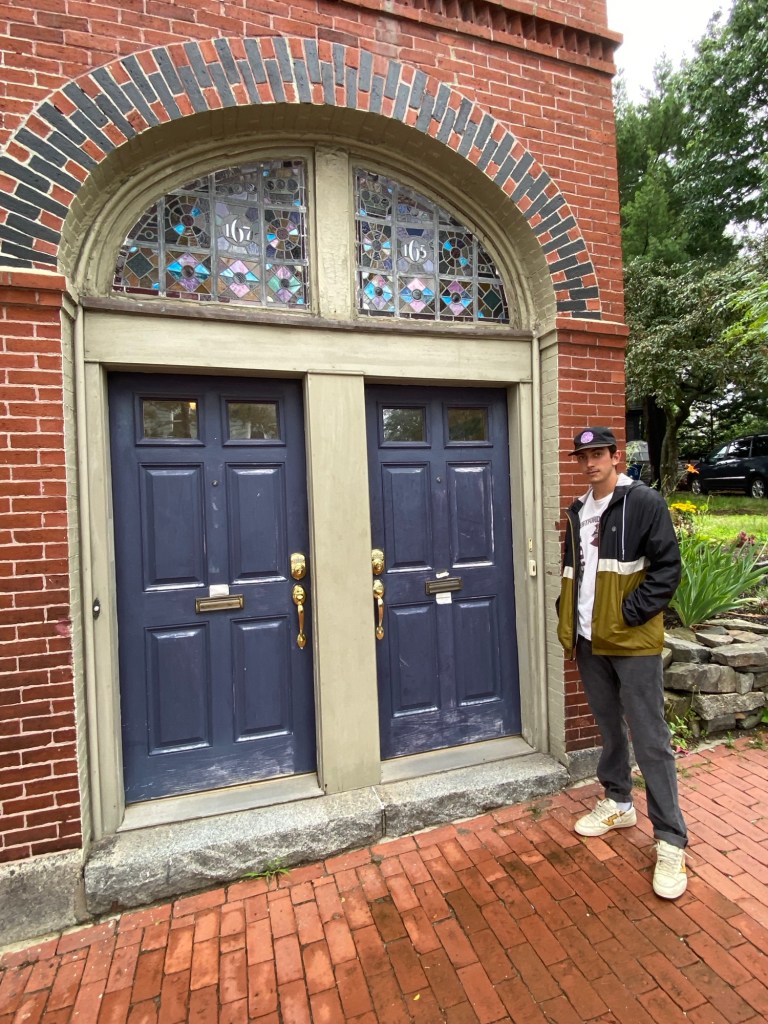
165 Congress Street in Portland is a John Calvin Stevens building. Stevens (1855-1940) was Portland’s most prolific architect. He was known for Shingle-style and Colonial Revival designs.
My son and I took a trip to Portland in July 2021, when he was a 20-year old college student. We rented an AirBnB in the historic Munjoy Hill neighborhood of Portland (which is where these cool indigo doors are located). We had a nice time walking around, eating, and shopping. We also went to the outlets in Freeport, Maine and got a bunch of clothes.
A lot of mothers say that it’s hard to stay close to adult sons once they get busy with their own families and careers. I hope that doesn’t happen to us. My son turns 25 next week. My baby. We’ve got a shopping trip planned for next Friday.
As people who read my blog may know, I am a big fan of dessert. I take flavor combinations seriously and I think I know when one is extra special.
Through endless trial and error, I have stumbled across a real winner in the ice cream mix-in department. It’s SO good.
If you have a Trader Joe’s near you, you gotta try this:
Take three Trader’s Joe’s Soft-baked Snickerdoodles (no substitutes!) and microwave them in a small bowl for 15-20 seconds. Top them with a big scoop of vanilla ice cream and top that with about a quarter cup of Grape-Nuts cereal.
Next: mix them together thoroughly, breaking up the cookies as you go.
Oh my god. So delicious. If you’re in mood for a satisfying, cinnamony dessert, give it a try.
As Shelly told me, arthroplasty recovery is gruesome. Between the bruising, the swelling, the pain and the really gross incision, it’s a major yuk…especially for the medically squeamish.
I was pretty stressed out dealing with my patient this weekend. Sadly, that resulted in me getting overly annoyed in a couple of situations. (The only one I feel badly about is the pharmacy tech at Walgreens—it wasn’t her fault that their printer didn’t work and she couldn’t give me his prescription.)
I appreciate the many great suggestions I got for Bingeworthy shows during this time of very little activity for me and my patient (aka my husband).
I am pleased to report that we have found a worthy successor to Poldark and it is…drumroll please…The Diplomat (also on Netflix). Although it’s not a period piece like Poldark, it’s got a lot of the ingredients we like: Europe; excellent actors (many of whom are inevitably Brits); good writing; good production values, and very little violence. There are 3 seasons out (22 episodes) with a fourth in production. As everyone knows, Netflix releases entire seasons at once, so all shows are bingeable.
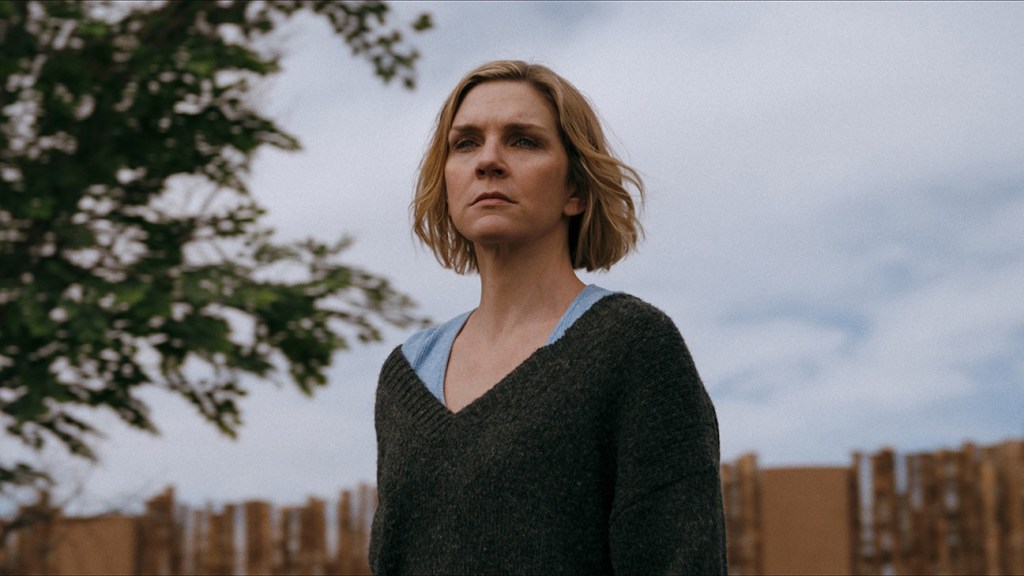
In the non-binge department, we are enjoying Pluribus on Apple TV+. I believe they drip those out on Fridays. It’s my understanding that Vince Gilligan created the show specifically for its star Rhea Seehorn. She’s so good in it. And she’s an American playing an American (not an incredibly talented Brit playing an American—a pet peeve of mine!)
I hope everyone had a good Thanksgiving.
American actress Keri Russell in The Diplomat on Netflix
Another very good American actress: Rhea Seehorn in Pluribus on Apple TV+
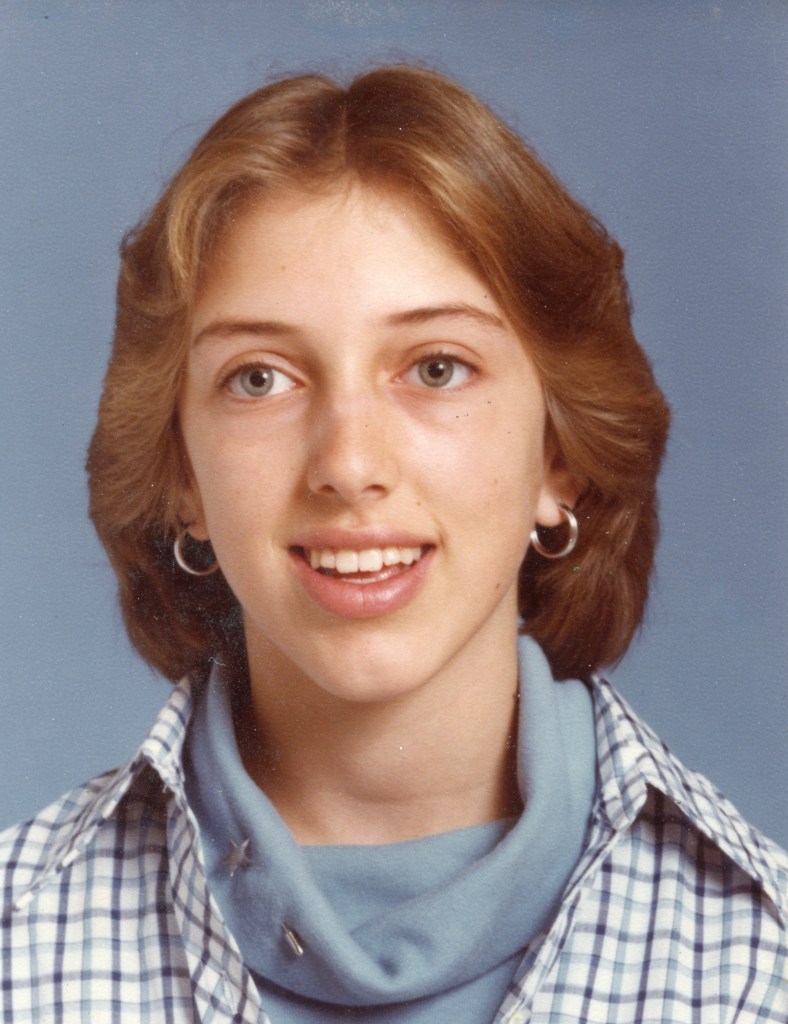
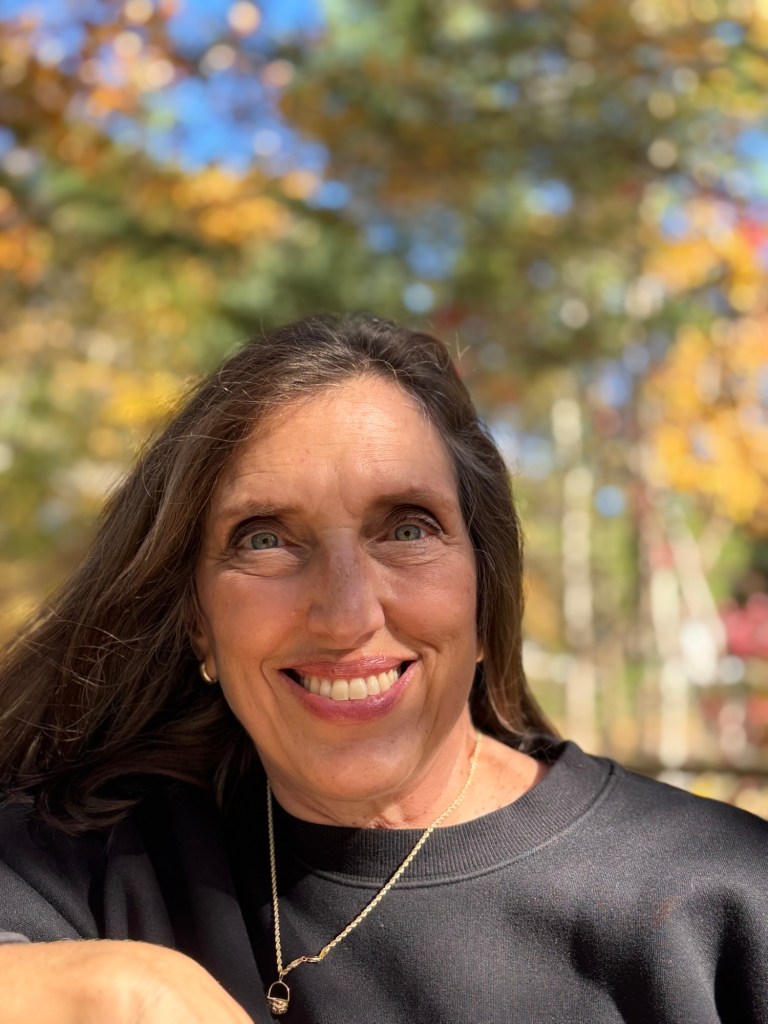
As the arthroplasty recovery continues, I’m indulging myself in a ridiculously vain social media trend. People are uploading photos of themselves as teenagers to ChatGPT (possibly started by the women abused by Jeffrey Epstein as young teenagers) and asking how Chat thinks they will look at their actual current age. The comparison inevitably makes people feel good about their looks.
Me at 13How ChatGPT thinks I’ll look at 60.The real me last month
Also, we shouldn’t even NEED the Epstein files to force Trump to resign in disgrace.
If you haven’t read the entire transcript of Katie Johnson’s 2016 testimony as reported by Andy Borowitz of the Borowitz Report, you really should. It sounds 💯% true to me. Trump should be in prison.
In 2016, a woman using the pseudonym Katie Johnson filed a lawsuit alleging that Jeffrey Epstein trafficked her and Donald Trump raped her when she was a 13-year-old child.
The scenes that unfolded today at the U.S. Capitol dramatize the importance of listening to survivors’ voices. In that spirit, I am posting below the full transcript of Katie Johnson’s testimony.
~Andy Borowitz
Warning: it is extremely graphic and disturbing.
I came to this interview of my free will. No, there was nothing promised to me for doing this interview. Yes, everything that I say in this interview will be the truth.
I met Donald Trump at some parties that I was working for Mr. Jeffrey Epstein. There were about three or four times that I had encounters with Donald Trump. I was 13. The first time that I met Donald Trump was at a party at Jeffrey Epstein’s mansion. There was an orgy going on and he was kind of watching off in the distance.
He basically asked if I could come over and give him a hand job. At first I wasn’t very comfortable with it. This was my first party and I didn’t think that that was my responsibility. But my recruiter told me that I needed to do it. So I agreed to it and then he, you know, I began to—sorry this is a little difficult. But before I gave him a hand job he kind of slapped my hand away and said, “You need to use a glove.” The recruiter ran over and handed me a glove and said, “No one touches Mr. Trump’s penis without a glove.” So I needed to use a glove. I gave him a hand job and then immediately after he had an orgasm he left and I didn’t see him again at that party…
I originally came to New York trying to be a model and in my travels I met a girl named Tiffany there who was very interested in me and said that that’s what she did is that she helped girls, you know, get what they wanted. She could help me get into modeling, that she knew a lot of people that were higher-ups and that it would be no problem. And so that’s why, you know, I would just basically have to come model at a couple of events and meet some people, there would be no sweat.
So of course I went, you know, that sounded like no big deal. And she was recruiting the girls to come to these parties and they all looked, I mean most of them were my age. There were maybe a couple girls that were maybe 14 or 15 but it seemed to me like we were all very young.
Jeffrey Epstein knew that I was 13 years old. When he interviewed me, he asked me to get down to my bra and just my panties and I thought that was weird but, I mean, modeling. Maybe it was something about my figure. He asked me to give him a massage. He asked me my age, I told him that I was thirteen, I told him why I was there, and he basically said, “Well, you’ll do, you know, I’m sure that you’ll fit pretty nicely here.” And then he tried to basically slip himself inside of me. And I pushed him away and I said, you know, I’m—because at that point in time I still believed that there were models and then there was the girls that did that. Like I thought there was a separation. So I told him that I wasn’t interested in that but he said that I would do.
And as far as Donald Trump, he knew that I was 13, and I believe that Tiffany told him. He seemed to take a liking to me because I was so young and I was also a virgin. So, I don’t know, he seemed like he wasn’t really into having girls that were liked by the other guys. The whole glove thing—he kind of liked things to be his first, you know, for lack of a better term. He was the one who wanted to get to a girl before everyone else did.
Donald Trump knew that I was 13 because the first night that I was there, Tiffany actually suggested that and she had a whole bunch of different wigs and I expressed interest in them and I always told her that I would love to walk around with blue hair. And so I tried some on and there was a blonde wig that she said that looked great on me. So, I wore that wig and Donald Trump had specifically asked about me because I remind him of his daughter and she said, “Well, she’s 13 as well.” So, he knew the first time that he saw me. He took a liking to me because I looked like his daughter.
The reason I’m coming out now is—when it happened originally, I just wanted to forget about the whole incident. And when I saw that he was running for president, I felt that it was my responsibility to come out and tell our country what kind of man this person is. I don’t think that he should even be the dog catcher, let alone running the greatest country in the world…
The first time that I met Jeffrey Epstein, he did try to force himself inside of me without getting the go-ahead or anything. And then it was probably about the third or fourth party is when he basically forced—it was another massage and it was basically like, it wasn’t sex, but it was, there was penetration. And I told him that I didn’t want that, but he kind of got a little irritated. So, I don’t know, there was something about him that, I guess I kind of held a lot of resentment towards him. By the time that that happened, I already started catching on that maybe I wasn’t there for modeling and maybe I was just getting used for things and I kind of held him responsible.
I did receive money to go to these parties. After every party, I was paid by Mr. Epstein. There wasn’t, out of all the girls that were there with me, most of them were 13, 14. I think the oldest one might have been 16, but just turned 16 and she’d been there for a while… Second time that I saw Mr. Trump was, same scenario, he was an onlooker at an orgy and Tiffany came over to me and said that Donald Trump had requested that I perform oral sex on him. And never, I’d never done something like that with anybody, so I was a little nervous. So, I walked up to him and he was sitting there very proud-like and I just kind of moved in that direction and he kind of slapped me away and said, “What are you doing? You need to put a condom on.” Like I was some dirty filth or something. Tiffany ran over and handed me a condom and apologized profusely and said that would never happen again. And she looked at me and scolded me basically like a child and said that, “That’s not how: Donald Trump always, anytime anyone touches his penis it needs to have a condom on or a glove. Especially when it comes to performing oral sex.” So, I apologized and then I performed oral sex on him. And once again, once he was done, he hopped up and that’s the last I saw of him at that party. It’s like once he’s done, he’s out. Some of the things that I noticed that were weird with him: sometimes before the parties he would come over and Jeffrey Epstein and himself would kind of banter back and forth and he was very, Donald Trump was very racist. He said a lot of racist things. There was a lot of comments towards Mr. Epstein about being Jewish and he called him a Jew bastard, said that he was cheap and there were some words I didn’t even understand.
Something about his, you know, the shape of his penis being directly related to his mole or, I mean, I’m not too familiar with the Jewish tradition—but I’m pretty sure that whatever he was saying wasn’t very nice. He also referred to, you know, people of Hispanic origin, he called them Spicks. That was around the first time that the World Trade Center had gotten bombed in the 90s. And he was talking about the towel heads and how we would just be better off if we didn’t let them in and basically got rid of everyone, every single one that was already here. And it made me really uncomfortable, really, really uncomfortable.
He also loved to call Black people n—– and Arabic people he called sand n—–. The only time that he tried to give me some money was our last encounter together, where he acted out a rape fantasy. I was forced to give that money back because Jeffrey Epstein paid us after the party. I don’t even know why he gave it to me, maybe to make me feel more cheap. It was a rape fantasy to him, but I wasn’t playing.
The next thing that Tiffany approached me with was that he had a fantasy where he walked in on his maids, maids basically making out and it was some type of fantasy for him. At that point, I was like, “I don’t want to be involved with anything that has to do with him.” But she’s like, “You are just basically the other one. So, there’s nothing that you will have to do. Just—he’s requesting you to be involved.” So, I reluctantly—I mean, I felt like I didn’t have a choice there, but it was basically, he’s walking in on his two maids, I was one of the maids, I was the white maid. And there was a Spanish girl, Maria, who was the Hispanic maid. And we were making out and he walks in and he gets really angry and threatens to call immigration on Maria if she doesn’t come over and make things right and give him a blow job.
So, while she is over there giving him a blow job, I am supposed to look scared like, “Oh, oh no,” cleaning up things and pretending like I’m trying to go back to my job as a maid. And then he’s being so rude to Maria. I felt so bad for her. It just didn’t seem like a fantasy. It’s the weirdest fantasy as far as that goes. He was threatening, he was threatening to call immigration on her. She wasn’t even near going down to give him, perform oral sex on him before he slapped her away and said, “What are you doing? You know you need to put a condom on.” And she’s trying to say “I’m so sorry.” And he’s like, “You can’t even, I can’t even understand what you’re saying. Just speak English!” He called her derogatory comments. And then he’s like, “You know what, you don’t know what you’re doing. Have her come over and show you how it’s done.” And so I, again, I said that I didn’t—I had to go over there or else he was going to call immigration on Maria. I didn’t know if it was true or not, but he said that if I didn’t show her how to perform oral sex on him, then he was going to call immigration on her and then get rid of us both.
Anything that was in relation to him getting off or being satisfied or happy had to do with him being in power, extreme power. And it was always intimidating when he was like that. You didn’t really know if it was true. If you refused to play along, would he really call immigration on Maria? Would he really get rid of us both? And I didn’t even want to know what that meant. It wasn’t a game.
The one night that I had the blonde wig on, he mentioned that I reminded him of his daughter. And actually the maid’s fantasy, I didn’t have a blonde wig on. I was trying to stay away from blonde wigs at the time. But he actually requested, told Tiffany that that’s what he wanted me to wear. Like he wanted it, and anytime I put it on, anytime I had it on and he’d see me, he would say, “Oh man, you look—” and it wasn’t like a, “Oh, you remind me of my daughter.” It was this sick, evil “You remind me of my daughter.” It was just this weird pleasure, sick smile. Like I don’t even want to know what he was thinking about. I could imagine what he was thinking about.
After the parties would end, we were to report to Mr. Epstein and basically tell him everything that happened, with who, what they liked, what they disliked, if there was any requests, if there was any talk about anything. That’s what we told Mr. Epstein—everything. And then he paid us, and then we got to go home.
The fact that Trump has a chance to be the next president makes me feel disgusting inside. I’ve always been proud to be an American. I think we live in a beautiful country. But I just see him ruining everything. He’s horrible, what he portrays on the outside isn’t even that great, but people don’t even know the half of how evil, how sick and twisted that man is. I have a friend that’s been my friend ever since the school year that I stopped going, the eighth grade. I confided in her, and she knows all about it. She knows everything…
I’m prepared to do whatever it takes to save the country that I believe that we have. I know what he does behind closed doors. I’m willing to sacrifice my life to put our country back in the right—like, going maybe in some type of positive direction. Not even, there’s no right or wrong, but a positive direction. This guy’s not going to take us anywhere positive.
You know, as far as my life changing by coming out with this information, I’ve thought long and hard about whether or not I should. And I’ve gone back and forth. But I think that the American people need to know what kind of man this person is. And if my life changes because of that, then so be it. But the American people need to know what they’re dealing with. If I had the chance to talk to Donald Trump, I would run the other way. I’m scared of him like I’ve never been scared of anything else in my entire life. I can’t explain it to you, but the fear of him even being in a next room, I have a panic attack.
The last encounter that I had with Donald Trump, Tiffany approached me about a rape scene that was supposed to be played out. And I didn’t like the sound of that at all. But Tiffany promised, assured me that it wasn’t going to be—if it was anything I wasn’t comfortable with, we could stop. That she would be right there and that it wouldn’t get out of hand. And that it was just a fantasy, like it wasn’t really going to happen. And so I told her that I would. I mean Tiffany was always nice to me. I trusted her, or else I wouldn’t have always done what she asked me to.
But she was there and he came in and I was basically tied to a bed with pantyhose. And they were so tight it hurt to even lay there. And I tried to say something and he was just “Shut up! Shut up, bitch!” He was being really, really rough.
It just didn’t seem like a fantasy. And I started to get scared and he was basically like ripping my clothes off. And I got freaked out. I told him that I didn’t want to do this. I screamed over for Tiffany and she was like, “Mr. Trump, she’s only, she’s not—this is scaring her.” And he’s like, “Oh you shut up too.” He just turned into this animal. It was like a completely different, completely different person. It was like everyone in the room was scared of him. And I couldn’t do anything about it.
He ripped off all my clothes and he started to basically have sex with me and I was screaming. I’d never had sex before, it was my first time and Tiffany was yelling at him too. She was saying I was a virgin and he told us to just shut the fuck up and just basically took my virginity while I was crying and telling him to stop and basically begging for him to just stop. And Tiffany didn’t know what else to do either. No one was there to help us, or me. And so, after the fact, he basically finishes. It didn’t take that long at all. But it felt like it was like five and a half hours. It felt like it was an eternity.
I was crying and Tiffany was consoling me and she was apologizing. She told me that she would never put me in that situation again. But he comes over mad because I was crying and he said that I should be thankful that someone like Donald Trump took my virginity. Well, he didn’t say took my virginity. He said, I should be glad that someone like Donald Trump popped my cherry and not some pimply little 14 year old. And I just was like, “What if I get pregnant?” Not even talking to him. I didn’t want to talk to him. I was talking to Tiffany and he said, “Well you’ll get an abortion then, bitch.” And then just walked away. And I told Tiffany I needed to go home. I never went back again.
I guess it’s for you to decide. I don’t have any kids myself because I’m afraid to have kids because who knows what kind of damage they can get into, but if you have a 13-year-old daughter, would you be okay with the person who’s running our country doing that to your little girl? And I just, I don’t know. I just want people to know. I think that I have a faith in our society that we’ll make the right choice. He seemed to be taking great pleasure in dominance and control and the more I screamed, the more I got scared, the more he was enraged with power and it was like he was just charged with it. It was scary.
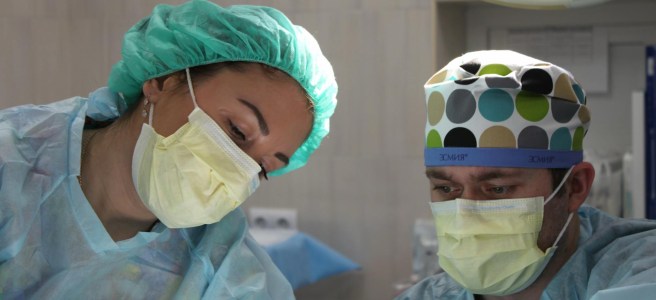
I have survived an arthroplasty. And by “survived, ” I mean I accompanied my husband to his total knee replacement surgery.
I am notgood with medical stuff. I get “white coat anxiety.” So, I think I handled things pretty well. He is back home and resting comfortably.
The only thing I messed up was hanging up on the surgeon (twice!) when he called to tell me everything had gone well. I couldn’t seem to answer my own phone correctly.
Also, I ran over a curb when driving up to the area where the nurse rolled him out in a wheelchair, but my tires seem fine. (Phew, can you imagine if I got a flat on the way home?)
Oh, and I had to plug my ears with my fingers and look out the window when the physical therapist described to my husband exactly what the “madman with the drill and the saw” does during a total knee arthroplasty.
I will be having a drink at 5pm. Or maybe an Oxycodone (kidding)
![A logo for "50 Happens," [a site dedicated to Gen X women with children and grandchildren] [who embrace life's challenges with humor and resilience], [featuring a modern and uplifting design] [that embodies strength and positivity] [with an elegant and playful style] [and a harmonious blend of colors like pink, fuchsia, purple, and blue].](https://50happens.blog/wp-content/uploads/2024/12/img-5uorrxvwartomopcpuhjfjd0.png?w=300)


















 50 Happens