Yesterday was a discussion of the various “resisting” techniques (tape, wax crayon, etc) and a demo of how masking fluid works.
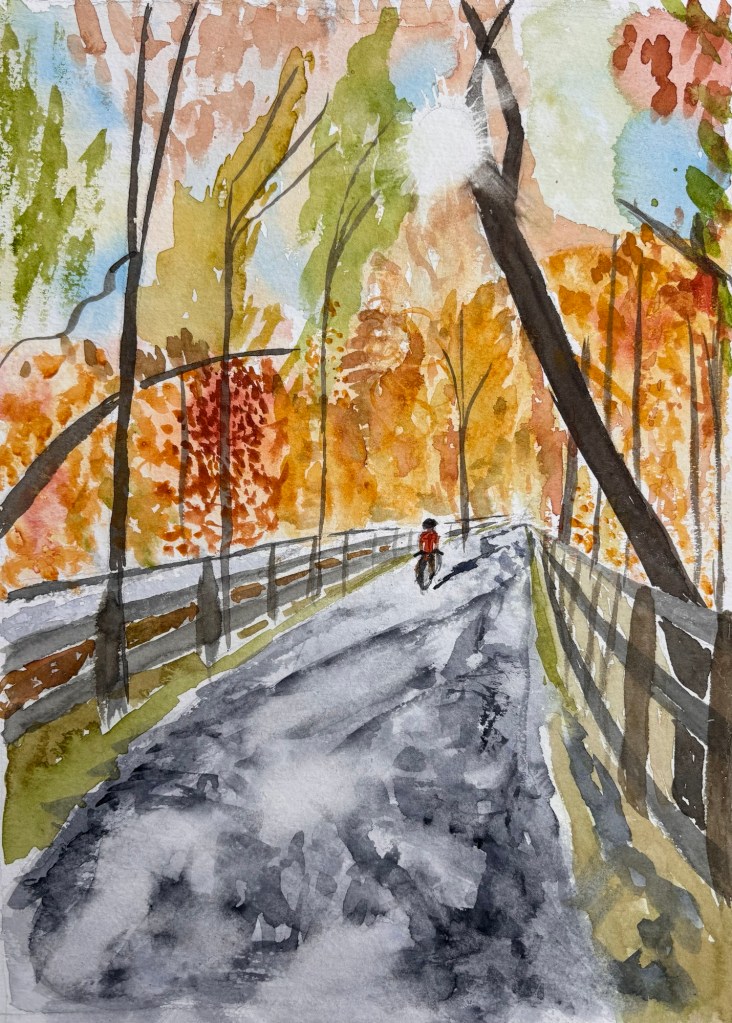
I gave it a try in this painting, inspired by my photo shoot on the rail trail the other day.
Here’s the inspo pic:
You can see I tried to use the masking fluid (aka rubber cement) to try to create those tiny rays around the sun. The teacher said to rub them out a bit with a MagicErase sponge, which is a tool that watercolorists use to soften areas and rub out paint that has already dried.
I also used the MagicErase sponge on the bike path because I felt I had “overpainted” it. One of the hard things with watercolors is knowing when to stop. It’s very easy to ruin a nice effect by doing too much.
I sat away from the major gabbers in the class and was happier (although it did not go unnoticed that I changed my seat).
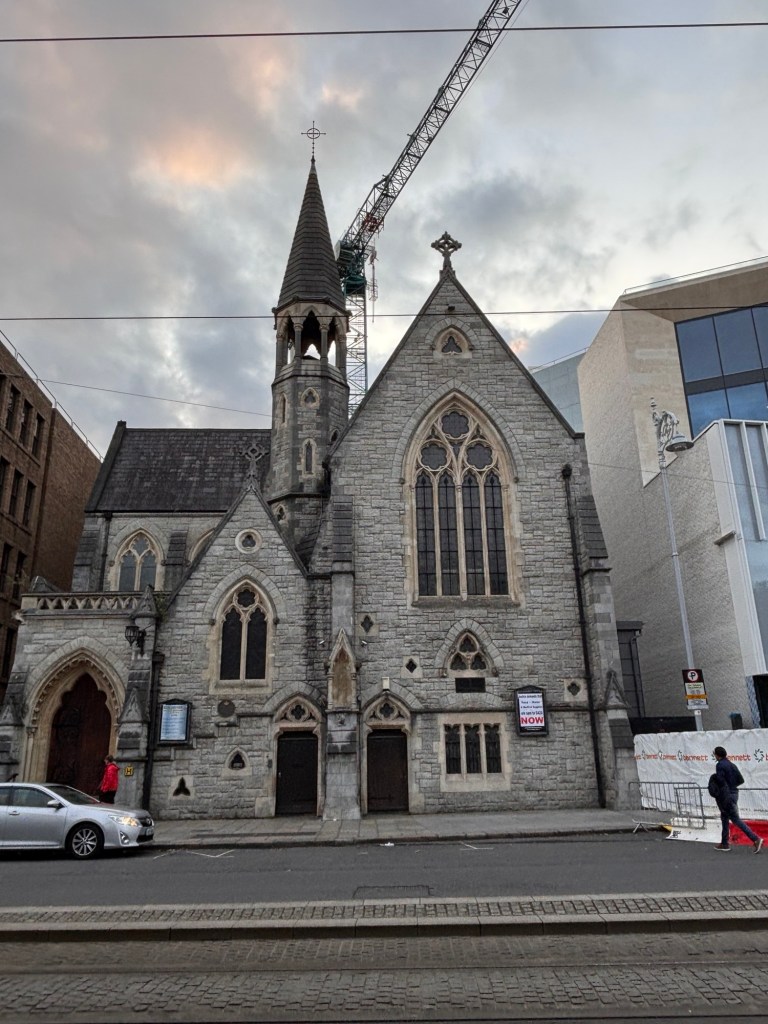
I’ve already posted many Irish doors from my trip in June, but not this one:
This is the Dublin Unitarian Church, which I walked by many times before realizing what it was. The church was right near our hotel, but so “tucked in,” I didn’t notice it until the very end of my time there.
It’s clearly in the gothic style, similar to last week’s doors. I guess I like “recessed arches.” (Thanks to Suzette for naming them for me.) And look at those cool hinges.
Seriously, this church has NO breathing room on either side. By the time I noticed it was a Unitarian Church, it was time to go home. I never got to see the inside. The doors were locked both times I tried. ☹️
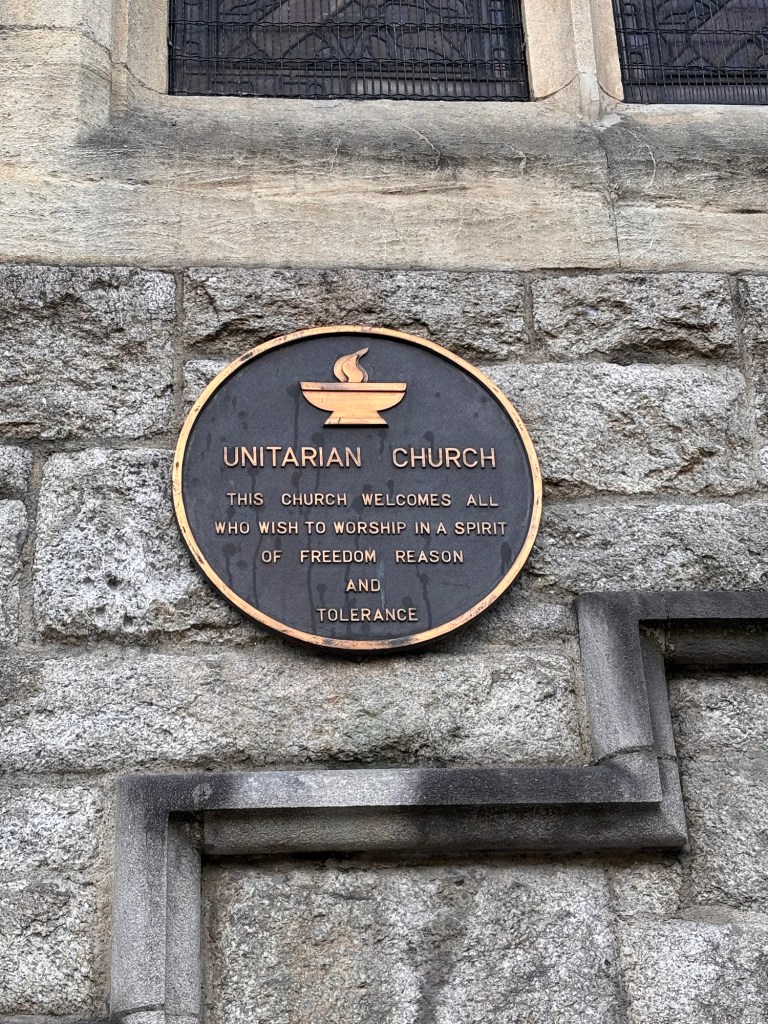
Similar to Unitarian Universalist churches in the USA, it uses the flaming chalice symbol.
What’s the difference between Unitarian Universalist and just Unitarian?
PerChatGPT:
American Unitarian Universalism (UU) emerged in 1961 from the merger of Unitarian and Universalist traditions, forming a non-creedal, pluralistic movement embracing humanists, theists, atheists, pagans, and others. It emphasizes individual freedom, social justice, and spiritual diversity without doctrinal boundaries.
European Unitarian churches, including Dublin’s, remain rooted in liberal Christian heritage, emphasizing reason, conscience, and the moral teachings of Jesus while rejecting the Trinity. They are typically more theistic and biblically grounded, though open and inclusive. In short: American UUism is multi-faith and post-Christian, while European Unitarianism is liberal Christian with freedom of belief.
For more Thursday Doors, see Dan’s blog No Facilities.
We have a woman in our church choir with dementia or Alzheimer’s (not sure of her official diagnosis). She has a lovely singing voice. In fact, she was a music teacher at one point.
But Susan (not her real name) is getting worse. She has an extremely difficult time keeping track of her sheet music and the folder it lives in. Last Sunday, as we began to warm-up before the congregation arrived, she turned to me and said, “I have no idea why I’m standing here, but I was a music teacher once.” She gets upset when she doesn’t know what’s going on. She’s never caused a scene or melted down, but her anxiety is a real issue. She needs constant reassurance. And she can get snippy with people who are trying to help her.
Her partner Jim is a nice man who has already lost both of his adult daughters to diseases. He’s doing his best, but this has got to be really tough on him.
The plan now is to make a formal schedule whereby her fellow sopranos will take turns supporting her each week, so that nobody gets stuck doing it all the time. It’s going to mean showing up early, sitting with her, making sure she has music, reassuring her throughout the rehearsal and performance, and then making sure she gets back to Jim.
To be perfectly honest, I’m not looking forward to it. I never knew this woman before she had dementia. She’s not a family member of mine. I have no special fondness for her.
But clearly, I need to step up. That’s the whole point of church, especially Unitarian Universalist churches, where belief in God is optional. “Community” is the goal. I know that if I get dementia (or cancer or anything else), these people will support me. They are GOOD PEOPLE. Most are better than me. (I’m not just saying that. They really are.)
Here’s something Susan said to me in one of her sweeter moments: “I have a trick for when I don’t know what’s going on. I smile more.”
I’m going to try to remember that. Smile more. If she’s annoying me with her inability to follow along and constant questions, I’ll smile at her. She has a lovely smile. And so do I.
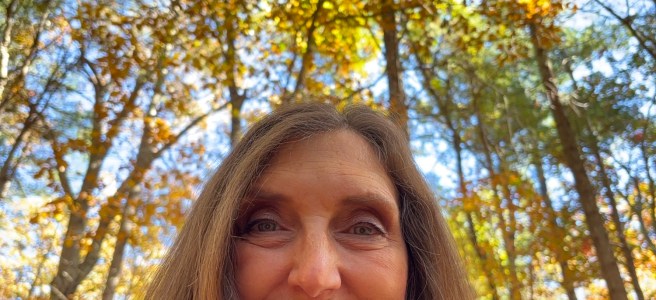
Selfie on the rail trail. I was trying to get a pic for a self-portrait for painting class.Our rail trail yesterday
Smiling in annoying or uncomfortable situations might not help. But it can’t hurt. I think this might be a uniquely American thing.
If someone asked me yesterday if I’d ever been to Sacramento, the capital of California, I would’ve said no.
But I was wrong. My high school friend Susan and I took our 11-year old sons on an epic Northern California road trip in the summer of 2012 and stopped at the famous Squeeze Burger (formerly Squeeze Inn) in Sacramento. We were on our way to her house in Lake Tahoe from Oakland.
Upon further research, I found pictures of the famous cheese-skirted burgers online, which look familiar.
We were in the second Sacramento location (now closed), which featured the original tiny Sacramento storefront as a booth in the restaurant. Perfect for two boys traveling with their moms.
This is why pictures matter people. By the time you hit 60, you will not remember half the stuff you did in your life.
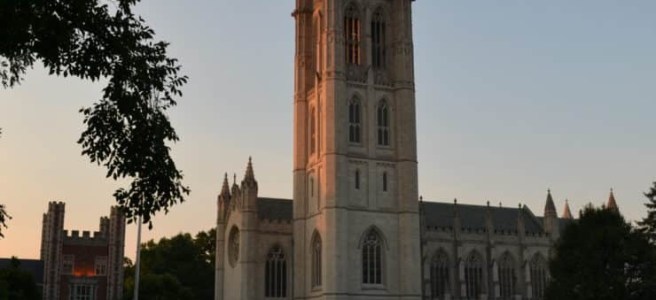
My college in Hartford, Connecticut had a spectacular gothic chapel on the quad. So Hogwarts! We were not an Ivy League school, but with that chapel on the quad—and scores of rich classmates from the snootiest boarding schools on the Eastern Seaboard—we could pretend we were. A couple of my more diligent classmates were able to transfer to Ivy League schools after freshmen year, but most of us just stayed and partied in Hartford.
My daughter had absolutely no interest in attending a small, private liberal arts college, but we did stop by one day when we were passing through the area. And the chapel still looked gorgeous.
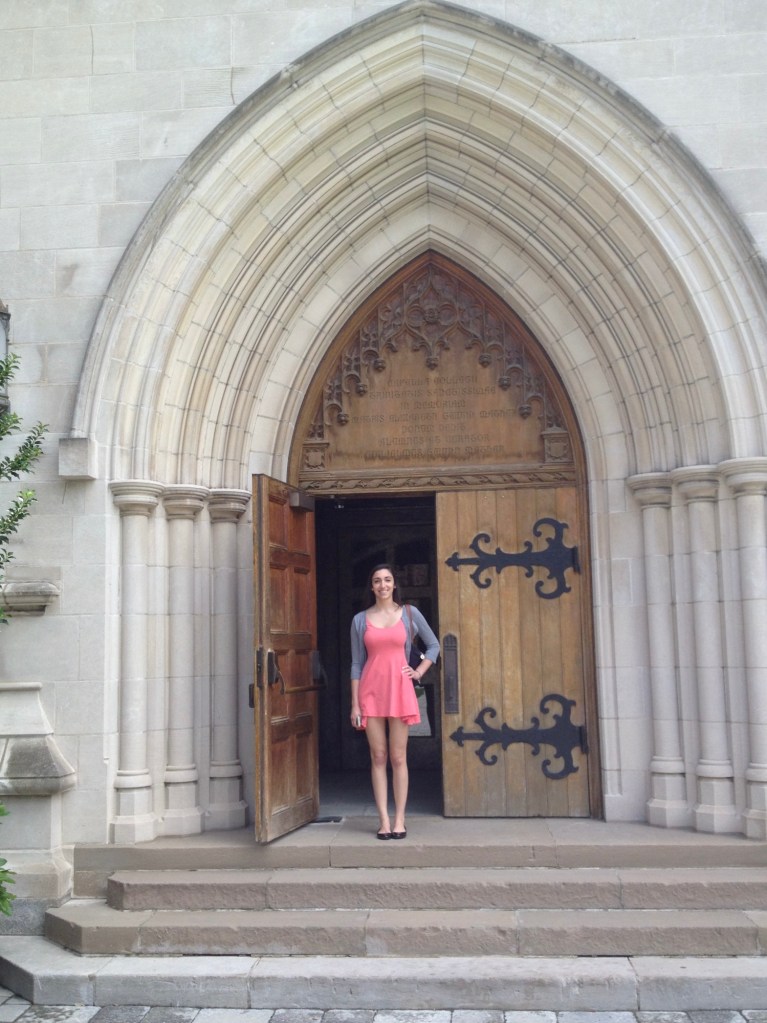
My daughter in front of my college’s chapel doors in 2013.
The same doors as seen through an arch on the day of my graduation in 1987.
My church runs an annual “country fair” which serves as both a fundraiser for the church and a fall festival for the town. A portion of the proceeds are donated to a local nonprofit each year.
It’s always in early October and it has been going on for decades. Different teams work to prepare and then implement the various revenue areas: the book sale, the country store, “trash & treasure,” face painting, bake sale, etc.
For the past few years, I’ve worked jewelry. We get a tremendous amount of jewelry donated by members and friends of the church throughout the year—everything from diamond rings to Mardi Gras beads.
Sorting, pricing and displaying it is a big job! There are about five of us that usually handle this task, with Julie being our fearless leader. Julie is a former Peace Corps volunteer and retired high school teacher with an eye for precious metals. She’s extremely good at making sure we don’t accidentally give away a real gold ring or a vintage sterling brooch for $5.
She tends to monitor and sell the “real jewelry” at the fair while the rest of us sell the mounds and mounds of “costume jewelry.” She can be tough when needed, especially on the early birds who are clearly looking to score some real gold for next to nothing.
Julie has permanently dedicated a significant portion of her basement to donated jewelry, props on which to display jewelry, and tools to evaluate and repair jewelry.
Here’s my snap of Julie the Jewelry Queen setting up necklace displays in the church office the night before the Country Fair.
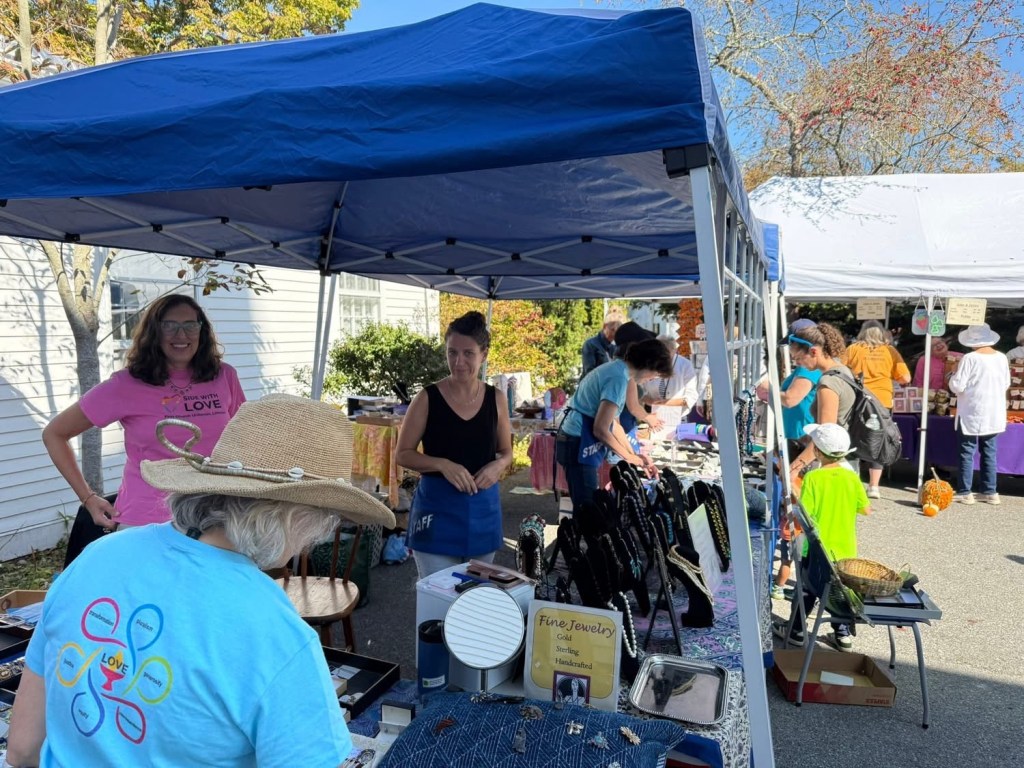
And here’s a cell pic of our group in action yesterday. (It was taken by our minister.)
I was determined to close all three rings on my Apple Watch yesterday, so I went out for a walk in the rain. I wore a baseball hat and a large LL Bean raincoat with the hood up. My peripheral vision may have been slightly impaired.
I was listening to music from my phone in my pocket, when I briefly looked at my watch to see how far I’d walked. I must have stepped on a piece of loose asphalt and turned my ankle.
I went down. All the way down. I landed on my left side and caught myself with both wrists. I was briefly laying on my side in the wet street (a quiet cul de sac).
My watch started beeping and tapping my wrist telling me that I’d fallen and asking if it should call for help. That part was actually nice. Someone cared! But I didn’t think anything was broken, so I hit the little X to decline.
What the fuck ankle! You can’t handle stepping on a little bump?? (This ankle has let me down before.) How many times have I implored my mother and others “watch your step, don’t fall”? Falling is the worst. It’s sudden. It’s stupid. You weren’t watching. Dumb.
A few days ago I voluntarily got down on the ground to take this photo of a mushroom along the side of the rail trail where I typically walk, which has no loose asphalt.
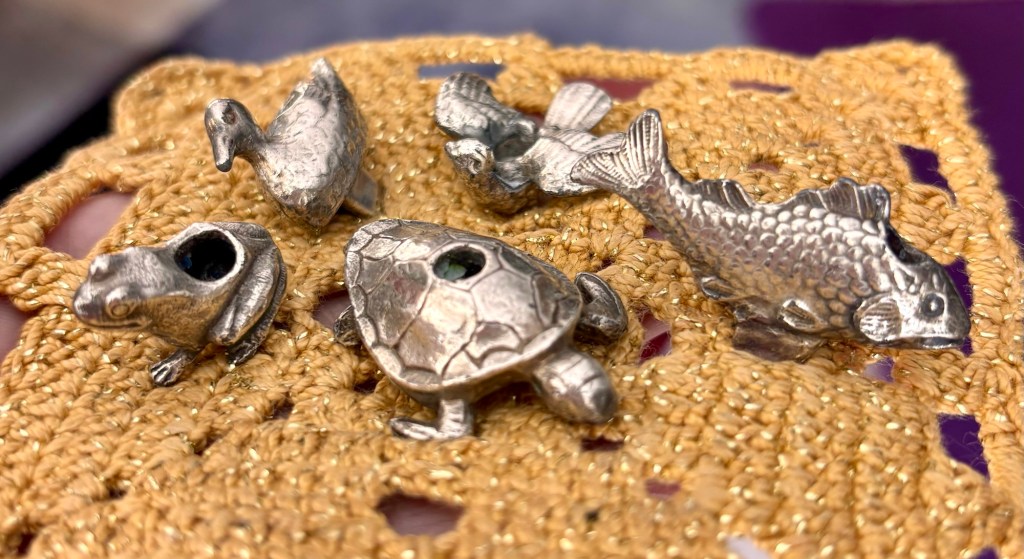
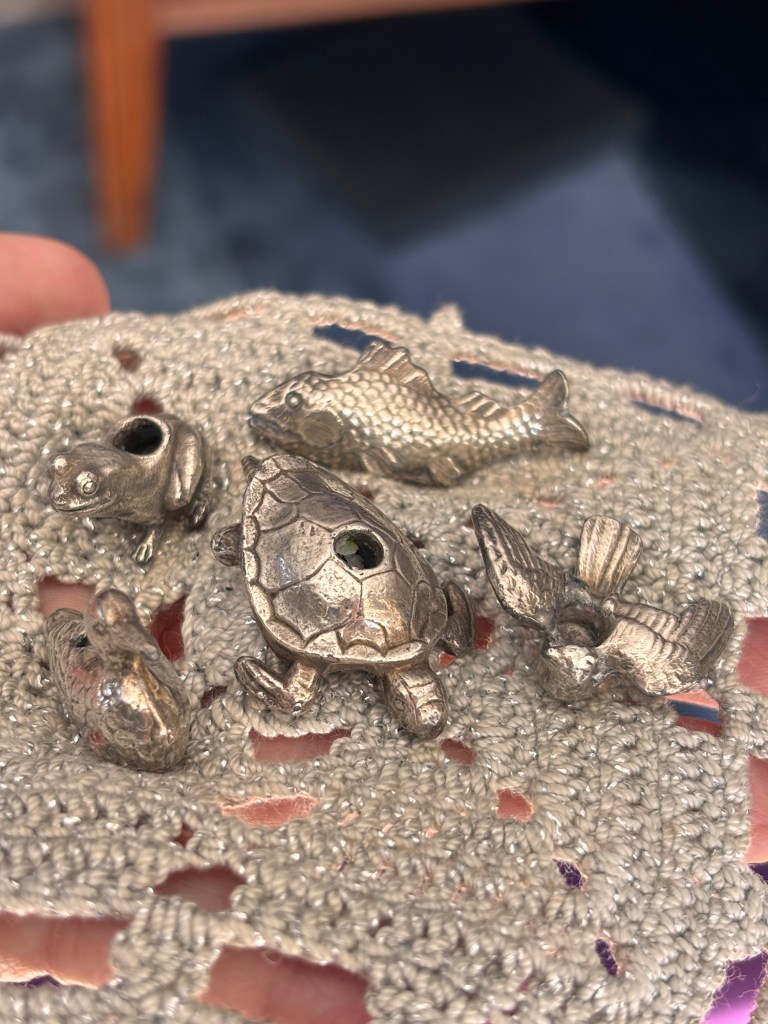
A tiny silver turtle, a fish, a bird, a duck and a frog—60-year old birthday candle holders.
A gift from a dear friend of my mother—a 3x “boy mom” who so loved little girls—on the occasion of my first birthday (we think).
Passed by my mother to me, I used them when I remembered. (The candle holes are narrow, so candles must be shaved to fit.)
Now they are polished and ready to go to my daughter.
We pass things on.
They use what they wish.
I first took a picture of them on a silver coaster, but they were hard to see. Lesson learned: use a contrasting background when photographing still objects.
![A logo for "50 Happens," [a site dedicated to Gen X women with children and grandchildren] [who embrace life's challenges with humor and resilience], [featuring a modern and uplifting design] [that embodies strength and positivity] [with an elegant and playful style] [and a harmonious blend of colors like pink, fuchsia, purple, and blue].](https://50happens.blog/wp-content/uploads/2024/12/img-5uorrxvwartomopcpuhjfjd0.png?w=300)














 50 Happens