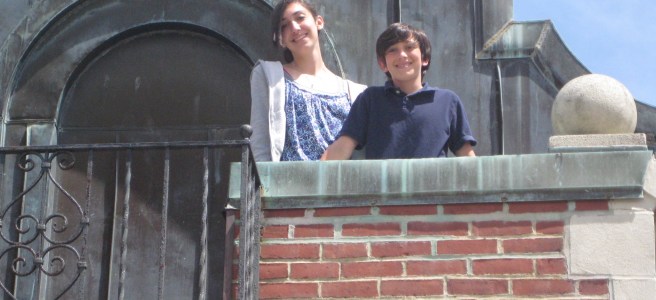
This is the pic that came up today when I searched the ginormous folder on my computer for a “door.”
There was no geographic info in the file name or photo data. All I know is that it was taken with my old Canon PowerShot camera in June 2011 and that the two kids on the balcony are mine.
I had no recollection of this moment, but Google Lens figured out the location (amazing). It’s downtown Winchester, Massachusetts (my husband’s hometown). My father-in-law was alive and still living there at the time, so it makes sense.
It’s an area now called “Winchester Terrace.” AI found this photo on Apartments.com that shows the exact spot:
At the top of the staircase on the right is the spot I posed my kids in 2011.
This discovery sparked a memory of my very dear father-in-law—“Nonno” to my kids.
He was most the wonderful man who enjoyed life’s small moments like no other. Martini time, a beautiful operatic aria, an excellent meal, a grandchild’s kiss (he called it a “buzz”), a friendly joke with a stranger (especially waitresses!), and random bits of foreign languages sprinkled into any conversation. He always made me feel like the most amazing, interesting, gorgeous woman who ever lived. A true charmer. He lived well into his 90s.
Yesterday was the last week of my 8-week class called “Loosen up with Watercolors” at our local (amazing) community arts center.
Against advice from the teacher, I attempted to paint a portrait of someone I know and love: my granddaughter. The reference photo (taken by my daughter) was from last summer when my granddaughter was 9 months old. (She’s walking now!)
I had the idea to use wine bottle webbing in the background for her playpen siding.
I had fun doing this, but I get why the teacher said not to paint family members as a total beginner. You’re too attached to the subject!
I want to learn how to make smooth skin tones, but I was too afraid to experiment on her adorable little face. I will try a stranger again next time, like that random chef from a magazine, which was my first ever watercolor portrait.
I read this article about a woman’s harrowing coming-of-age in Franco’s Spain and it triggered memories of a trip to Madrid I took with my parents in 1984 or 85—less than a decade after the end of the authoritarian Franco regime, which had lasted 36 years.
I cannot find a SINGLE photo from that trip, but I know it really happened. (Someday, if I find photos in my parents’ house, I will add them to this post.)
Here’s what I remember:
My father was in the process of selling his small company to a British company and had to go to London on business, so he took my mother and me with him. This was my first trip to Europe, so they wanted to visit one other city while we were over there and they randomly chose post-Franco Madrid. (For some reason, my sister did not come. She stayed home with the family dog who fell into the foundation of an unbuilt house and died while we were away.)
Of London, I remember only some heinously spicy Indian food, other bad food, and cream being poured on everything.
Here’s my very hazy memory of Madrid.
It was dark and dirty. We ate extremely late in the evening in smoke-filled restaurants. My parents spoke no Spanish, but still rented a car and drove up a one-way street the wrong way. A cop pulled us over and somehow it was communicated that he would take cash in lieu of giving my father a ticket.
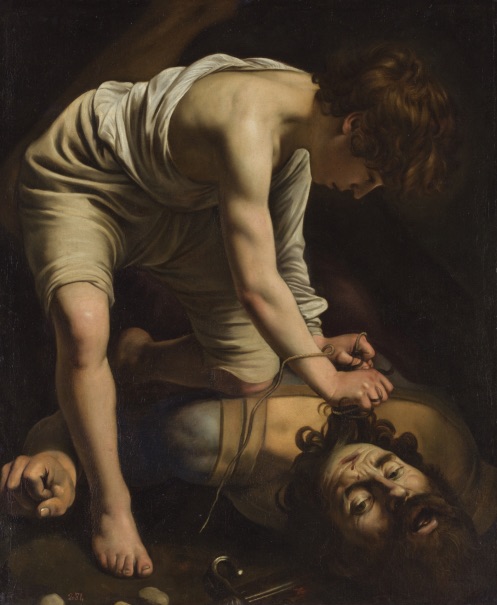
We went to The Prado Museum and I looked at lots of dark paintings.
“David With The Head of Goliath” by Caravaggio (c1600) has been in The Prado forever. I feel like I remember seeing it there. So gruesome.
We visited Toledo, which is outside of Madrid, and I got a piece of their signature jewelry, which is also dark. They make it with black steel. I no longer have the piece, but it looked something like this.
And that’s it. That’s all I remember. The lack of photos doesn’t help.
Back to the BBC article about that poor young woman whose parents turned her over to the authorities and suffered the cruelest treatment imaginable during the Franco regime. I can’t imagine how she (or her daughter) carried on any type of relationship with her ultra conservative Catholic parents after that. The gall of that 90-year old grandfather saying “we suffered a lot too” is outrageous. I noticed the word “forgiveness” is not used.
Thursday will mark 50 years since Franco’s death. Spain has since seen a revolution in women’s rights – but survivors of the Patronato are still waiting for answers and are now demanding an inquiry.
If someone asked me yesterday if I’d ever been to Sacramento, the capital of California, I would’ve said no.
But I was wrong. My high school friend Susan and I took our 11-year old sons on an epic Northern California road trip in the summer of 2012 and stopped at the famous Squeeze Burger (formerly Squeeze Inn) in Sacramento. We were on our way to her house in Lake Tahoe from Oakland.
Upon further research, I found pictures of the famous cheese-skirted burgers online, which look familiar.
We were in the second Sacramento location (now closed), which featured the original tiny Sacramento storefront as a booth in the restaurant. Perfect for two boys traveling with their moms.
This is why pictures matter people. By the time you hit 60, you will not remember half the stuff you did in your life.
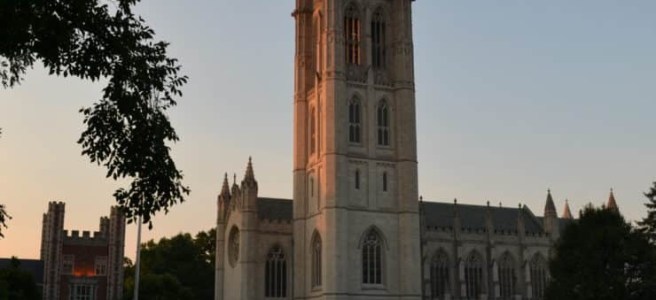
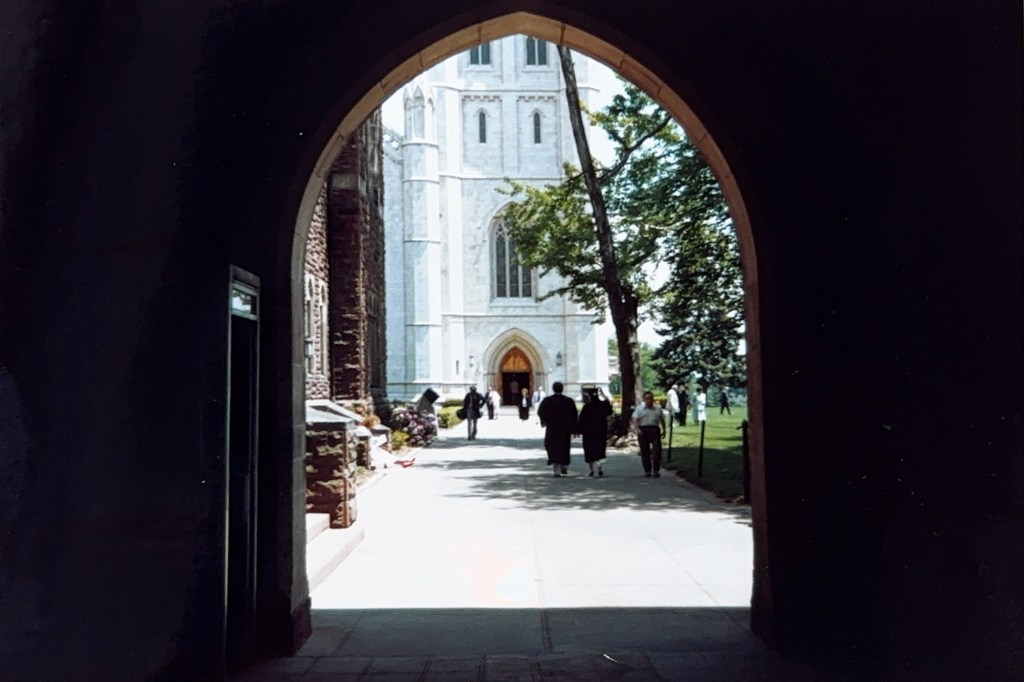
My college in Hartford, Connecticut had a spectacular gothic chapel on the quad. So Hogwarts! We were not an Ivy League school, but with that chapel on the quad—and scores of rich classmates from the snootiest boarding schools on the Eastern Seaboard—we could pretend we were. A couple of my more diligent classmates were able to transfer to Ivy League schools after freshmen year, but most of us just stayed and partied in Hartford.
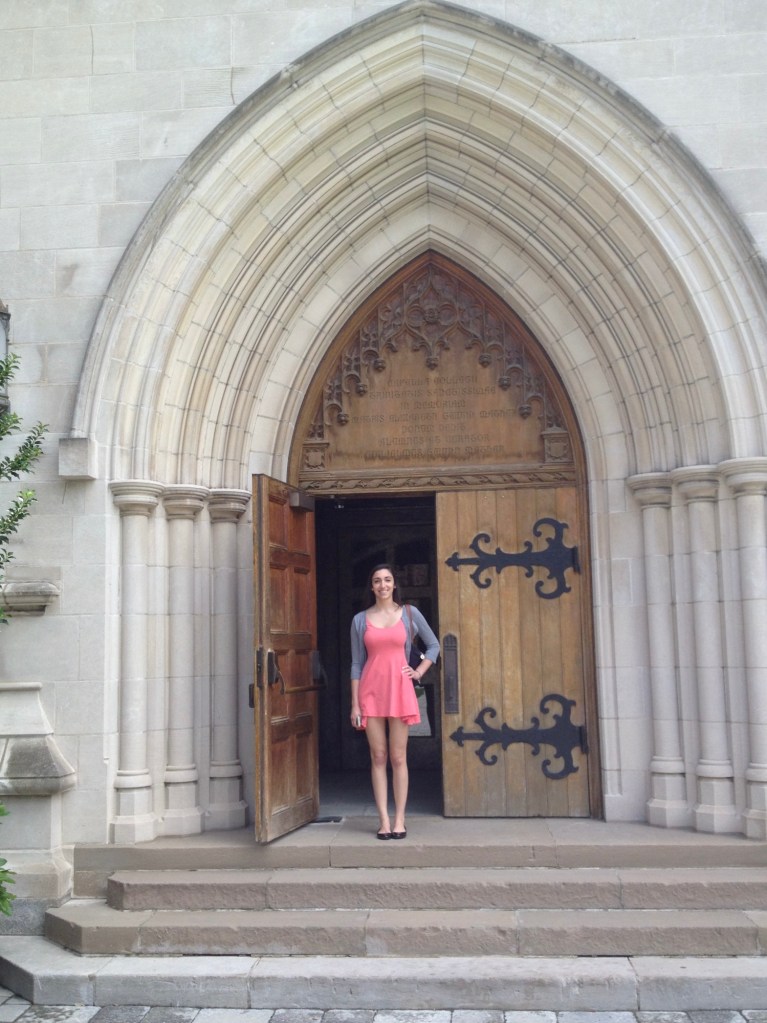
My daughter had absolutely no interest in attending a small, private liberal arts college, but we did stop by one day when we were passing through the area. And the chapel still looked gorgeous.
My daughter in front of my college’s chapel doors in 2013.
The same doors as seen through an arch on the day of my graduation in 1987.
I remember my mother giving me a blue Velcro coupon organizer in my twenties (a little portable folder with dividers for keeping various types of paper coupons—food, toileteries, etc.) She would also cut out and give me coupons for various things she thought I used. It was very thoughtful.
I don’t know what happened to that organizer. At one point, I remember thinking coupons were such a hassle. Half the time, my coupons had expired by the time I got around to pulling one out. All that effort and kerfuffling at the register just to save 50 cents.
I think I had abandoned paper coupons by the time I had my own family at age 30. And I’m pretty sure my millennial/GenZ kids have never once cut out a paper coupon.
Now of course, we have endless customer loyalty programs and accompanying rewards points, electronic coupons, discount codes, promo codes, etc.
I honestly don’t know if my kids have the time and motivation to take advantage of those types of savings programs.
But I do! I will sit in my car and hit the plus sign next to every single savings offer before I go into a CVS, just in case I buy something that applies.
Beware the senior citizen with time on her hands!
According to CVS, I have saved over $3,500 since joining their free “ExtraCare” program in 2016.
The satisfaction of seeing the total bill tick down after hitting “redeem all coupons” at the soulless self-checkout reminds me of the feeling of getting a 100% on your weekly spelling quiz. There’s really no intelligence involved. It’s all preparation, and you were prepared.
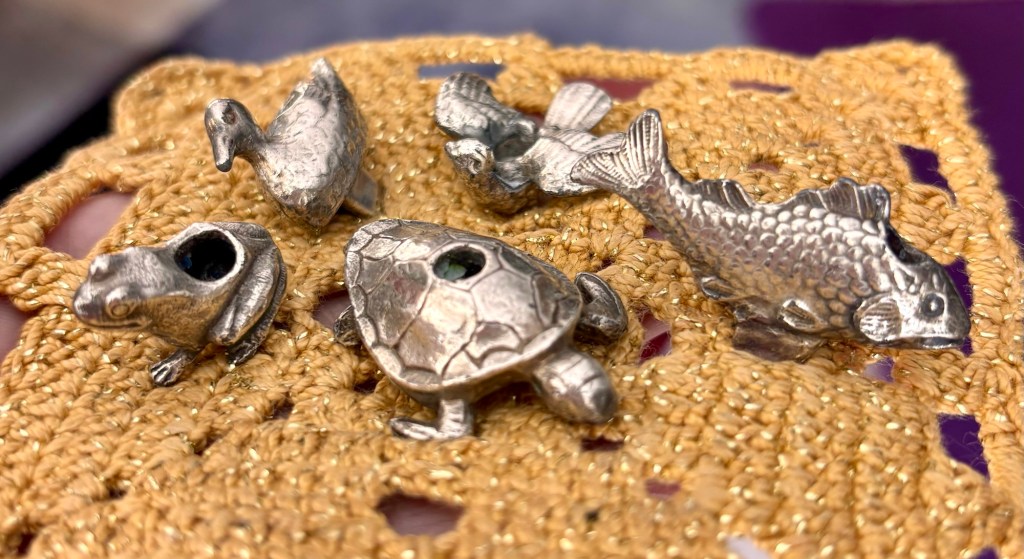
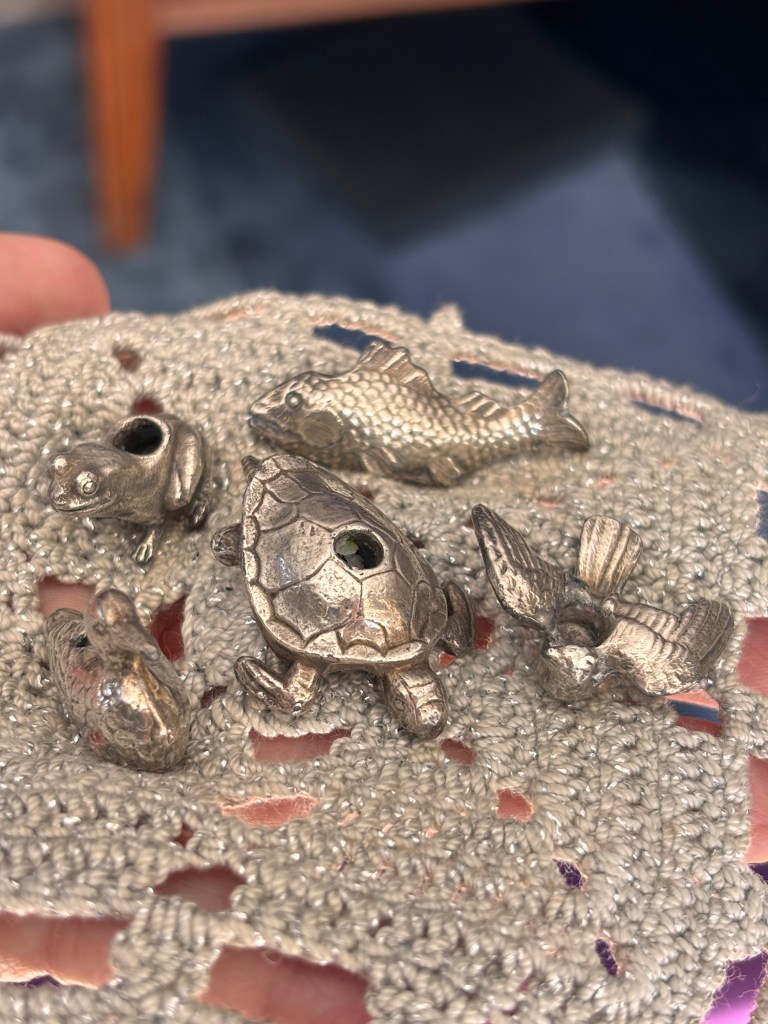
A tiny silver turtle, a fish, a bird, a duck and a frog—60-year old birthday candle holders.
A gift from a dear friend of my mother—a 3x “boy mom” who so loved little girls—on the occasion of my first birthday (we think).
Passed by my mother to me, I used them when I remembered. (The candle holes are narrow, so candles must be shaved to fit.)
Now they are polished and ready to go to my daughter.
We pass things on.
They use what they wish.
I first took a picture of them on a silver coaster, but they were hard to see. Lesson learned: use a contrasting background when photographing still objects.
Happy Thursday! I’ve just learned of Dan’s Thursday Doors through Ritva’s post and I like it! Who doesn’t love an interesting door?
Here’s my understanding of the parameters:
Thursday Doors is a weekly feature allowing door lovers to come together to admire and share their favorite door photos from around the world. Anyone may join the fun by creating their own Thursday Doors post and then sharing the link in the comments on Dan’s site, anytime between Thursday morning and Saturday noon (North American Eastern Time).
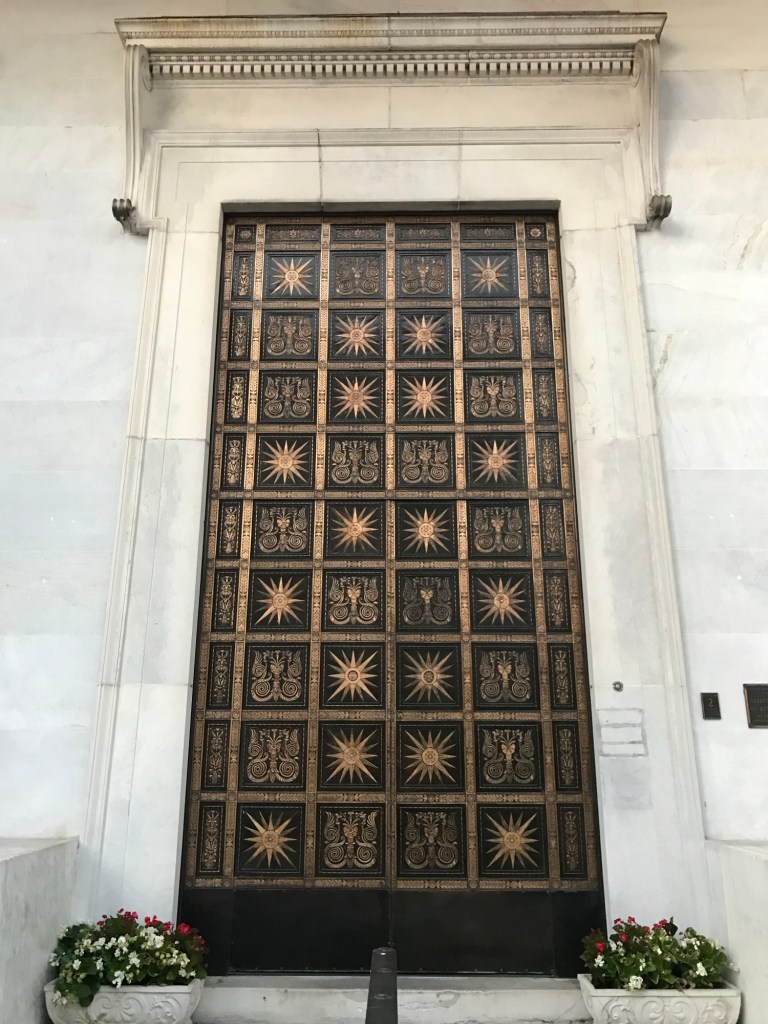
The mammoth bronze doors of the historic Bank of Chester County (now a Wells Fargo) in downtown West Chester, Pennsylvania. The Greek Revival building was completed in 1836 and is in the National Register of Historic Places.
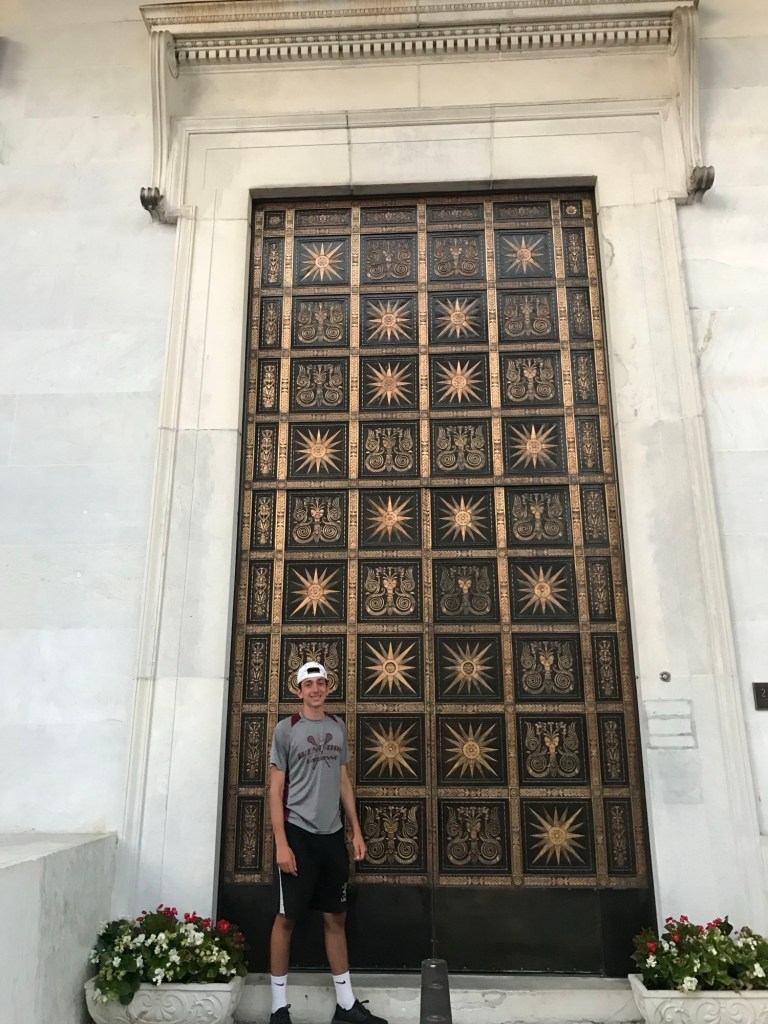
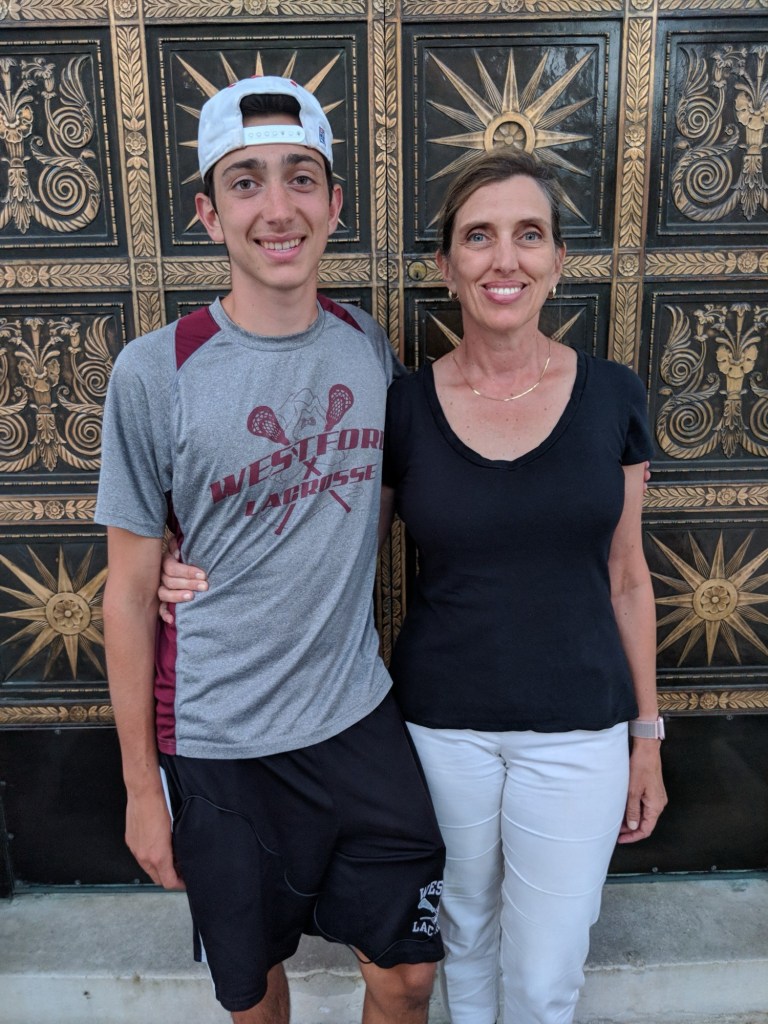
Clearly I was captivated by these doors as I took multiple pictures of them when we were visiting West Chester for a lacrosse tournament in July 2018.
Here’s my son in front of the doors for scale:
I think I really liked the decorative swirls and starbursts in the individual panels and the fact that they’re non-biblical. It’s not a church nor was it ever. In comparison to Europe (and its endless ornate doors), the United States was founded as a secular country. I tend to be drawn to beautiful evidence of that.
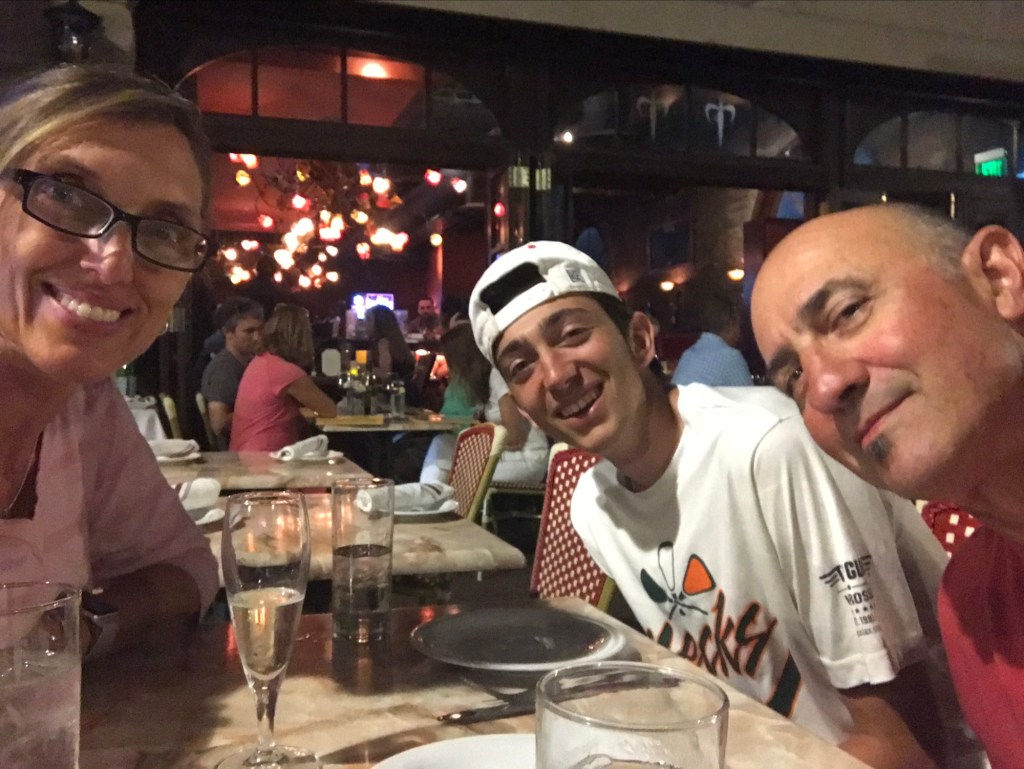
Also, I’m reminded that downtown West Chester, Pennsylvania is fun. Or at least it was in 2018. I hope it bounced back after the pandemic.
Outdoor dining in downtown West Chester, Pennsylvania (USA 🇺🇸)
![A logo for "50 Happens," [a site dedicated to Gen X women with children and grandchildren] [who embrace life's challenges with humor and resilience], [featuring a modern and uplifting design] [that embodies strength and positivity] [with an elegant and playful style] [and a harmonious blend of colors like pink, fuchsia, purple, and blue].](https://50happens.blog/wp-content/uploads/2024/12/img-5uorrxvwartomopcpuhjfjd0.png?w=300)










 50 Happens